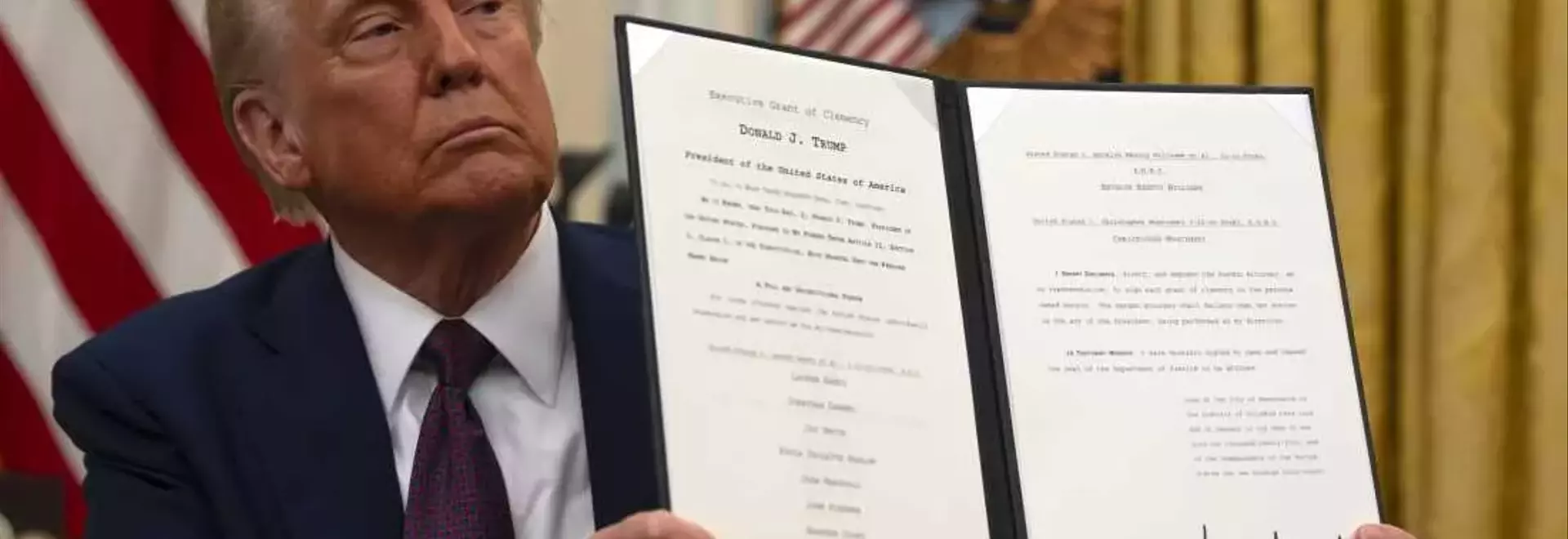
Trump's Controversial Use of Pardon Power in Second Term
During his second term, former President Trump's exercise of the presidential pardon and commutation powers has drawn significant attention due to its distinctive pattern. Unlike previous administrations, Trump's clemency grants have frequently extended to political associates and individuals with direct or indirect ties to his political and personal orbit. This approach is perceived by legal experts as a deliberate use of a constitutional prerogative to make political statements and reward loyalty, diverging from the more traditional applications of presidential mercy. The sheer volume and nature of these decisions have sparked debate regarding the evolving role of clemency in American politics and the potential for its politicization.
In recent times, President Trump has utilized his clemency authority to pardon figures such as Rudy Giuliani and Mark Meadows, both implicated in efforts to challenge the 2020 election outcomes. Additionally, former U.S. Representative George Santos and a former CEO of a cryptocurrency exchange have also received clemency. This trend is particularly noteworthy when contrasted with past presidents, who often reserved such actions for the end of their terms or for cases aimed at fostering national unity. Constitutional law professor Bernadette Meyler points out that these actions signify a pronounced shift towards an "insider pardon" culture, where personal and political affiliations appear to heavily influence clemency decisions.
The power to grant pardons and commutations is a long-standing feature of the U.S. presidency, rooted in English common law's "prerogative of mercy." Historically, this authority has allowed presidents to nullify federal convictions or sentences without congressional or Supreme Court intervention. While Trump's first term saw pardons for a diverse group, including nonviolent drug offenders and white-collar criminals, it was also marked by clemency for political allies and individuals championed by celebrities. These tendencies have become even more pronounced in his second term, as noted by Meyler, who observes a more overt integration of political motivations into the exercise of this power.
Critics and observers, including American University professor Jeffrey Crouch, suggest that Trump's approach to pardons is consistent with his broader "norm-busting" tendencies in other areas of governance. For example, his blanket pardon of individuals involved in the January 6, 2021, Capitol incident shortly after taking office in his second term stands in stark contrast to the modest number of clemency actions during his first term. This proactive and often controversial use of clemency, sometimes even defying the conventional "lame duck" period for such decisions, underscores a deliberate strategy to align clemency with his political agenda and public pronouncements.
The current White House has implicitly drawn a contrast between Trump's active involvement in the pardon process and former President Biden's perceived detachment, referencing Biden's use of an autopen for official documents. White House spokesperson Abigail Jackson affirmed Trump's direct engagement, stating that he has "exercised his constitutional authority to issue pardons and commutations for a variety of individuals." This statement also contains an implied criticism of Biden's own clemency actions, particularly those for family members and certain categories of criminals, suggesting a continued political sparring over the appropriate use of presidential mercy.
The effectiveness of the traditional clemency application process under the current administration remains ambiguous. Mark Osler, a law professor, raises concerns that individuals pursuing clemency through conventional channels might face an uphill battle, especially if their cases lack political prominence or personal connection to the president. The appointment of Alice Johnson, a recipient of Trump's clemency herself, as a "pardon czar" highlights an alternative, more personalized pathway to clemency, yet it simultaneously casts a shadow on the impartiality and accessibility of the formal system. This situation underscores a growing disparity between those who gain the president's attention and those who rely solely on institutional procedures for justice.
