Alaska Schools Face Infrastructure Crisis Amid Disaster Relief Demands
In the vast and often unforgiving landscape of Alaska, public schools in numerous indigenous villages stand not only as centers of learning but also as vital sanctuaries during times of crisis. These institutions, frequently the only structures equipped with basic amenities like functioning toilets and independent power sources, and often built on elevated foundations, become indispensable havens when natural disasters strike. However, a deepening crisis in their upkeep threatens this critical role, as years of insufficient funding have left these essential buildings in a precarious state of disrepair. This widespread neglect undermines their capacity to provide a safe refuge, turning these would-be havens into potential hazards themselves.
Alaskan Schools' Dual Role Strained by Neglect: A Deep Dive into the Infrastructure Crisis
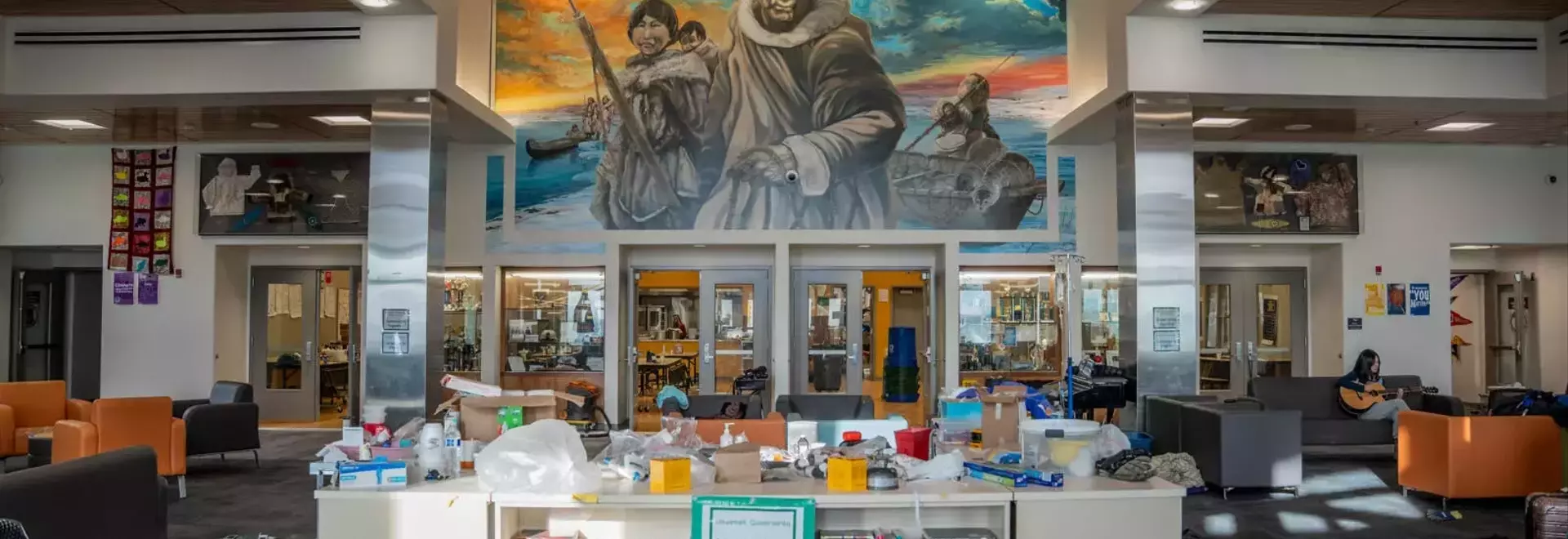
On a somber Sunday morning in October, the remote Alaskan village of Kipnuk found itself engulfed by surging floodwaters, the fierce remnants of Typhoon Halong. James Taq'ac Amik and his partner narrowly escaped the deluge in their motorboat, seeking an unlikely refuge on a small bridge. Their journey highlighted a stark reality: as homes began to drift away, many residents instinctively turned towards the Chief Paul Memorial School, a towering structure on steel pilings, hoping for its promised security. However, this bastion of safety quickly revealed its vulnerabilities.
While the school itself remained structurally intact, its critical operational systems faltered. Ongoing upgrades to the main generator had rendered it insufficient, and the backup unit proved incapable of handling the sudden surge in demand from hundreds of displaced villagers. This power failure, crucial for heating and communication, forced a mass evacuation two days later, underscoring a systemic problem.
Across Alaska's expansive, predominantly Indigenous territories, public schools are legally mandated to serve as emergency shelters due to their often superior construction and facilities. State Senator Löki Tobin and emergency management director Bryan Fisher emphasize their role as "lifeboats" and "the last place of refuge." Since August 2024, Governor Mike Dunleavy has declared numerous disasters, with schools frequently acting as primary shelters, highlighting their indispensable function. Yet, despite this critical role, these rural educational facilities have suffered decades of chronic underfunding for maintenance and repair.
A collaborative investigation by KYUK Public Media, NPR, and ProPublica has brought to light a severe health and safety crisis within these schools. Alaska's legal framework requires the state to fund construction and maintenance in rural districts, which lack local tax revenues. However, over the past 28 years, only 14% of nearly 1,800 funding requests for school repairs have been approved. Commissioner Deena Bishop of the Alaska Education Department acknowledges this systemic failure, stating, "We get to an emergency because we didn't take care of it."
The Lower Kuskokwim School District waited 14 years for major renovation funding in 2015, but Superintendent Hannibal Anderson noted the generator in Kipnuk was not fully functional prior to the storm, and subsequent requests for maintenance were deemed not urgent enough. Similarly, in Kotlik, where 70 individuals sheltered, school repairs totaling millions have gone unfunded since 2018. Principal Cassius Brown explained that their school's elevated position makes it the only viable shelter. In Chevak, Principal Lillian Olson recounted how 65 people recently relied on the school's gymnasium during an outage, yet crucial fire sprinkler systems have failed, and a $32 million renovation request for the school was among many unfunded proposals. Hooper Bay's school, rebuilt after a 2006 fire, has seen 29 funding requests for over $8.4 million in critical repairs, with only one, for exterior work, partially funded.
Compounding the issue, Alaska's emergency management division and education department lack formal agreements or dedicated funding to maintain schools specifically as emergency shelters. While some preparedness grants exist, education department spokesperson Bryan Zadalis confirmed no departmental oversight assesses a school's suitability as a shelter. Senator Tobin passionately argued for recognizing schools' multifaceted role—not just for education but as crucial community and disaster support infrastructure. During a budget meeting in February 2024, she questioned Deputy Commissioner Craig Christenson of the Alaska Department of Military and Veterans Affairs about the cost of evacuating residents versus maintaining schools. Christenson, while acknowledging their utilization, sidestepped direct responsibility for maintenance, leaving a critical gap in policy and funding.
This ongoing crisis in Alaska's public schools serves as a stark reminder of the broader societal implications when essential infrastructure is neglected. The failure to adequately maintain these buildings not only compromises the safety and well-being of communities in times of extreme vulnerability but also highlights a critical oversight in disaster preparedness strategies. It challenges policymakers to re-evaluate how we define and invest in public assets, recognizing their interconnected roles in education, community resilience, and emergency response. The narrative from Alaska compels us to consider how such underinvestment might manifest in other regions, urging a more holistic and proactive approach to infrastructure development and maintenance to truly safeguard our communities.
