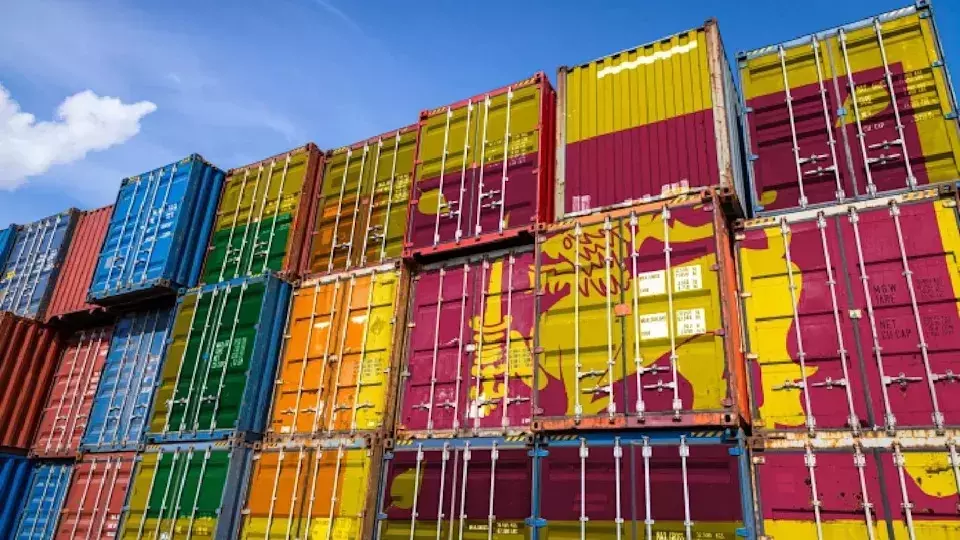
Sri Lanka's Apparel Exports Soar with US Demand, Amidst Tariff Concerns
Sri Lanka's garment and textile industries experienced a notable boost in May 2026, with export figures reaching an impressive $394.14 million. This surge is largely attributed to escalating demand from key international markets, particularly the United States. However, this promising economic development coincides with a critical trade investigation by the US Office of the Trade Representative, focusing on potential forced labor practices. The outcome of this inquiry could significantly impact future trade relations, as Sri Lankan industry leaders are actively engaging to secure favorable tariff conditions and ensure continued growth in the sector.
Details of Sri Lanka's Export Performance and Trade Challenges
In May 2026, Sri Lanka's apparel and textile exports recorded a substantial increase of 7.96%, amounting to $394.14 million. This remarkable growth signals a firming up of demand from crucial international markets following a challenging period earlier in the year. The United States emerged as the primary driver of this upturn, with shipments to the US market climbing by 15.36% to $149.96 million. This positive development occurs at a pivotal moment as Sri Lanka prepares for an important phase in its trade relationship with the US.
Currently, Sri Lanka is under scrutiny as part of a Section 301 investigation conducted by the Office of the US Trade Representative. This inquiry pertains to the prohibition of imports linked to forced labor. The investigation could potentially lead to the imposition of additional tariffs, ranging from 10% to 12.5%, on affected goods. A US government report released in June identified Sri Lanka among 46 countries facing the higher 12.5% tariff rate. In contrast, other nations such as Bangladesh, Cambodia, Pakistan, and Indonesia were slated for a lower 10% tariff, acknowledging their efforts in addressing forced labor concerns.
A public hearing regarding the proposed tariffs is scheduled for July 7 in Washington. Sri Lankan industry bodies have a crucial window until June 22 to apply for a hearing slot, making the upcoming weeks vital for presenting their case and mitigating potential adverse impacts. Representatives from the Joint Apparel Association Forum (JAAF) have expressed encouragement regarding May's export figures, viewing them as a testament to the ongoing trust international buyers place in Sri Lankan manufacturing, even amidst a complex global trade environment.
JAAF emphasizes the industry's immediate focus on advocating for a fair and competitive tariff outcome in Washington. Their objective is to ensure that the current positive momentum translates into sustainable long-term growth rather than merely a short-term gain. The organization remains optimistic that with appropriate policy support, the latter half of 2026 could see even stronger performance for the sector.
Beyond traditional markets, shipments to other destinations experienced a 14.61% increase, reaching $70.67 million during May. Exports to the United Kingdom also saw a modest rise of 0.87%, although shipments to the European Union slightly declined by 0.3% to $121.35 million. Despite May's encouraging surge, JAAF noted that total apparel and textile exports for the first five months of 2026 amounted to $1.93 billion, representing a 4.68% decrease compared to the same period in the previous year. Cumulative declines were observed across all three major export markets: the US, EU, and UK during this earlier period.
The recent surge in Sri Lanka's apparel exports, particularly to the United States, is a beacon of hope for the nation's economy. It underscores the resilience and quality of Sri Lankan manufacturing. However, the impending US tariff decision casts a shadow of uncertainty. This situation highlights the complex interplay between trade, labor practices, and international relations. It serves as a reminder for all nations to uphold ethical labor standards, as such practices are increasingly becoming integral to global trade partnerships. The outcome of the Washington hearing will not only shape Sri Lanka's economic future but also set a precedent for how trade disputes related to labor concerns are resolved on the global stage. It is imperative that all stakeholders engage constructively to foster fair trade and sustainable development.
