ICE Agents Detain Columbia Student Under False Pretenses
News

ICE Agents Detain Columbia Student Under False Pretenses

authorBy Mona Chalabi
DateFeb 26, 2026
Read Time2 min

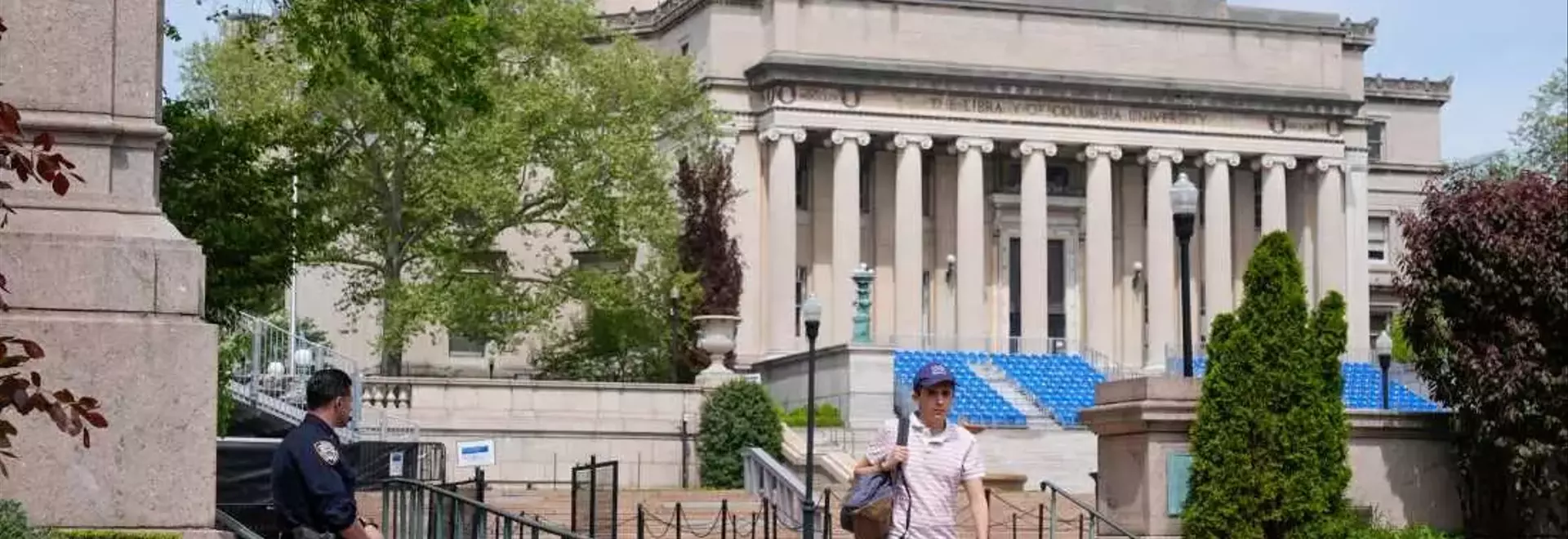
A senior student at Columbia University, Ellie Aghayeva, a neuroscience and political science major from Azerbaijan, was reportedly taken into custody by federal immigration agents. Her lawyers and the university's acting president assert that the agents gained entry to her campus apartment by falsely claiming to be looking for a missing person. This event, occurring early Thursday, raises serious questions about the methods employed by law enforcement in university settings.

Shortly after her apprehension, Aghayeva, who is a prominent social media influencer sharing her immigrant college experience, posted a plea for help on Instagram, stating that the Department of Homeland Security had "illegally arrested" her. Her legal team promptly filed an emergency petition, seeking her release and highlighting that the agents had no warrant. The incident underscores growing concerns among immigration advocates about the increasing use of deceptive tactics by federal immigration authorities, a practice that, while often legal, is seen as an aggressive shift in enforcement strategies. This is not an isolated event at Columbia, as a similar incident involving the detention of a Palestinian activist and graduate student occurred just a year prior.

In response to the incident, Columbia University's acting president, Claire Shipman, reiterated the university's policy that law enforcement agents require a judicial warrant or subpoena to access non-public areas, including student housing. She advised students not to grant entry or accept official documents from agents, but instead to contact campus public safety. This stance reflects the university's commitment to protecting its community members and highlights the ongoing tension between federal immigration enforcement and the rights of individuals within educational institutions.

These developments emphasize the critical importance of transparency and accountability from governmental agencies. Educational institutions, in turn, have a duty to safeguard their students' well-being and legal rights, especially in cases where enforcement tactics blur ethical lines. Upholding due process and ensuring that all individuals are treated with dignity are fundamental pillars of a just society, and these principles must be rigorously defended.

More Articles
News
A $72 Million Lunar Mission's Downfall: Unpacking the Failure of Lunar Trailblazer
The Lunar Trailblazer mission, a $72 million NASA initiative to map lunar water, was lost a day after its 2025 launch due to a critical software error that misdirected its solar panels. A new report reveals a confluence of pointing inaccuracies and onboard fault management failures as the culprits. This incident underscores the inherent risks in low-cost space missions and offers vital lessons for future endeavors, highlighting the need for rigorous testing and robust system architecture to prevent similar catastrophic losses.
By Michele NorrisFeb 26, 2026
News
Unveiling the Revised Nuclear Reactor Safety Framework
The Department of Energy has publicly released updated guidelines for experimental nuclear reactors, which streamline environmental and safety regulations. These revisions were influenced by a presidential executive order aiming to expedite the deployment of new reactor designs, and were previously revealed by NPR. While supporters view this as a move towards nuclear innovation, critics express concerns regarding potential compromises to safety and environmental standards.
By Christianne AmanpourFeb 26, 2026
News
US Mortgage Rates Dip Below 6% for the First Time in Years
For the first time since September 2022, the average 30-year fixed-rate mortgage in the U.S. has dropped below 6%, reaching 5.98%. This significant reduction, driven by federal interest rate cuts and government intervention, is expected to invigorate the housing market. While experts foresee a psychological boost for potential buyers and sellers, the impact on overall market affordability amidst a persistent housing shortage remains a key concern.
By Mona ChalabiFeb 26, 2026
News
Bipartisan Consensus on Key Issues in US States
In a departure from typical partisan gridlock, Democrats and Republicans in various US states are finding common ground on critical issues like AI regulation, data center oversight, and housing affordability. This unity transcends traditional ideological boundaries, as state-level politicians actively address technology's societal impact and urban development challenges, showcasing a pragmatic approach to governance.
By Ann CurryFeb 26, 2026
News
AI's Impact on Privacy: Emerging Challenges and Enduring Risks
Recent incidents highlight how generative AI intensifies privacy concerns, from legal privilege disputes with chatbots to controversies over AI-powered surveillance and data sharing with authorities. While AI introduces new complexities, privacy experts emphasize that fundamental data risks with tech companies largely remain consistent. This article explores the evolving landscape of digital privacy in the age of advanced artificial intelligence.
By Michele NorrisFeb 26, 2026