US Mortgage Rates Dip Below 6% for the First Time in Years
News

US Mortgage Rates Dip Below 6% for the First Time in Years

authorBy Mona Chalabi
DateFeb 26, 2026
Read Time2 min

A notable shift has occurred in the American housing finance landscape: the average rate for a 30-year fixed mortgage has decreased to below 6%.

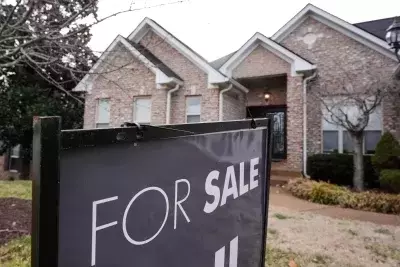
This development, reported by Freddie Mac, marks the first time since late 2022 that rates have reached this level, settling at 5.98%. This decline is largely attributed to the Federal Reserve's recent adjustments to benchmark interest rates, alongside a substantial government directive to acquire mortgage-backed securities, which has bolstered demand in the secondary market and enabled lenders to offer more competitive rates. The dip below the 6% threshold is considered a crucial psychological turning point for both existing homeowners, who may now be more inclined to relocate, and prospective buyers, who have been deterred by previous high borrowing costs. However, despite this positive movement in interest rates, the broader housing market continues to face challenges. Mortgage applications saw a modest increase recently, primarily driven by refinancing activities rather than new home purchases, indicating that the market's previous stagnation has not fully dissipated. The persistent issue of housing scarcity, characterized by limited new construction and available properties, coupled with high median home prices (around $405,000 at the close of last year), continues to exert pressure on affordability. Industry experts caution that without a corresponding increase in housing supply, any gains from lower mortgage rates could be swiftly negated by escalating property values, further complicating homeownership for many Americans.

This reduction in mortgage rates represents a positive step towards alleviating some of the financial burdens associated with home buying, offering a renewed sense of hope and opportunity for individuals and families aspiring to achieve homeownership. It underscores the dynamic interplay between monetary policy, government initiatives, and market psychology in shaping economic realities, reminding us of the continuous pursuit of balance and accessibility in vital sectors such as housing. The path forward demands sustained efforts to address supply constraints and ensure that market improvements translate into tangible benefits for all.

More Articles
News
Bipartisan Consensus on Key Issues in US States
In a departure from typical partisan gridlock, Democrats and Republicans in various US states are finding common ground on critical issues like AI regulation, data center oversight, and housing affordability. This unity transcends traditional ideological boundaries, as state-level politicians actively address technology's societal impact and urban development challenges, showcasing a pragmatic approach to governance.
By Ann CurryFeb 26, 2026
News
AI's Impact on Privacy: Emerging Challenges and Enduring Risks
Recent incidents highlight how generative AI intensifies privacy concerns, from legal privilege disputes with chatbots to controversies over AI-powered surveillance and data sharing with authorities. While AI introduces new complexities, privacy experts emphasize that fundamental data risks with tech companies largely remain consistent. This article explores the evolving landscape of digital privacy in the age of advanced artificial intelligence.
By Michele NorrisFeb 26, 2026
News
California Farmers Turn to Solar Energy Amid Water Scarcity
California farmers, particularly in the San Joaquin Valley, are increasingly embracing large-scale solar farm projects as a viable alternative for their land, driven by persistent water scarcity. This pivot allows them to maintain financial stability while contributing to renewable energy goals, transforming agricultural landscapes into significant solar power generation hubs. The initiative, spearheaded by entities like the Westlands Water District, seeks to repurpose fallowed land for clean energy production, addressing both environmental challenges and economic sustainability.
By Anderson CooperFeb 26, 2026
News
Supreme Court Divided on Tax Foreclosure Property Rights Case
The Supreme Court heard arguments in a case challenging whether a county can seize and sell a home for unpaid taxes at a price lower than its fair market value, with justices appearing divided on balancing property rights and government tax collection. The case involves an estate whose property was foreclosed for a minimal tax debt, raising questions about whether fair market value should be returned to property owners.
By Lester HoltFeb 26, 2026
News
Surgeon General Nominee Faces Scrutiny Over Health Stances and Financial Ties
Dr. Casey Means, President Trump's nominee for Surgeon General, underwent a Senate confirmation hearing, facing intense questioning on her views regarding vaccines, birth control, and potential financial conflicts of interest. Her unconventional medical background and alignment with Health Secretary Robert F. Kennedy Jr.'s 'Make America Healthy Again' agenda sparked considerable debate among committee members and public health experts.
By Anderson CooperFeb 25, 2026