Unveiling the Revised Nuclear Reactor Safety Framework
News

Unveiling the Revised Nuclear Reactor Safety Framework

authorBy Christianne Amanpour
DateFeb 26, 2026
Read Time2 min
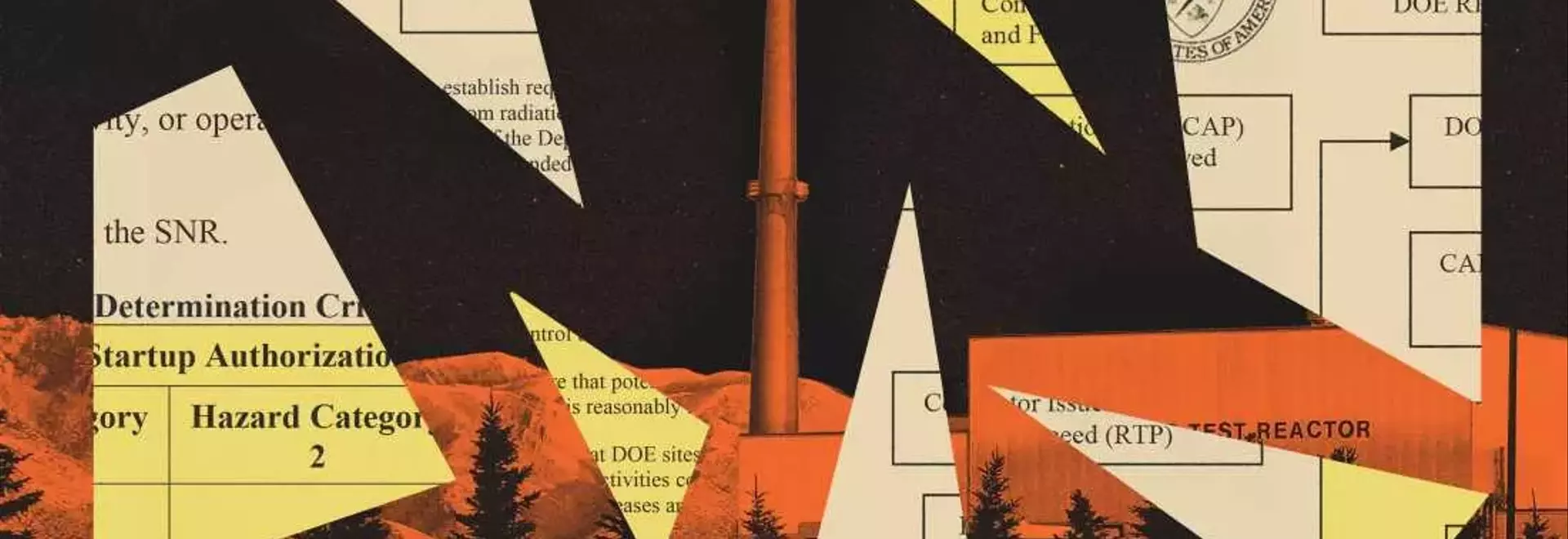
The Department of Energy has now disclosed previously undisclosed regulations governing experimental nuclear reactors, following an earlier investigative report that brought their existence to light. These updated protocols significantly reduce oversight on environmental and security aspects, sparking a debate between proponents of rapid nuclear development and those prioritizing stringent safety measures.

Accelerating Nuclear Ambitions: The Public Disclosure of Streamlined Safety Rules

The Energy Department's Transparency Initiative: Unveiling Revised Nuclear Directives

After an exclusive report from NPR brought the issue to public attention, the Department of Energy (DOE) has officially published its revised regulatory framework for experimental nuclear reactors. These modifications notably loosen environmental and security requirements, a move designed to accelerate the development and deployment of next-generation nuclear technologies.

Presidential Mandate and the Genesis of the Reactor Pilot Program

The impetus for these regulatory changes stems from a presidential executive order, which set an ambitious target for the operationalization of multiple experimental reactors within a tight timeframe. This directive led to the establishment of the DOE's Reactor Pilot Program, expanding the scope of reactors falling under DOE's jurisdiction and allowing for their construction beyond traditional national laboratory sites.

Evolving Oversight: A Shift from Traditional Nuclear Regulation

Historically, the Nuclear Regulatory Commission (NRC) has governed commercial nuclear reactors through a public and transparent process. However, the new DOE rules, which apply to a broader array of experimental commercial designs, signal a departure from this established norm. This shift allows for a more expedited, though potentially less scrutinized, development pathway for advanced nuclear concepts.

Previously Confidential Regulations Now Accessible to the Public

Initially, these internal departmental rules were shared only with ten companies participating in the pilot program, remaining inaccessible to the public until NPR's investigation. Now, the Idaho National Laboratory, which spearheads the Reactor Pilot Program, hosts these updated directives, along with other pertinent policy and standard documents, on its official website, ensuring public access.

Industry Progress and Expert Reservations Amidst Regulatory Streamlining

Despite the ongoing debate, companies involved in the reactor program have pressed forward. Several firms have successfully completed critical safety analyses and are on track to activate their reactors as early as this summer. However, experts continue to voice concerns that the expedited timelines and relaxed regulations could inadvertently jeopardize safety protocols, potentially compromising the thorough assessments typically associated with nuclear operations.

More Articles
News
US Mortgage Rates Dip Below 6% for the First Time in Years
For the first time since September 2022, the average 30-year fixed-rate mortgage in the U.S. has dropped below 6%, reaching 5.98%. This significant reduction, driven by federal interest rate cuts and government intervention, is expected to invigorate the housing market. While experts foresee a psychological boost for potential buyers and sellers, the impact on overall market affordability amidst a persistent housing shortage remains a key concern.
By Mona ChalabiFeb 26, 2026
News
Bipartisan Consensus on Key Issues in US States
In a departure from typical partisan gridlock, Democrats and Republicans in various US states are finding common ground on critical issues like AI regulation, data center oversight, and housing affordability. This unity transcends traditional ideological boundaries, as state-level politicians actively address technology's societal impact and urban development challenges, showcasing a pragmatic approach to governance.
By Ann CurryFeb 26, 2026
News
AI's Impact on Privacy: Emerging Challenges and Enduring Risks
Recent incidents highlight how generative AI intensifies privacy concerns, from legal privilege disputes with chatbots to controversies over AI-powered surveillance and data sharing with authorities. While AI introduces new complexities, privacy experts emphasize that fundamental data risks with tech companies largely remain consistent. This article explores the evolving landscape of digital privacy in the age of advanced artificial intelligence.
By Michele NorrisFeb 26, 2026
News
California Farmers Turn to Solar Energy Amid Water Scarcity
California farmers, particularly in the San Joaquin Valley, are increasingly embracing large-scale solar farm projects as a viable alternative for their land, driven by persistent water scarcity. This pivot allows them to maintain financial stability while contributing to renewable energy goals, transforming agricultural landscapes into significant solar power generation hubs. The initiative, spearheaded by entities like the Westlands Water District, seeks to repurpose fallowed land for clean energy production, addressing both environmental challenges and economic sustainability.
By Anderson CooperFeb 26, 2026
News
Supreme Court Divided on Tax Foreclosure Property Rights Case
The Supreme Court heard arguments in a case challenging whether a county can seize and sell a home for unpaid taxes at a price lower than its fair market value, with justices appearing divided on balancing property rights and government tax collection. The case involves an estate whose property was foreclosed for a minimal tax debt, raising questions about whether fair market value should be returned to property owners.
By Lester HoltFeb 26, 2026