Guerrilla Gardener Creates Pop-Up Wetland in LA River
Transforming Urban Channels: A Call to Action for Nature's Revival
The Unlikely Genesis of an Urban Oasis: A Shopping Cart's Revelation
For many residents of Los Angeles, the river that bisects their city is little more than a concrete channel, a relic of a past effort to control floodwaters, now primarily a conduit for urban runoff and debris. However, in 2020, artist Doug Rosenberg discovered an unexpected sight: a shopping cart in the river's shallow waters, around which greenery had begun to flourish, attracting a great blue heron. This scene inspired Rosenberg, illuminating the potential for even minimal structures to accumulate sediment and foster micro-ecosystems within the river's barren landscape.
An Artist's Vision: Sculpting Nature from Concrete
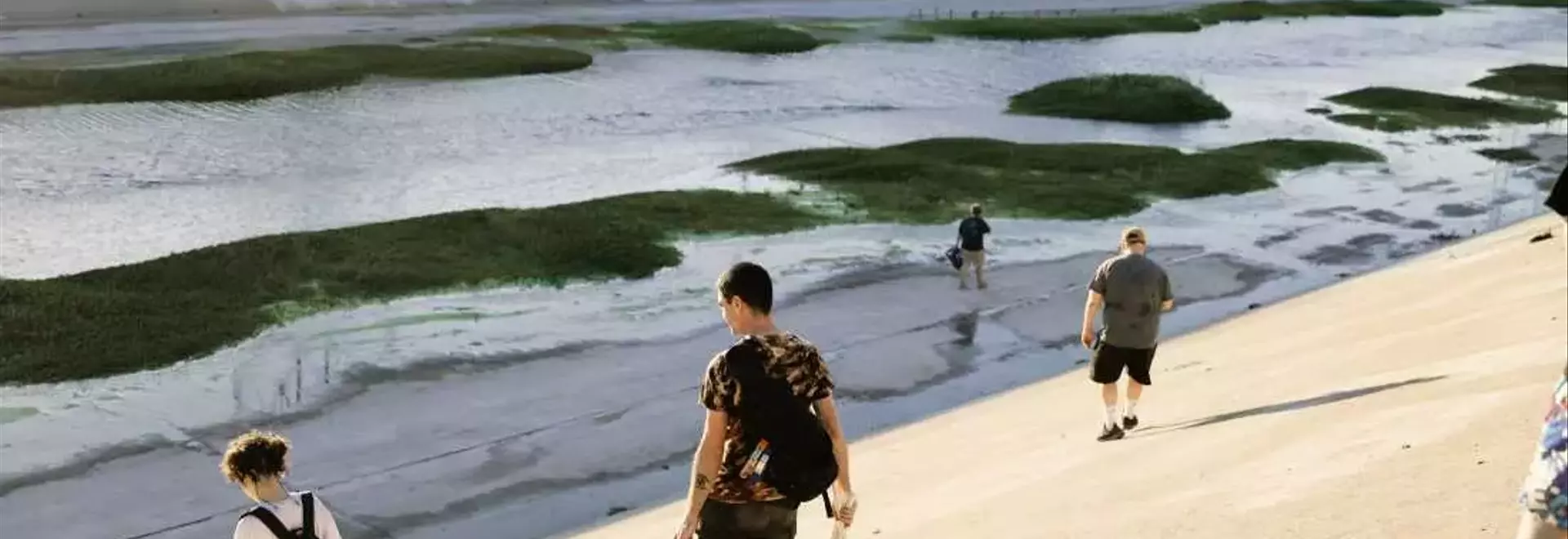
Driven by this observation, Rosenberg embarked on an audacious project. In a deserted downtown stretch of the river, he strategically placed large rocks, forming loose, circular arrangements. These formations were designed to capture sediment, providing a foundation for plant life to take root. Within just ten weeks, this simple intervention resulted in a vibrant, 10-by-20-foot green island, a flourishing wetland amidst the 100-foot-wide concrete channel. Rosenberg views this as performance art, a visual statement advocating for accessible, low-tech environmental action.
The World of Unauthorized Horticulture: Navigating Regulations
Rosenberg's work places him squarely within the realm of guerrilla gardening, an activity that bypasses official procedures and permits. City officials acknowledge his positive intentions but emphasize the illegality of his actions. The LA River is designated as a navigable waterway under the Clean Water Act, meaning any unapproved alterations, such as the introduction of materials like rocks, are prohibited. Across the nation, guerrilla gardeners often operate outside legal frameworks to reclaim neglected public spaces, cultivate food in urban food deserts, and enhance biodiversity, often driven by a mission to connect urban environments with nature.
Advocacy vs. Action: Divergent Paths to River Restoration
Accessing Rosenberg's wetland requires traversing railroad tracks and descending steep channel banks, yet he considers it an open, public space. While his efforts are driven by a desire to foster a connection with nature in an urban setting, environmental groups and city officials express concern. Organizations like Friends of the LA River emphasize that restoration efforts are most effective when guided by ecological principles and collaboration with regulatory bodies, ensuring public safety and preventing unintended environmental harm. A primary concern is the potential for such unauthorized structures to impede water flow, increasing flood risks, a critical issue given the river's history of devastating floods.
Historical Echoes: The Legacy of River Activism
The LA River's history is marked by significant events and dedicated individuals who have fought for its revitalization. The Army Corps of Engineers channelized the river in the 1930s to prevent flooding, transforming it into a concrete "hydro-highway." While official plans for habitat restoration and public access have been slow due to legal and budgetary challenges, local officials acknowledge the foundational role of community advocates and artists. Pioneers like Lewis MacAdams, a poet and activist, famously opened sections of the river to the public in 1985, advocating for its recognition as a vital natural resource. Similarly, kayakers in 2008 demonstrated the river's navigability, reinforcing its protected status under the Clean Water Act. These historical precedents suggest that unofficial actions can pave the way for broader, systemic change.
The Impermanence of Innovation and the Power of Engagement
Rosenberg leverages social media to share his project, attracting volunteers who assist with tasks such as removing invasive plants. However, his wetland, which includes both native Goodding's willow and invasive creeping water primrose, faces criticism for potentially fostering non-native species that can harm native ecosystems and water resources. The temporary nature of his project is also evident; a recent heavy rain event washed away the wetland, demonstrating the river's powerful currents. Despite these setbacks and the acknowledged risks of his "reckless" approach, Rosenberg remains committed to his art. He believes in the value of "vigorous action" to inspire a sense of agency, particularly among younger generations grappling with large-scale environmental challenges like climate change, suggesting that sometimes, imperfect action is better than inaction.
