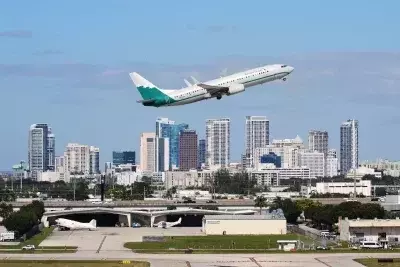
FAA Lifts All Commercial Flight Restrictions After Government Shutdown
After an extended period of national government shutdown, the Federal Aviation Administration (FAA) has announced the complete removal of all limitations on commercial air travel. This pivotal decision promises to restore full operational capacity to the nation's skies, benefiting travelers and the aviation industry alike.
FAA Rescinds Flight Limitations, Air Travel to Normalize
In a significant development for air travel across the United States, the Federal Aviation Administration (FAA) officially declared on Sunday, November 16, 2025, that it is lifting all previously imposed restrictions on commercial flights. These limitations had been in effect at 40 major airports nationwide during the country's longest government shutdown, causing widespread disruptions and cancellations.
The announcement, delivered in a joint statement by Transportation Secretary Sean P. Duffy and FAA Administrator Bryan Bedford, signals an immediate return to normal flight operations. Airlines are now authorized to reinstate their complete flight schedules, commencing Monday, November 17, at 6 a.m. EST.
The FAA had initially implemented these unprecedented restrictions on November 7, 2025, citing escalating safety concerns stemming from growing staffing shortages at air traffic control facilities during the shutdown. The flight cuts, which began at 4% and subsequently increased to 6%, impacted thousands of flights and passengers across major hubs, including key airports in New York, Chicago, Los Angeles, and Atlanta.
However, with the 43-day government shutdown concluding on November 12, staffing levels at air traffic control facilities have steadily improved. This positive trend prompted the FAA to gradually ease restrictions, rolling them back to 3% on Friday, November 14. Data from aviation analytics firm Cirium indicated a dramatic reduction in cancellations over the preceding weekend, with less than 1% of all flights being affected. Flight tracking website FlightAware reported only 149 cancellations on Sunday and 315 on Saturday, significantly below the mandated 3% cuts.
According to the FAA's statement, the decision to rescind the order was based on recommendations from an agency safety team. This team conducted "detailed reviews of safety trends and the steady decline of staffing-trigger events in air traffic control facilities," concluding that the conditions for full operational resumption were met. While the agency acknowledged reports of non-compliance by some carriers during the emergency order, it did not provide specific details, only stating that it is "reviewing and assessing enforcement options."
The peak of flight disruptions occurred on November 9, when over 2,900 flights were canceled due due to the FAA's directive, persistent controller shortages, and adverse weather conditions. The situation began to ameliorate last week as more air traffic controllers returned to their posts following news of an impending deal to end the government shutdown. This progress also led the FAA to suspend plans for further rate increases that had aimed for a 10% reduction in flights.
Secretary Duffy had previously emphasized the necessity of these cuts, citing worrisome safety data and the need to alleviate pressure on the aviation system. Although he has not publicly shared the specific safety data, he highlighted reports of aircraft proximity incidents, runway incursions, and pilot concerns regarding controller responses during the shutdown period. Airline executives have expressed strong optimism that operations will fully recover well in advance of the busy Thanksgiving travel season, following the FAA's latest directive.
This resolution brings a much-needed sigh of relief to the traveling public and the airline industry, marking a crucial step towards stability and efficiency in the nation's air transportation network.
The lifting of flight restrictions by the FAA marks a critical turning point for the aviation industry and the broader economy. It underscores the profound impact government shutdowns can have on essential services and highlights the resilience required to navigate such challenges. For travelers, it means a return to predictable and reliable air travel, just in time for the holiday season. From a broader perspective, this event serves as a stark reminder of the intricate balance between government functions, economic stability, and public convenience.
