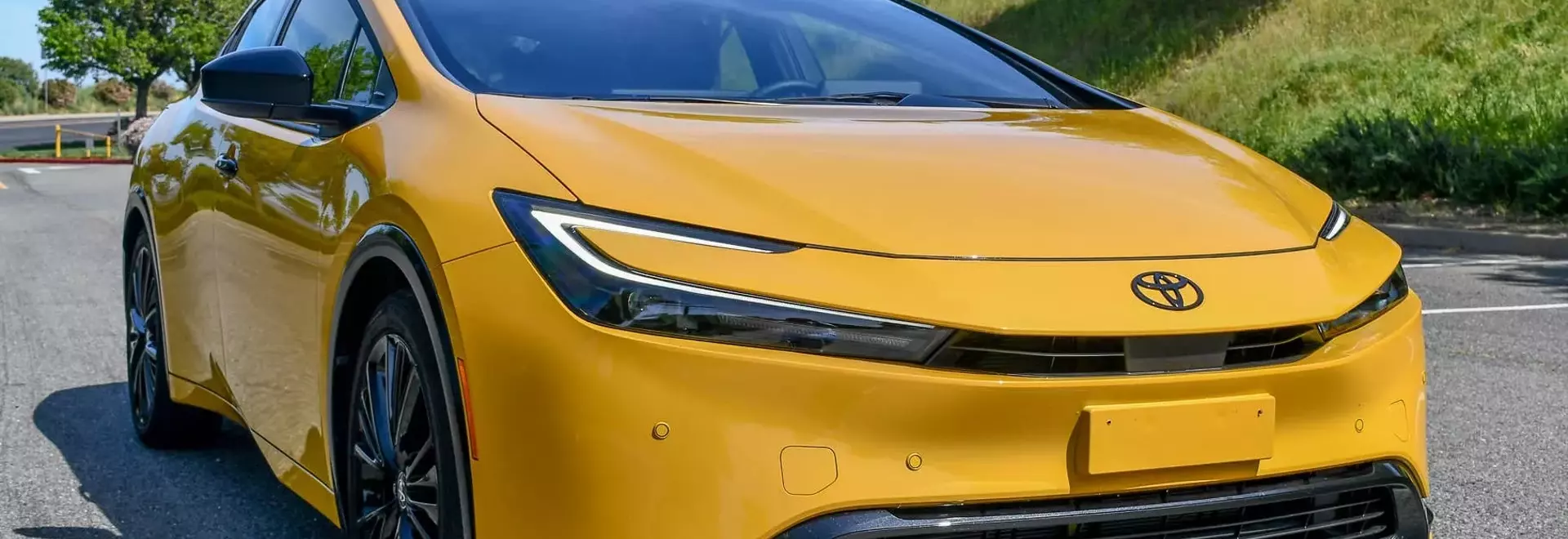
2026 Toyota Prius Nightshade PHEV: A Family Commuter's Contender?
The 2026 Toyota Prius Nightshade PHEV, a vehicle traditionally celebrated for its outstanding fuel economy rather than its family-friendly attributes, poses an interesting question: can it serve as a practical family car? While its primary allure remains its impressive mileage, a closer look reveals a vehicle that, despite its compact nature, can surprisingly accommodate small children. However, it falls short of being an ideal family hauler compared to more spacious alternatives. The Nightshade trim, while not top-tier, strikes a balance between cost and desirable features, making it a compelling option for those prioritizing efficiency and a distinct aesthetic, even if it necessitates compromises in comfort and cargo space.
Ultimately, the Prius Nightshade PHEV excels as a commuter vehicle, offering unparalleled fuel efficiency and an all-electric range that significantly reduces gasoline consumption. Its design, while stylish, prioritizes aerodynamics and efficiency over expansive interior room or luxury amenities. Therefore, while it can transport a family in a pinch, its true strength lies in its ability to provide economical and eco-conscious daily commutes, making it a valuable asset for individuals or small families seeking to minimize their environmental footprint and fuel expenses.
Family Suitability: Comfort and Constraints
The 2026 Toyota Prius Nightshade PHEV, despite its modest dimensions, surprisingly manages to accommodate car seats for small children with relative ease. The rear cabin offers adequate legroom, approximately 35.9 inches, ensuring that toddlers and young children can sit comfortably without feeling overly cramped. The inclusion of easily accessible lower anchor points and top tether points simplifies the installation of child safety seats, a crucial factor for parents. Furthermore, features like fully retractable rear windows and a rear sunroof contribute positively to the children's experience, providing entertainment and a sense of openness within the compact space. However, the limited width of the rear seats means children are seated quite close together, potentially leading to sibling squabbles. A notable drawback is the absence of dedicated rear air conditioning vents, which can compromise comfort, particularly in warmer climates, necessitating extra effort to keep the rear cool.
While the trunk offers 20.3 cubic feet of space, it’s partially occupied by the PHEV charging cable, reducing usable cargo area. This configuration means that while it can handle routine grocery runs and smaller items, accommodating larger strollers or extensive family luggage becomes challenging. The car is certainly not designed for the voluminous storage needs typically associated with family vehicles. Thus, while it can technically transport a family, particularly for shorter trips or if children are very young, it demands compromises on space and convenience. It highlights a design philosophy that prioritizes fuel efficiency and urban maneuverability over the expansive interior and cargo capacity often found in larger sedans or SUVs. For daily commuting with children, it's manageable, but for extended family journeys or those requiring significant gear, its limitations become apparent.
The Nightshade Trim: Value and Efficiency
The 2026 Toyota Prius Nightshade PHEV, starting at around $37,795, positions itself as a compelling mid-range offering within the Prius lineup. It bridges the gap between the more basic SE and XSE trims and the higher-end Premium model, providing a blend of enhanced aesthetics and practical features without venturing into luxury territory. While it foregoes some premium amenities like a power liftgate, driver's seat memory, or ventilated front seats, it compensates with significant upgrades. The review model, for instance, came equipped with a larger 12.3-inch touchscreen, a fixed glass sunroof, and carpet protectors, pushing its price to $41,304. This pricing strategy places it competitively, often costing less than the base Premium model while still offering substantial technological and stylistic improvements, particularly the distinctive carbon fiber-like interior trim and the eye-catching Karashi yellow exterior. The vehicle's interior, while functional, reflects its price point, offering a minimalist yet stylish environment that appeals to a specific audience.
The standout feature of the Nightshade PHEV, however, is its remarkable fuel efficiency. With an EPA rating of 48 mpg combined, and real-world observations often exceeding this, it unequivocally delivers on its promise of economical operation. For daily commutes, especially in areas with high fuel costs, this efficiency translates into considerable savings and fewer trips to the gas station. Additionally, the PHEV variant offers an all-electric range of approximately 44 miles, providing emission-free driving for shorter distances and significantly extending the overall range before needing to refuel. This dual power source makes it highly versatile, catering to both urban driving and longer highway stretches. While the car's interior design, including the driver display's placement, might require an initial adjustment period, its unparalleled fuel economy often overshadows these minor inconveniences. The Nightshade PHEV is ideally suited for individuals who prioritize efficiency and a unique aesthetic, making it an excellent choice for a dedicated commuter vehicle rather than a primary family hauler.
