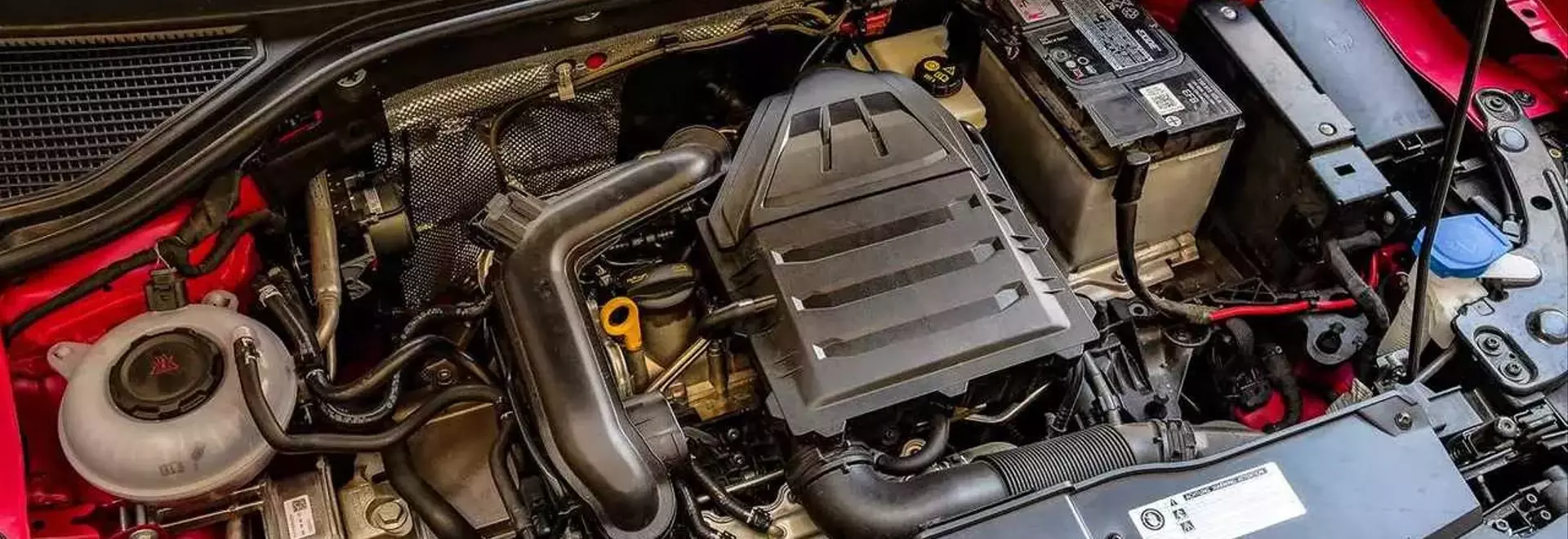
Volkswagen Confirms Future of Three-Cylinder Engines Amidst Regulatory Changes
Volkswagen has affirmed its commitment to the 1.0-liter three-cylinder engine in the European market, a decision influenced by the revised, more lenient Euro 7 emissions standards. This strategic pivot ensures the ongoing availability of this compact powertrain in smaller vehicles within its lineup. Previously, the stricter initial proposals for Euro 7 had prompted a pause in the engine's development. However, with the softened regulatory landscape, Volkswagen is re-evaluating its application, particularly for models like the Polo and T-Cross. This move highlights the company's adaptability in navigating environmental policies while maintaining diverse engine offerings to meet consumer needs.
The automotive group's smaller, yet efficient, three-cylinder units continue to play a crucial role in its product strategy, especially for subcompact vehicles. While these engines have been superseded by larger four-cylinder options in compact car segments such as the Golf and A3, they remain integral to the entry-level offerings in models like the Polo and Fabia. Volkswagen's decision underscores a balance between evolving environmental mandates and market demands for cost-effective and fuel-efficient powertrains. The continued presence of these engines provides consumers with a broader range of choices, ensuring that the brand caters to various preferences and vehicle segments.
Volkswagen's Continued Commitment to Three-Cylinder Engines
Volkswagen has officially declared that its 1.0-liter three-cylinder engine will remain a fixture in its European vehicle lineup, a direct consequence of the European Union's decision to relax the previously stringent Euro 7 emissions standards. This reversal from an earlier intention to discontinue development for the engine, driven by the initial, more demanding regulatory proposals, marks a significant strategic shift. The German automaker's head of product communications, Stefan Voswinkel, clarified that the less restrictive final version of the Euro 7 legislation has made it economically and technically feasible to continue producing and deploying the EA 211 inline-three engine. This ensures that models such as the Polo and T-Cross will retain this efficient and compact powertrain, catering to a segment of the market that values fuel economy and accessibility.
The decision to sustain the 1.0 TSI engine's production is rooted in its proven efficiency and suitability for smaller vehicle platforms. Despite earlier considerations to phase it out, the modified regulatory environment now permits Volkswagen to strategically integrate this engine into its compact and subcompact offerings across Europe. This provides a crucial entry-level option for consumers and maintains the brand's competitive edge in segments where smaller, more economical engines are highly sought after. The engine's resilience in the face of changing emissions standards also reflects Volkswagen's adaptive engineering capabilities and its commitment to offering a diverse powertrain portfolio that meets both environmental requirements and consumer expectations for reliable and practical vehicles.
The Evolving Role of Compact Engines in VW Group's Portfolio
While the 1.0-liter three-cylinder engine is set to continue powering Volkswagen's subcompact range, the broader strategy for compact vehicles within the VW Group has seen a shift towards larger engine alternatives. Previously, this three-cylinder unit was an option for entry-level compact models like the VW Golf, Skoda Octavia, and Audi A3. However, these vehicles now typically feature a 1.5-liter four-cylinder unit, available in 114 hp or 148 hp configurations, offering enhanced performance and refinement. This transition in compact car segments highlights a trend towards more robust powertrains, while the smaller three-cylinder continues to serve its niche effectively in subcompacts such as the Polo, Fabia, and Ibiza, where its benefits of size and fuel efficiency are most pronounced.
The strategic deployment of the three-cylinder engine in subcompacts ensures that Volkswagen can offer a range of power options suitable for different vehicle sizes and market demands. For instance, the Skoda Fabia demonstrates this versatility by offering both a naturally aspirated 1.0-liter engine with 79 hp and turbocharged variants delivering 94 hp or 114 hp. This multi-tiered approach allows Volkswagen to effectively balance performance, fuel economy, and emission compliance across its diverse product portfolio. By maintaining the three-cylinder option for its smallest cars, Volkswagen continues to provide accessible and efficient mobility solutions, while reserving larger engines for models where greater power and sophistication are expected by consumers.
