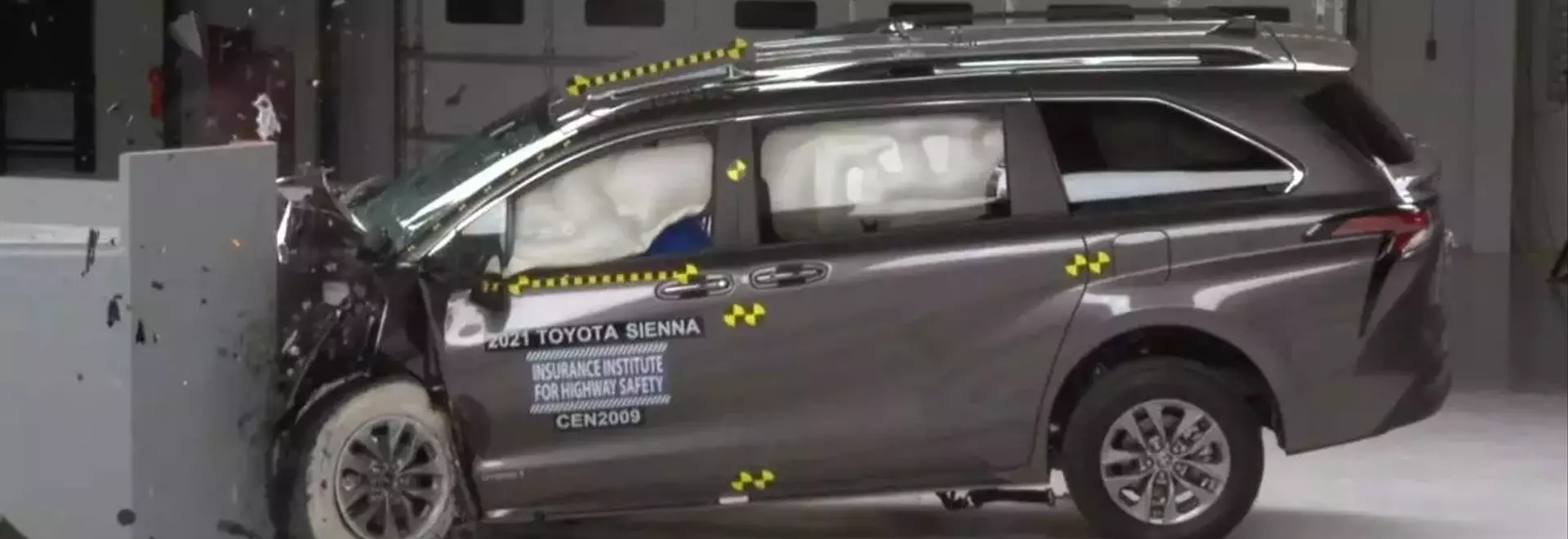
Minivans Fail IIHS Rear-Seat Safety Tests, Raising Concerns for Family Vehicles
The Insurance Institute for Highway Safety (IIHS) recently released new data revealing a significant flaw in a vehicle category often lauded for its family-friendliness: minivans. Despite their widespread appeal for transporting families, not a single minivan model currently on the market was able to achieve the IIHS's coveted "Top Safety Pick" designation, primarily due to deficiencies in rear-seat occupant protection during crash simulations. This unexpected outcome has ignited a conversation within the automotive industry and among consumers regarding the comprehensive safety of these popular vehicles.
Minivan Rear-Seat Safety Falls Short in Latest IIHS Evaluations
In a detailed assessment conducted by the IIHS, a range of prominent minivan models, including the Chrysler Pacifica, Honda Odyssey, Kia Carnival, and Toyota Sienna, underwent rigorous testing under revised, more stringent guidelines for moderate overlap frontal crashes. The results were concerning: none of these minivans secured an "Acceptable" rating for safeguarding rear passengers. The Honda Odyssey received a "Poor" rating, while the Pacifica, Carnival, and Sienna were rated "Marginal." This collective performance prevented any minivan from earning a "Top Safety Pick" award from the Institute.
David Harkey, president of the IIHS, expressed his disappointment, emphasizing that minivans, by their very nature as family transporters, should offer exemplary protection for all occupants. The core issue, according to the IIHS, stems not from structural weaknesses of the vehicles themselves, but rather from problems related to seatbelt design and performance. During crash tests, dummies simulating rear passengers in some models experienced elevated forces on the head, neck, and chest. For instance, the Pacifica failed to provide adequate chest protection and its side airbags did not deploy, while the Sienna presented a risk of "submarining"—where the seatbelt slides upward into the abdomen, increasing injury potential. These findings highlight a critical need for manufacturers to re-evaluate and enhance the restraint systems for rear-seat occupants.
While these minivans largely performed well in small overlap crash tests and side-impact evaluations, particularly the Sienna and Odyssey, the IIHS underscores that true vehicle safety necessitates a comprehensive approach, ensuring protection across all seating positions and crash scenarios. The hope is that these test results will serve as a catalyst for manufacturers to promptly implement necessary design modifications to improve the overall safety package of minivans.
Reflecting on Minivan Safety: A Call for Holistic Protection
The recent findings from the IIHS regarding minivan safety offer a crucial reminder that vehicle safety is an evolving standard, demanding constant adaptation and improvement. For years, minivans have been synonymous with family travel, implying a high degree of safety and reliability. However, this report reveals a significant gap in the protection offered to rear passengers, a segment of the vehicle's occupants often comprising children or vulnerable adults. As a consumer and an advocate for road safety, this information is not only insightful but also prompts a reconsideration of what constitutes a truly safe family vehicle. It underscores that while advancements in frontal impact protection are vital, equal attention must be paid to every aspect of a vehicle's safety architecture. Manufacturers must prioritize holistic safety, ensuring that every passenger, regardless of their seating position, is afforded the highest level of protection. This is not merely about meeting minimum standards; it's about exceeding expectations to guarantee peace of mind for families on the road. The onus is now on the automotive industry to respond decisively, integrating these lessons into future designs and current models, thereby reaffirming their commitment to passenger safety across the board.
