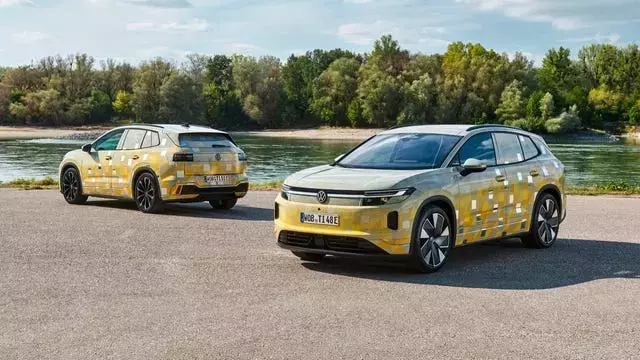
Volkswagen's Electric Future: The ID. Tiguan
Volkswagen is strategically rebranding its forthcoming second-generation ID.4 electric crossover as the ID. Tiguan. This move aims to capitalize on the established popularity and market recognition of the conventional gasoline-powered Tiguan SUV. Unveiled through camouflaged prototypes, the ID. Tiguan showcases an evolutionary design that builds upon the aesthetics of the current ID.4, rather than mirroring its internal combustion engine counterpart. Key visual elements include a highly aerodynamic silhouette, prominent 21-inch wheels designed for enhanced airflow, and a striking full-width LED light bar integrating seamlessly with the headlights. While specific details regarding its electric powertrain are yet to be disclosed, expectations are high for a significant improvement in range compared to the ID.4. The global reveal of the ID. Tiguan is scheduled for October 2026, marking a pivotal moment in Volkswagen's electric vehicle strategy.
The automotive landscape is undergoing a significant transformation, with electric vehicles (EVs) playing an increasingly central role. Volkswagen's decision to rename its next-generation electric crossover from ID.4 to ID. Tiguan is a clear indicator of a strategic pivot to leverage existing brand equity in the burgeoning EV market. By associating the new electric model with the highly successful and familiar Tiguan nameplate, Volkswagen aims to smooth the transition for consumers, making electric mobility more accessible and appealing. This strategic branding is not merely a name change but a calculated effort to integrate its electric future with its celebrated heritage, fostering a sense of continuity and trust among its customer base. The ID. Tiguan represents a crucial step in Volkswagen's ambitious electrification roadmap, signifying a deeper commitment to sustainable transportation while maintaining a connection to its proven legacy of popular and reliable vehicles.
Design Evolution and Aerodynamic Efficiency
The upcoming Volkswagen ID. Tiguan, transitioning from the ID.4, exhibits a design that signifies a clear evolution rather than a complete departure. While leveraging the Tiguan name, its aesthetic largely progresses from the ID.4's styling, creating a distinctly modern electric vehicle identity. Official prototype images, though camouflaged, highlight a sleek and swept-back profile. This design choice is not merely for visual appeal but serves a crucial functional purpose: enhancing aerodynamic efficiency. Reduced drag contributes significantly to improved range and overall performance for electric vehicles, making every contour and line of the ID. Tiguan's exterior a thoughtful consideration for its electric powertrain.
Further reinforcing its commitment to efficiency and a modern appeal, the ID. Tiguan will feature substantial 21-inch wheels, specifically engineered with an aerodynamic design. This attention to detail extends to the lighting, with a distinctive slim LED light bar spanning the entire front fascia, seamlessly integrating with the headlamps to create a cohesive and futuristic look. In contrast to both the existing ID.4 and the gasoline-powered Tiguan, the ID. Tiguan boasts unique rectangular taillight elements, providing a fresh and recognizable rear signature. Despite the lack of specific powertrain details, the focus on design elements that optimize aerodynamics suggests that Volkswagen is prioritizing efficiency and range for this next-generation electric SUV. The blend of familiar branding with forward-thinking design principles positions the ID. Tiguan as a compelling new entrant in the electric SUV market, promising a balance of style, innovation, and practical electric performance.
Performance Outlook and Market Introduction
Volkswagen's decision to rename the ID.4's successor the ID. Tiguan indicates a strategic alignment with its popular gas-powered SUV, aiming to leverage existing brand strength. While specific powertrain configurations remain under wraps, expectations are that the new ID. Tiguan will inherit and potentially enhance the current ID.4's electric motor setups, which offer both single-motor (rear-wheel drive) and dual-motor (all-wheel drive) options. A primary goal for this next-generation electric SUV is to deliver a superior driving range, surpassing that of the ID.4. This anticipated improvement in range is a critical factor for consumer adoption in the competitive electric vehicle market, addressing one of the main concerns for potential EV buyers.
The official global unveiling of the Volkswagen ID. Tiguan is scheduled for October 2026. This timeline allows for further development and refinement, ensuring the vehicle is competitive and meets market expectations upon its release. While details are currently sparse, the focus on enhancing range and potentially offering more robust powertrain options suggests that Volkswagen is committed to making the ID. Tiguan a compelling electric SUV. The strategic rebranding and the promise of improved performance are central to Volkswagen's broader electrification strategy, as the company seeks to expand its electric footprint and reinforce its position in the rapidly evolving automotive industry. The ID. Tiguan is poised to be a significant player, combining a familiar name with cutting-edge electric technology and enhanced capabilities designed to appeal to a wide range of consumers seeking an efficient and capable electric vehicle.