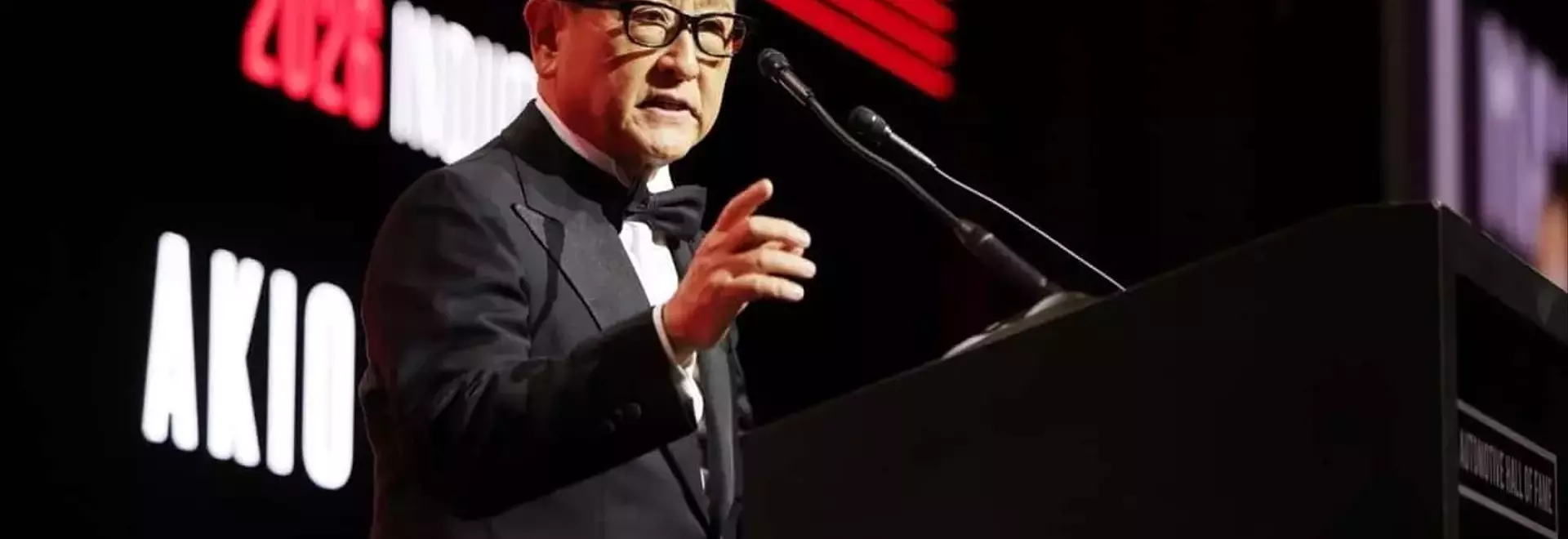
Akio Toyoda's Vision for Automotive Collaboration
Toyota Chairman Akio Toyoda, a recent inductee into the prestigious Automotive Hall of Fame, delivered a powerful message during his acceptance speech, urging industry rivals to prioritize collaboration over confrontation. His address, made before a distinguished gathering of automotive professionals, underscored the imperative for joint efforts in shaping the future of transportation and enhancing global well-being. This significant call for unity from a leading figure in the automotive world marks a pivotal moment, challenging traditional competitive paradigms and advocating for a shared vision.
A Legacy of Leadership and a Call for Unity
Akio Toyoda's induction into the Automotive Hall of Fame on September 23, 2026, in Detroit, recognized his profound impact on the industry. He became the fourth member of his family to receive this esteemed honor, joining his grandfather Kiichiro Toyoda, his father Shoichiro Toyoda, and his grandfather's cousin Eiji Toyoda. This unique family legacy now boasts five Hall of Fame honorees, four of whom belong to the same lineage. The Hall of Fame, established in 1939, has celebrated over 300 pioneers, including industry giants like Henry Ford and Ferdinand Porsche. Toyoda, standing among his family's generational achievements and alongside contemporary inductees such as motorsports engineer Giampaolo Dallara, acknowledged the collective effort that led to his recognition, extending gratitude to his team, partners, and customers. His speech, however, quickly transcended personal accolades, shifting focus to a broader, more impactful message for the entire automotive sector.
The significance of Akio Toyoda's induction extends beyond personal achievement; it symbolizes a generational commitment to automotive excellence within the Toyoda family, making them a rare and distinguished presence in the Automotive Hall of Fame. His family's contributions have profoundly shaped the industry, setting standards for innovation and manufacturing. This heritage provided a powerful backdrop for his speech, where he consciously veered from celebrating past glories to addressing future challenges. He leveraged the weight of his family's legacy and his position as chairman of the world's largest automaker to issue a direct challenge to the industry: embrace cooperation. This was not a moment for self-congratulation, but rather a strategic platform to advocate for a paradigm shift, urging competitors to view shared problems as opportunities for collective solutions.
Redefining Competition Through Cooperation
During his induction ceremony, Akio Toyoda used the platform to champion an unconventional perspective: the automotive industry, despite its inherently competitive nature, would benefit immensely from increased collaboration. He passionately appealed to his peers—automakers, suppliers, and dealers alike—to unite their capabilities and resources. His core argument was that by working together, rather than battling independently, the industry could more effectively innovate, overcome shared obstacles, and ultimately enhance the quality of life for people globally. This statement, delivered to a room full of powerful rivals, served as both an invitation and a direct challenge to rethink traditional competitive strategies, urging a collective approach to the future of mobility.
Toyoda's call for unity highlighted the immense potential for progress when industry leaders set aside rivalries to pursue common goals. He posited that the automotive sector's collective strength could address complex challenges, from technological advancements to environmental sustainability, more efficiently and effectively. This perspective is not merely idealistic; it proposes tangible benefits such as the standardization of components, which could streamline manufacturing processes and accelerate innovation. His speech subtly suggested that by pooling resources for research and development, particularly in emerging areas like electric vehicles and autonomous driving, companies could mitigate individual risks and share the rewards of breakthroughs. Such alliances could also foster the development of open standards, reducing costs and accelerating market adoption, ultimately benefiting consumers and the broader society. His emphasis on cooperation represents a forward-thinking approach, recognizing that the future of mobility demands shared solutions beyond the scope of any single company.
