US Tariffs Cost Automakers Billions, Shaking Global Industry
Cars

US Tariffs Cost Automakers Billions, Shaking Global Industry

authorBy Brock Yates
DateMar 16, 2026
Read Time2 min

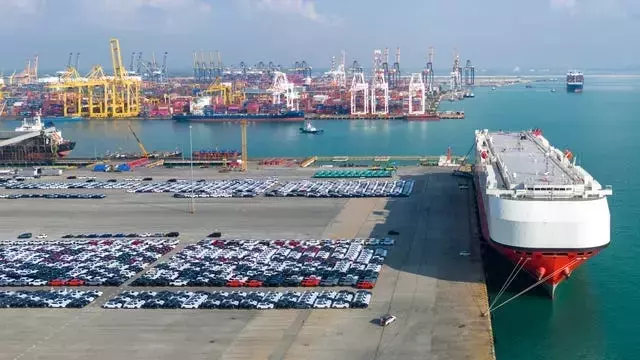
New reports indicate that the levies on imported vehicles, initiated by the previous U.S. presidential administration, have significantly impacted the automotive sector, leading to financial losses exceeding $35 billion since 2025. This considerable expense stems from a detailed examination of manufacturers' financial disclosures, which highlights the widespread repercussions of these trade barriers across the industry.

The financial strain has not been uniformly distributed; companies with extensive international operations and those heavily dependent on foreign-sourced components for their American assembly lines have faced the most severe consequences. For instance, Toyota alone is projected to incur approximately $9.1 billion in tariff-related expenditures by the end of March 2026. Similarly, major American manufacturers like General Motors, Ford, and Stellantis collectively reported costs amounting to $6.5 billion in 2025. Numerous other global automotive brands, including BMW, Honda, Hyundai-Kia, Mazda, Mercedes-Benz, Nissan, Subaru, and Volkswagen, have also disclosed or anticipate tariff costs exceeding $1 billion, underscoring the broad impact of these policies.

Despite the stated goal of these tariffs to incentivize increased manufacturing within the United States, the unpredictable nature of the trade policies has introduced considerable obstacles. Automakers grapple with constant adjustments to duties, making long-term strategic decisions, such as establishing new production facilities in the U.S., a risky endeavor. While some companies, like Audi, are exploring options for more domestic assembly, and others, such as Buick, plan to shift specific model production stateside, the overarching uncertainty hinders firm commitments. Stability in trade regulations is crucial for the industry to effectively plan and navigate its future global production landscape, potentially fostering a more secure environment for investment and growth.

In an increasingly interconnected world, economic policies like tariffs demonstrate how government actions can profoundly influence global industries. The automotive sector's challenges highlight the delicate balance between fostering domestic growth and maintaining a stable international trade environment. Moving forward, clear, consistent, and collaborative approaches to trade policy will be essential to support innovation, economic stability, and job creation, benefiting both individual nations and the global community.

More Articles
Cars
Long-Term Test Concludes: The 2024 BMW i4 xDrive40 Grand Coupe's Enduring Appeal
After a comprehensive 40,000-mile long-term evaluation, the 2024 BMW i4 xDrive40 Gran Coupe solidifies its reputation as a true driver's car, earning consistent praise for its dynamic handling, responsive steering, and comfortable ride. Despite minor criticisms regarding rear-seat space and cold-weather range, the electric sedan proved remarkably reliable, requiring minimal service and delivering an engaging driving experience. Its performance at the test track remained strong, and its ability to blend electric efficiency with BMW's signature driving pleasure left a lasting positive impression on the testing team.
By Larry ChenMar 16, 2026
Cars
Porsche Owners Gain Access to Elite Laguna Seca Race Track
Porsche customers can now experience the thrill of WeatherTech Raceway Laguna Seca as part of the brand's exclusive Track Experience program. This addition marks a significant expansion, making it only the second dedicated US race venue in the program alongside Barber Motorsports Park. The initiative allows owners to push their high-performance vehicles to their limits under professional guidance.
By Michele AcquaragiaMar 16, 2026
Cars
BMW M3 Touring Enters the Race Track After Public Demand
BMW's M3 Touring, initially a playful concept, is now a full-fledged race car set to compete in the 24 Hours of Nürburgring. The vehicle, which shares technical specifications with the M4 GT3 EVO and boasts a powerful 590-horsepower turbocharged inline-six engine, was brought to life after an overwhelming positive response from the public to an April Fool's joke. This unexpected turn highlights the impact of fan engagement on automotive development.
By Brock YatesMar 16, 2026
Cars
Ram Introduces 2026 1500 BackCountry with Enhanced Off-Road Capabilities
Ram expands its 1500 lineup with the new BackCountry package for the Big Horn 4x4 Crew Cab. This upgrade features a suspension lift, 32-inch off-road tires, and essential underbody protection, positioning it as a more rugged option for adventurers. It offers distinct aesthetic and functional enhancements, powered by either a Hurricane inline-six or a Hemi V8 engine.
By Chris HarrisMar 16, 2026
Cars
The President's New Off-Road Cadillac Escalade
The U.S. Secret Service has introduced two specially modified Cadillac Escalades, dubbed the 'Camp Package,' to the presidential motorcade. These new vehicles are designed to handle challenging terrains where 'The Beast,' the primary presidential limousine, cannot operate. The Escalade-inspired SUVs, which debuted at the 56th World Economic Forum, feature heavy-duty modifications, including reinforced windows and eight-lug wheels, indicating their armored nature. While branded as Cadillacs, their older design suggests they may be re-skinned Suburbans, a common practice for such specialized government vehicles.
By Jeremy ClarksonMar 16, 2026