US and Japan Collaborate to Bolster Yen Amidst Historic Decline
Money

US and Japan Collaborate to Bolster Yen Amidst Historic Decline

authorBy Bola Sokunbi
DateAug 02, 2026
Read Time3 min
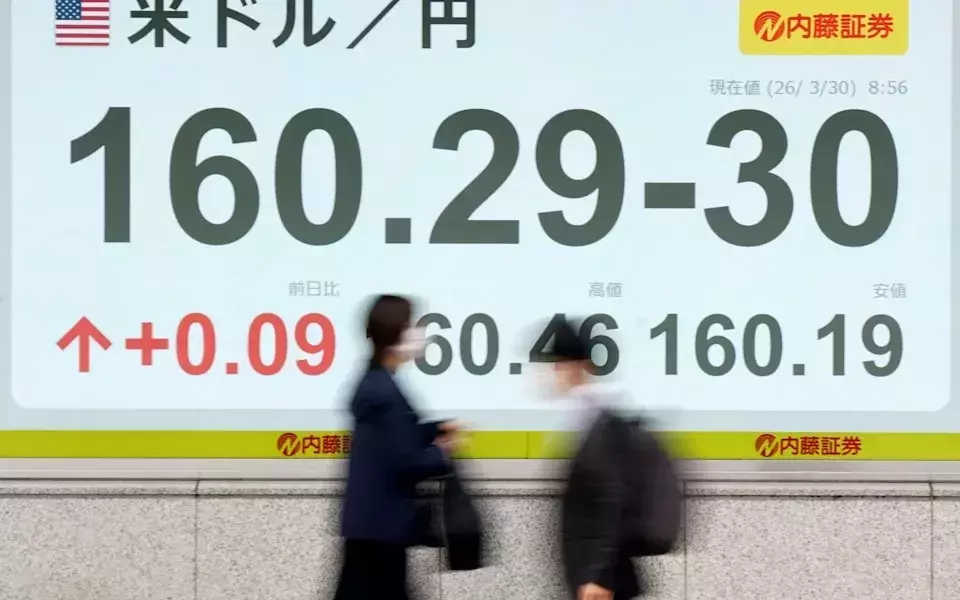
In a significant development for global financial markets, the United States and Japan have joined forces to stabilize the Japanese yen, which recently plunged to a four-decade low against the dollar. This collaborative effort marks a rare instance of direct currency intervention, highlighting the concerns shared by both nations regarding the yen's sustained depreciation and its potential broader economic implications.

A United Front: Restoring Yen Stability Through Collaborative Action

Unprecedented US-Japan Currency Intervention

On Monday, the Japanese government is poised to confirm a joint operation with the US administration, led by Donald Trump, to bolster the value of the yen. This decisive action comes after the Japanese currency plummeted to its lowest point against the US dollar in 40 years, triggering alarms in financial circles.

The Mechanism of Intervention: A Strategic Currency Play

Reports indicate that Washington initiated its support for Japan's currency on Friday by directing the Federal Reserve Bank of New York to execute a strategic maneuver: selling euros and acquiring yen. This carefully orchestrated intervention underscores the commitment of both nations to restore stability to the beleaguered Japanese currency.

Historical Context and Market Impact of the Intervention

This intervention represents a landmark event, being the first of its kind in 15 years, and was prompted by the yen's dramatic fall to a value not seen since 1986. Leading financial institutions, Goldman Sachs and Morgan Stanley, played pivotal roles in executing these currency purchases. The significance of this action was further underscored by US Treasury Secretary Scott Bessent, who was observed with a note outlining a plan to acquire between $5 billion and $10 billion worth of Japanese Yen, signaling a substantial commitment. Furthermore, Bessent lauded Japanese Prime Minister Sanae Takaichi and Bank of Japan Governor Kazuo Ueda for their steadfast dedication to financial stability.

Scale and Anticipated Market Repercussions

The US government's involvement is estimated to have included the acquisition of approximately ¥8.45 trillion (equivalent to £40 billion) in yen. Such a considerable injection of capital is widely anticipated to trigger significant market shifts as trading commences on Monday morning, influencing global currency valuations.

Factors Contributing to the Yen's Vulnerability

Throughout the current year, the yen has experienced a continuous decline, reaching historical lows. This depreciation is largely attributed to the Bank of Japan's policy of maintaining suppressed interest rates, a strategy that has made other currencies more attractive to international investors seeking higher returns on their investments.

Monetary Policy Decisions and Currency Depreciation

The yen's value saw an accelerated slump following the Bank of Japan's decision last week to keep its benchmark interest rate at 1%, coinciding with the US Federal Reserve's maintenance of its borrowing costs at 3.5%. The disparity in interest rates between the two major economies further widened the appeal of the dollar over the yen.

Immediate Effects and Previous Interventions

The news of the US intervention on Friday provided an immediate uplift to the yen, propelling it to a three-month high. Concurrently, the value of the US dollar declined against the Japanese currency, shifting from 164 yen per dollar earlier in the week to 157 yen by week's end. This marks the first direct US intervention in Japan's currency markets since 2011, when similar efforts were made to stabilize the yen in the aftermath of the Tohoku earthquake and tsunami. Historically, the US also intervened in 1998 to bolster the yen when it hit an eight-year low, demonstrating a consistent pattern of support for Japan's economic stability.

Japan's Ongoing Struggle for Currency Strength

Since 2022, Japan has undertaken six similar interventions in an attempt to strengthen its currency. However, despite these repeated efforts, the yen's gradual decline has largely persisted, indicating the complex and persistent challenges facing the Japanese economy and its currency's valuation in the global market.

More Articles
Money
Maximizing Tax-Free Retirement Withdrawals: A Guide for Seniors
Many retired couples overlook a significant tax advantage: the ability to withdraw up to $46,700 from their Traditional IRAs in 2026 without incurring federal income tax. This opportunity stems from a combination of standard deductions and a temporary senior bonus deduction. However, a majority of retirees fail to utilize this full tax-free allowance, often delaying withdrawals until Required Minimum Distributions (RMDs) or only taking out necessary funds, potentially leading to higher tax burdens later. Understanding and actively managing these withdrawals can significantly impact long-term financial health and allow for tax-efficient Roth conversions.
By T. Harv EkerAug 02, 2026
Money
Corning Stock: A 'Buy' for AI Infrastructure Despite Post-Earnings Dip
Corning experienced a significant stock downturn following its latest earnings report, despite strong performance in its Optical Communications segment driven by AI infrastructure demand. This article explores whether the market's reaction was an overcorrection to a slightly missed outlook or a signal of slowing AI momentum, concluding that Corning remains a strong investment for AI infrastructure due to its strategic partnerships and growth plans.
By T. Harv EkerAug 02, 2026
Money
Understanding Retirement Spending: Housing Dominates Senior Budgets
This article delves into the spending habits of American retirees, revealing that housing costs consume a significant portion of their annual budgets. Based on Federal Reserve data, it highlights how retirees allocate their funds and offers strategies to optimize expenses in key areas like housing, transportation, food, and healthcare to ensure financial stability in their golden years.
By JL CollinsAug 02, 2026
Money
Warren Buffett's Enduring Investment Strategy: The Power of Index Funds
Warren Buffett, a titan in the investment world, has consistently advocated for a simple yet highly effective investment approach: low-cost S&P 500 index funds. Despite his unparalleled success through intricate stock picking, Buffett advises most investors, including his own family, to opt for broad market exposure and minimal fees. This strategy, exemplified by the Vanguard S&P 500 ETF (VOO), prioritizes long-term growth and passive investing over active management, a philosophy he has proven through both personal investments and public challenges.
By T. Harv EkerAug 02, 2026
Money
Cathie Wood's Strategic Divestment from Snowflake Amid Tech Stock Rally
Cathie Wood, the prominent investor behind Ark Investment Management, has recently reduced her stake in Snowflake, a cloud software company, by selling approximately $5.5 million worth of shares. This move comes after Snowflake's stock experienced a significant surge of nearly 10% in the past five trading days. Wood's investment philosophy often involves capitalizing on gains from her high-growth tech investments, despite the fluctuating performance of her flagship Ark Innovation ETF, which has seen both remarkable highs and notable lows. Her strategy is rooted in a strong belief in the transformative, deflationary power of technological innovation, particularly in areas like artificial intelligence, which she argues is misunderstood by many market observers.
By Natalie PaceAug 02, 2026