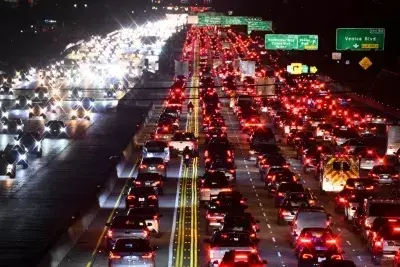
Urban Gridlock Reaches Unprecedented Levels, Extending Beyond Peak Hours
A new analysis reveals that traffic congestion in urban areas across the U.S. has reached unprecedented levels, extending well beyond the typical morning and evening peak periods. This widespread gridlock, which has surpassed pre-pandemic figures, is imposing significant delays on motorists and impacting daily routines, as noted by research institutions tracking urban mobility trends. The shift indicates a more pervasive problem than previously observed, affecting transportation infrastructure and daily life in cities nationwide.
For many residents, like Taelyr Vecchione in San Diego, the experience of navigating urban roadways has become increasingly frustrating. Vecchione's sentiments, shared on social media, reflect a common perception that traffic is no longer confined to specific times but is now a constant presence. This anecdotal evidence is supported by comprehensive data from the Texas A&M Transportation Institute's annual Urban Mobility Report, which has consistently monitored congestion since the 1980s. The report confirms that locations like San Diego have indeed seen a substantial increase in travel delays.
David Schrank, a lead research scientist at the Texas A&M Transportation Institute, points out that while congestion has returned to—and often exceeded—pre-pandemic levels, its character has changed significantly. The average American now spends approximately 63 hours annually caught in traffic, a figure that highlights the severity of the issue. A key difference from previous decades is that congestion is no longer primarily a commuter problem during rush hour. Instead, delays are now distributed more broadly throughout the day and week, affecting a wider segment of the population. This means that weekends and off-peak hours are also experiencing heightened levels of traffic, contributing to a sense of perpetual gridlock.
The research also highlights changes in weekly traffic patterns. Mondays typically see lighter traffic compared to other weekdays, while Thursdays are increasingly rivaling Fridays as the busiest days for travel. This variability underscores the complex and evolving nature of urban mobility. Furthermore, the report indicates a resurgence in truck-related delays during rush hour, approaching pre-pandemic volumes, which adds another layer of complexity to managing traffic flow. These trends suggest that while the economic recovery plays a role, changes in work schedules and other societal shifts are also contributing to the altered landscape of urban congestion.
Geographically, San Diego has experienced the most substantial proportional increase in commuter delays since 2019, with a jump exceeding 37%. Other major urban centers such as Miami, Phoenix, and the San Francisco Bay Area have also recorded significant upticks. However, Greater Los Angeles continues to lead the nation in total commuter hours lost to traffic, with an staggering 137 hours per person annually in 2024. Michael Manville, an urban planning professor at UCLA, notes that these patterns align with broader economic health, where robust economies often correlate with increased traffic.
Interestingly, not all regions have seen increased congestion. Washington, D.C., for example, has experienced a reduction in traffic compared to pre-pandemic times. This decline is potentially linked to the sustained prevalence of remote work within the federal government, as well as the implementation of regional strategies aimed at mitigating congestion, such as dynamic toll pricing. Robert Puentes, a transportation expert at the Brookings Institution, suggests that such tolling systems, where prices vary based on traffic levels, can be effective in reducing gridlock and could be adopted by more metropolitan areas. New York City's recent implementation of congestion pricing in Lower Manhattan, which charges drivers a fee to enter the area, has already shown initial success in reducing traffic within the toll zone, although its long-term impact on regional commuting patterns is still under evaluation.
The persistent rise in urban traffic congestion, marked by its expansion beyond traditional peak times and across more days of the week, reflects a complex interplay of economic activity, evolving work dynamics, and urban planning challenges. While some cities are experimenting with innovative solutions like dynamic pricing and congestion charges, the overall trend points to a growing need for comprehensive strategies to manage and alleviate the increasing burden on urban transportation systems, ensuring smoother and more efficient movement for all.
