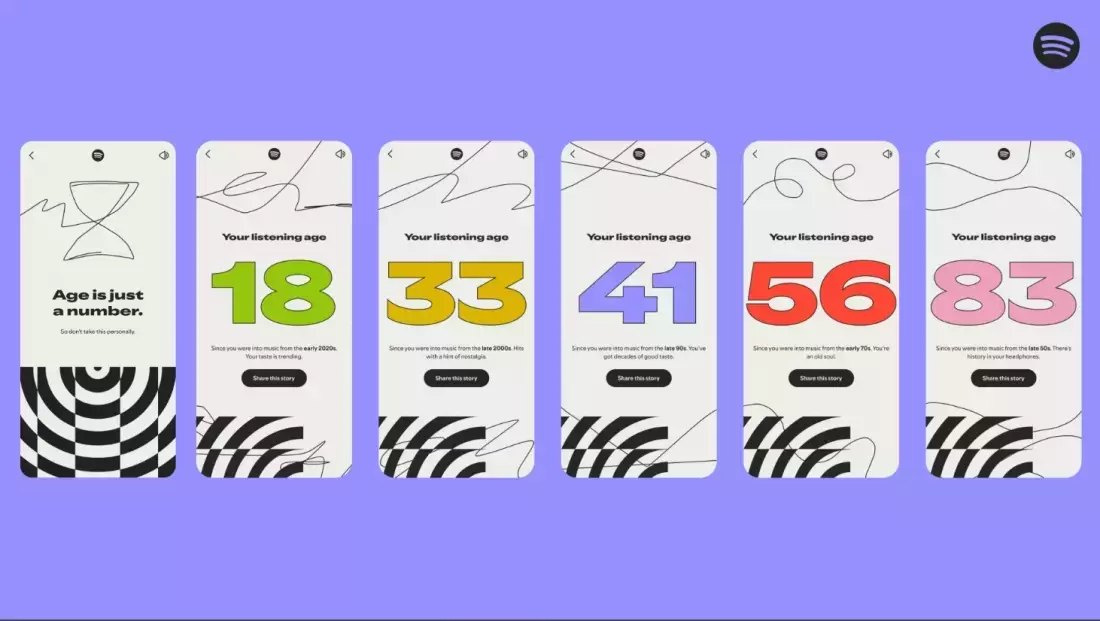
Spotify Wrapped's "Listening Age" Feature Sparks Online Buzz
Unveiling Your Sonic Footprint: The "Listening Age" Phenomenon
The Revelation of Your Auditory Vintage
Beyond simply tallying favorite artists and genres, the latest Spotify Wrapped experience delves deeper, assigning users a "listening age." This metric, which some find amusingly precise and others bafflingly off-target, quantifies how antiquated or contemporary one's musical preferences appear. The annual data-driven summary, known for its personalized insights and playful presentation, has once again captured public attention, with this new age-based analysis becoming a particularly hot topic.
Celebrity Reactions and Public Engagement
The introduction of the "listening age" has generated a flurry of online activity. High-profile figures, including renowned artists like Charli XCX and Grimes, along with political figures such as Canadian Prime Minister Mark Carney, have publicly shared their surprising results. These revelations, often spanning decades from their actual ages, have fueled social media with humorous memes and discussions about generational gaps in musical appreciation. The widespread sharing of these results highlights the human desire for self-expression through cultural consumption.
The Psychological Basis of Musical Preference
Spotify's methodology for determining listening age is rooted in the "reminiscence bump" theory. This psychological principle suggests that individuals often develop their most enduring musical connections during their adolescence and early adulthood, typically between the ages of 16 and 21. Research supports this idea, indicating that musical memories from these formative years tend to be particularly strong and impactful, shaping an individual's long-term listening habits.
Deciphering Spotify's Algorithm
According to Spotify, the listening age is derived from analyzing a user's entire listening history to pinpoint a five-year musical span that stands out significantly compared to their peers. For instance, if a listener, regardless of their chronological age, disproportionately engages with music from the late 1970s, Spotify might playfully assign them a "listening age" reflective of someone whose formative years coincided with that era. This approach aims to identify and categorize the core period influencing an individual's musical identity.
Identity, Connection, and Marketing Prowess
Experts suggest that this feature serves as more than just a playful data point; it's a powerful tool for identity projection and social interaction. By offering a novel way to understand and share one's musical tastes, Spotify encourages users to engage in a collective cultural conversation. This viral sharing acts as organic marketing, transforming personal insights into widespread publicity. The platform cleverly harnesses human psychology, recognizing that engaging and sometimes surprising data fosters discussion and strengthens community bonds.
The Dual Nature of Algorithmic Engagement
While the "listening age" sparks amusement and facilitates connection, it also raises questions about corporate marketing strategies. Some observers suggest that these engaging features are a deliberate ploy by Spotify to generate free publicity and encourage platform usage. However, as noted by marketing experts, this dynamic is often a win-win: Spotify benefits from increased engagement, while users gain a new avenue for self-discovery and social interaction. This clever integration of data, psychology, and social dynamics underscores the evolving landscape of digital marketing and personal branding.
