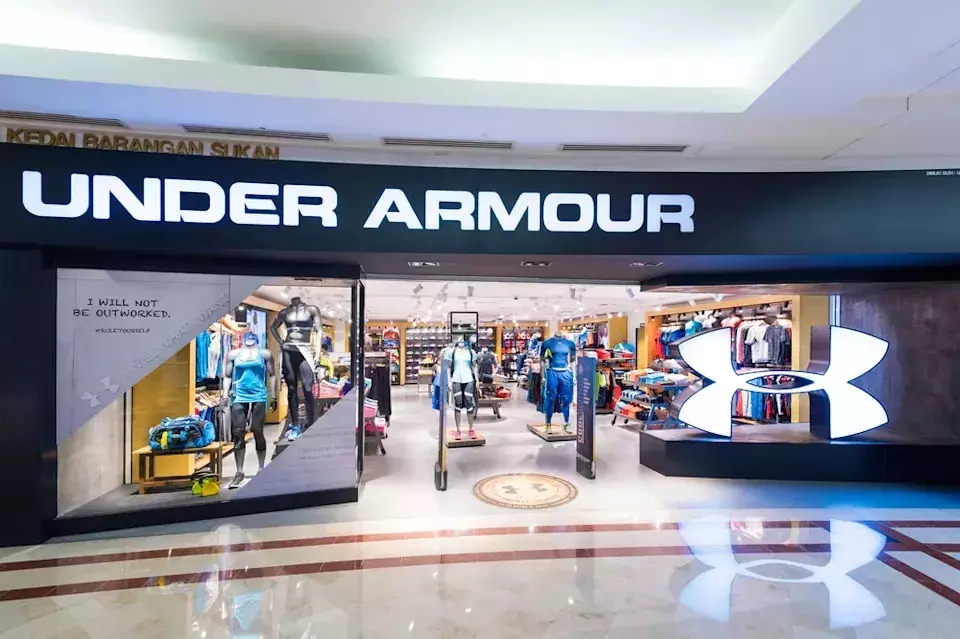
Under Armour's Strategic Redirection Faces Headwinds Amidst North American Market Downturn
Money

Under Armour's Strategic Redirection Faces Headwinds Amidst North American Market Downturn

authorBy Ramit Sethi
DateAug 16, 2026
Read Time3 min
Under Armour, a prominent athletic apparel and footwear company, is currently navigating a challenging period marked by a significant recalibration of its financial outlook. This report delves into the factors contributing to the company's struggles, particularly in its crucial North American market, and examines the strategic initiatives being implemented to reverse the trend. It also explores the market's reaction and investor sentiment surrounding these developments.

Navigating Turbulent Waters: Under Armour's Battle for Market Resurgence

Revised Fiscal Projections and Market Impact

Under Armour, Inc. (NYSE: UAA) has recently issued a revised forecast, indicating a more substantial annual revenue decrease than initially anticipated. This adjustment, announced on August 7, led to an immediate decline in the company's stock value, reflecting investor concern regarding the prolonged recovery timeline. The core of this downward revision stems from a significant contraction in the North American segment, the company's largest revenue contributor.

Challenges in the North American Market

During the fiscal quarter concluding on June 30, Under Armour witnessed a 9% dip in North American revenue, totaling $609.8 million. Chief Financial Officer Reza Taleghani communicated that adverse consumer spending patterns, notably in North America and parts of Asia Pacific, are expected to persist into the second fiscal quarter. This challenging macro-economic landscape, characterized by inflationary pressures and a cautious consumer, has broadly affected the sportswear industry, intensifying competition from agile, innovation-driven brands like On and Hoka.

Strategic Overhaul and Investment in Premium Offerings

Upon his return in 2024, CEO Kevin Plank initiated a strategic pivot centered on product simplification and quality enhancement. The company has streamlined its product portfolio by approximately 25%, prioritizing higher-end items across categories such as training, running, and team sports. This approach aims to deliver superior product choices rather than a wide array, introducing new designs like the "Surge 5" and "Radiant TR" training shoes to attract younger consumers.

Restructuring Costs and Future Outlook

The strategic reorientation has involved considerable investment, with Under Armour allocating $266 million towards restructuring and transformation initiatives. The complete implementation of this turnaround plan is scheduled by year-end, potentially leading to a more streamlined cost structure and improved profitability in the subsequent fiscal year. The belief is that a focused product line and stringent cost management will enhance gross margins and facilitate full-price sales as market demand stabilizes.

Investor Skepticism and Short Interest

Despite management's optimistic outlook on product consolidation and inventory optimization, institutional investors remain wary. Hedge fund ownership declined from 46 in the fourth quarter of the previous year to 40 in the first quarter of the current year. Furthermore, a substantial short interest of 23.98% of the total float underscores significant institutional doubt. This skepticism largely revolves around the timing of a North American demand rebound and the company's ability to maintain pricing power without resorting to margin-eroding promotions.

More Articles
Money
Roth Conversion Considerations for a Retired CPA with a $1.2 Million 401(k)
A 63-year-old retired CPA questions the necessity of Roth conversions for their $1.2 million 401(k), believing their future marginal tax rate will remain similar. The individual is currently living off savings and plans to start Social Security and a pension at 65. The article advises consulting a financial expert to evaluate the benefits of Roth conversions, considering potential impacts on Social Security taxation and Medicare premiums, especially within the two-year window before full benefits commence.
By Natalie PaceAug 16, 2026
Money
AppLovin's Growth Engine Under Scrutiny Despite Strong Revenue
AppLovin announced robust Q2 2026 results with a 53% revenue increase to $1.92 billion and adjusted EBITDA up 58% to $1.61 billion. Despite clearing an SEC inquiry, the stock fell significantly. This article delves into market concerns regarding the sustainability of AppLovin's growth, particularly focusing on its AI advertising engine, AXON, and whether its performance relies more on engineer-led model upgrades than on true self-learning and compounding growth.
By Dave RamseyAug 16, 2026
Money
Crucial Social Security Rule Change Imminent: Are You Prepared?
A significant alteration to Social Security's Full Retirement Age (FRA) is set to take effect in November, impacting individuals born in 1960 or later. This change, culminating a decades-long adjustment, raises the FRA to 67. Understanding this shift and its implications is vital for retirement planning, as miscalculating your FRA could lead to reduced benefits for life. Proactive measures, including verifying your FRA and exploring alternative income streams like HELOCs or CDs, are recommended to navigate these changes effectively.
By Mr. Money MustacheAug 16, 2026
Money
US Automakers' Diminishing Presence in Chinese Market
General Motors and Ford are significantly reducing their operations in China, reflecting a broader trend of American car manufacturers losing ground in the world's largest auto market. GM is discontinuing Chevrolet sales after a dramatic decline in demand, while Ford is relocating Lincoln Nautilus production from China to the US due to tariff challenges. This strategic shift underscores the increasing difficulties faced by American companies in China's evolving automotive landscape, marked by fierce competition from local brands and a softening domestic market.
By Natalie PaceAug 16, 2026
Money
AI Boom Boosts Chipmakers: Super Micro's Surge Lifts AMD, Intel, and NVIDIA
Leading chip manufacturers AMD, Intel, and NVIDIA experienced a significant rally following Super Micro Computer Inc.'s impressive earnings report. Super Micro's robust order book, showing over $60 billion in new AI infrastructure orders, reaffirmed strong demand in the AI sector, positively impacting these companies despite differing roles in the supply chain. This surge highlights the sustained investment in AI technology and its far-reaching benefits across the semiconductor industry.
By Scott PapeAug 16, 2026