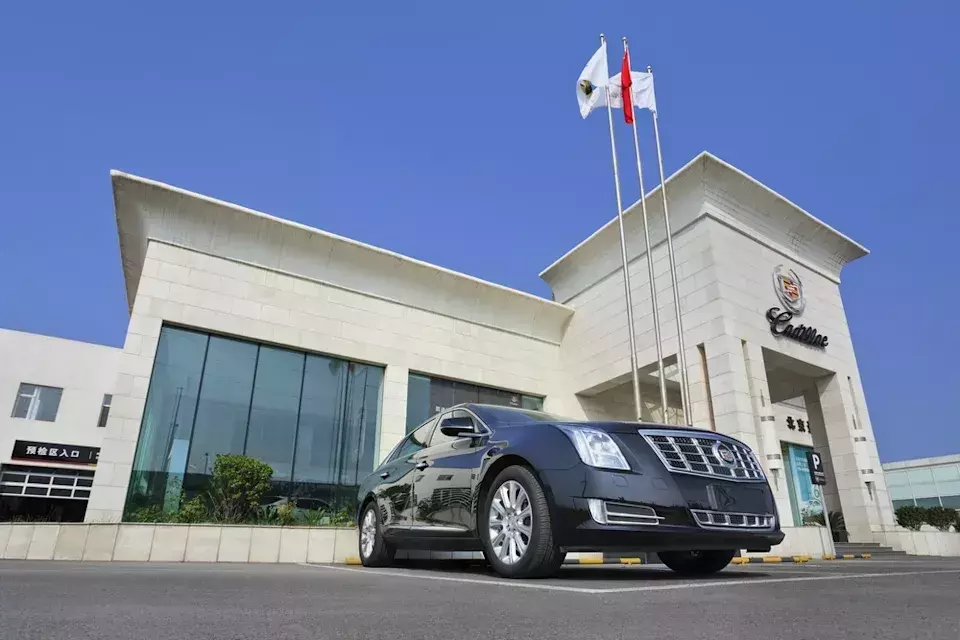
US Automakers' Diminishing Presence in Chinese Market
General Motors and Ford are actively scaling back their involvement in the Chinese automotive sector, signaling a pivotal shift for American car manufacturers within the world's largest vehicle market. General Motors is ceasing Chevrolet's retail presence in China, following a substantial drop in sales over the past decade. Simultaneously, Ford is redirecting the production of its Lincoln Nautilus luxury SUV from China back to the United States, primarily influenced by high import tariffs. These strategic adjustments highlight a growing challenge for American auto companies navigating China's increasingly competitive landscape, where domestic brands are gaining dominance and market conditions are becoming less favorable.
This reevaluation of strategy is driven by a combination of factors, including the surging success of local Chinese automakers and a cooling domestic market. The decision to retreat, while distinct for each company, reflects a shared conclusion that operating models previously viable in China are no longer sustainable. Both GM and Ford aim to enhance profitability and focus on their core strengths and domestic markets, even as they maintain a presence in China through other brands or joint ventures that cater to specific market segments or new energy vehicle initiatives.
The Retreat of Chevrolet and Lincoln from China
General Motors is significantly curtailing its operations in China by phasing out the Chevrolet brand, a move that underscores the challenging environment American automakers face in the country. For over two decades, Chevrolet held a presence in the Chinese market, reaching a peak in 2014 with sales exceeding 767,000 units. However, by last year, sales had plummeted to fewer than 9,000 vehicles, representing a drastic 98.8% decline. This sharp reduction in demand compelled GM to refocus its efforts on its more successful Chinese brands, Buick and Cadillac, with a particular emphasis on Buick's Electra electric vehicle series, which has shown promise in the electric vehicle segment.
Similarly, Ford is also undertaking a strategic withdrawal by ceasing the production of its Lincoln luxury brand vehicles in China for the U.S. market, effective 2030. This decision primarily impacts the Lincoln Nautilus, a top-selling model that has been manufactured in Hangzhou through a joint venture since 2024. The impetus behind this move is largely attributed to the considerable 52.5% tariff imposed on China-made vehicles imported into the U.S. CEO Jim Farley emphasized this as a strategic and identity-driven decision, reinforcing Lincoln's American roots and Ford's commitment to its domestic manufacturing base. Despite a relatively modest 5.7% decline in U.S. sales for the Nautilus compared to a larger 12.6% drop for the overall Lincoln brand, the high tariff burden made continued production in China economically unfeasible. Both GM's exit of Chevrolet and Ford's reshoring of Lincoln manufacturing exemplify the increasing complexities and economic pressures American automakers are encountering in the Chinese market, driven by intense local competition and evolving trade policies.
Shifting Automotive Landscape and Future Strategies
The diminishing market share of foreign automakers in China, which has fallen from 53% to approximately 33% in just two years, highlights a profound shift in the global automotive industry. This decline coincides with the impressive ascent of local Chinese manufacturers like BYD and Geely, which have capitalized on evolving consumer preferences and government support for domestic brands. The Chinese auto market has also experienced nine consecutive months of declining sales domestically, creating a dual challenge for international players. As the domestic market softens, Chinese companies are simultaneously expanding their reach into global markets, particularly in Europe and South America, further intensifying competition for American automakers both within China and on the international stage.
Despite these significant pullbacks, neither General Motors nor Ford is making a complete exit from China. GM, for instance, recently extended its SAIC joint venture until 2047, indicating a long-term commitment to its Buick and Cadillac brands in the region. The company plans to introduce at least 30 new energy vehicles locally by 2030, even as it ceases Chevrolet retail operations and shifts Envision production. This selective approach suggests that American automakers are recalibrating their strategies to focus on niche markets and emerging segments like electric vehicles, where they believe they can still compete effectively. For investors, these strategic adjustments are viewed as potentially positive for long-term profitability, as streamlining operations and reducing tariff exposures can enhance free cash flow. By concentrating on high-margin domestic segments such as light trucks, hybrid systems, and premium electric vehicles, GM and Ford aim to safeguard their financial health against the backdrop of a rapidly changing global automotive landscape.
