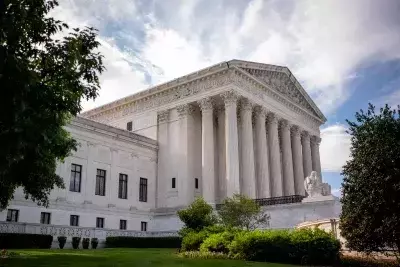
Supreme Court Rejects Trump's Tariff Policies
The United States Supreme Court recently delivered a significant verdict, striking down the tariff policies enacted by former President Trump. This ruling, which found the policies unconstitutional under the International Emergency Economic Powers Act (IEEPA), marks a considerable challenge to the presidential power to impose trade restrictions. The court's decision underscores a re-evaluation of the executive branch's authority in economic matters, setting a precedent for future trade policies.
Judicial Review of Presidential Trade Powers
The Supreme Court's 6-3 decision on the former President's tariff implementation marks a pivotal moment in the balance of power between the executive and judicial branches regarding international trade. This ruling specifically addresses the limits of presidential authority under the International Emergency Economic Powers Act (IEEPA). For an extended period, the judiciary had largely acceded to the executive's assertions of broad powers in areas deemed critical for national security or economic stability. However, this particular case, unlike previous emergency docket rulings, underwent thorough review, including full briefing and expedited arguments, signaling a deliberate and comprehensive examination by the justices.
The core of the dispute revolved around the President's expansive use of tariffs on a wide range of imported goods, a move initially made to fulfill campaign promises. These tariffs varied significantly, impacting goods from numerous countries, including allies and economic rivals. The fluctuating and often high rates introduced considerable uncertainty for American businesses, prompting legal challenges that argued the President had overstepped his constitutional bounds. This Supreme Court decision clarifies the boundaries of presidential power under IEEPA, asserting that such unilateral trade actions are subject to judicial oversight and must adhere to constitutional principles, thereby curbing potential abuses of executive authority in economic policy-making.
Impact on Future Trade Policy and Executive Authority
The Supreme Court's ruling against the former President's tariffs has profound implications for the future landscape of U.S. trade policy and the scope of executive authority. By declaring these policies unconstitutional under the International Emergency Economic Powers Act, the Court has drawn a clearer line regarding the President's ability to unilaterally impose economic sanctions or trade barriers. This decision serves as a check on the executive branch, suggesting that while presidents possess significant powers, these powers are not without limits and are ultimately subject to judicial review and constitutional scrutiny.
This landmark judgment signals a shift from previous instances where the Supreme Court had largely allowed presidential claims of authority to stand, often through emergency dockets that granted temporary effect to policies while litigation proceeded. In contrast, the tariff cases were subjected to rigorous scrutiny, culminating in a definitive rejection of the executive's overreach. This outcome is expected to influence how future administrations approach trade disputes and economic measures, necessitating a more collaborative approach with Congress and a greater adherence to established legal frameworks. It reinforces the judiciary's role as a critical arbiter of governmental powers, especially in complex areas like international trade and economic policy, where the balance between national interest and constitutional limits is constantly tested.
