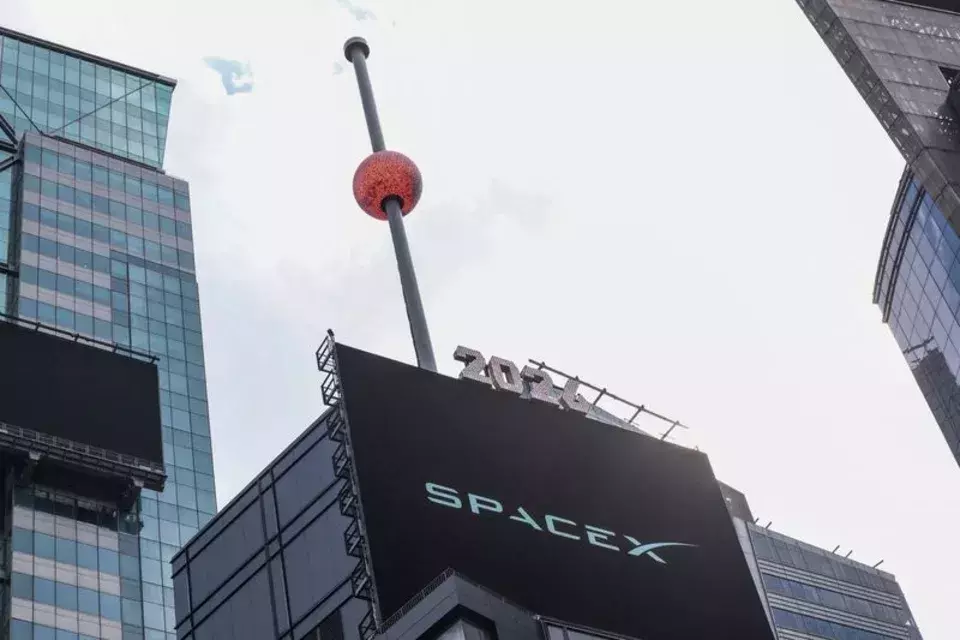
SpaceX's Post-IPO Performance: A Reality Check
SpaceX's stock has recently experienced a notable downturn, trading below its initial public offering price for the first time since its market debut. This development follows a period of intense enthusiasm that saw the company's valuation soar, briefly making its CEO, Elon Musk, the world's first trillionaire. The current dip has put early investors who bought in at the IPO price in a position of holding paper losses, potentially impacting confidence in the stock's future trajectory. This serves as a potent reminder of the volatile nature of the stock market, where even high-profile companies can face rapid shifts in investor sentiment.
The company's shares decreased by 1.9%, settling at $133.5, which is below the initial offering price of $135 per share. This figure is a considerable drop from its peak of $225.64, a valuation that had temporarily placed SpaceX's market capitalization above tech giants like Microsoft and Amazon. Such fluctuations are not uncommon, especially when the broader market experiences stress, influenced by factors such as the U.S. Federal Reserve's interest rate policies and concerns about the sustainability of rallies driven by artificial intelligence advancements.
Despite its initial explosive growth, critics have often argued that SpaceX's valuation might be overextended, particularly given its substantial $4.9 billion loss last year and the untested nature of many of its ambitious endeavors. Industry analysts, including Steve Sosnick, chief market analyst at Interactive Brokers, noted that while a slight drop below the IPO price isn't catastrophic, the company's high profile means its performance significantly impacts investor psychology. He suggested that some traders, eager to capitalize on early momentum, may have chased the stock, a strategy that often proves risky.
The inclusion of SpaceX's stock in prominent indexes, such as the tech-focused Nasdaq 100, did not manage to sustain buying interest; the stock has since declined by nearly 13% post-inclusion. The financial community is now keenly awaiting the company's first post-listing results, which are anticipated to be released via its official website and its social media account on X. Following this report, the initial lock-up period for eligible employees and early shareholders is set to expire, potentially allowing them to sell parts of their holdings, which could further influence the stock's performance.
Beyond financial metrics, investors are also closely monitoring the progress of SpaceX's 13th Starship test flight. The successful advancement of this rocket technology is seen as crucial for significantly reducing launch costs and realizing many of the company's long-term, ambitious projects, including the deployment of orbital data centers and future lunar missions. The current market performance underscores the challenges of valuing a company with revolutionary goals that are still in their developmental stages, emphasizing the importance of long-term vision versus short-term market reactions.
The recent market performance of SpaceX highlights the intricate balance between market excitement and underlying financial realities. The decline below its IPO price, while a setback, also presents a reevaluation point for investors, focusing attention on the company's fundamental strategies and its long-term potential rather than solely on initial speculative fervor.
