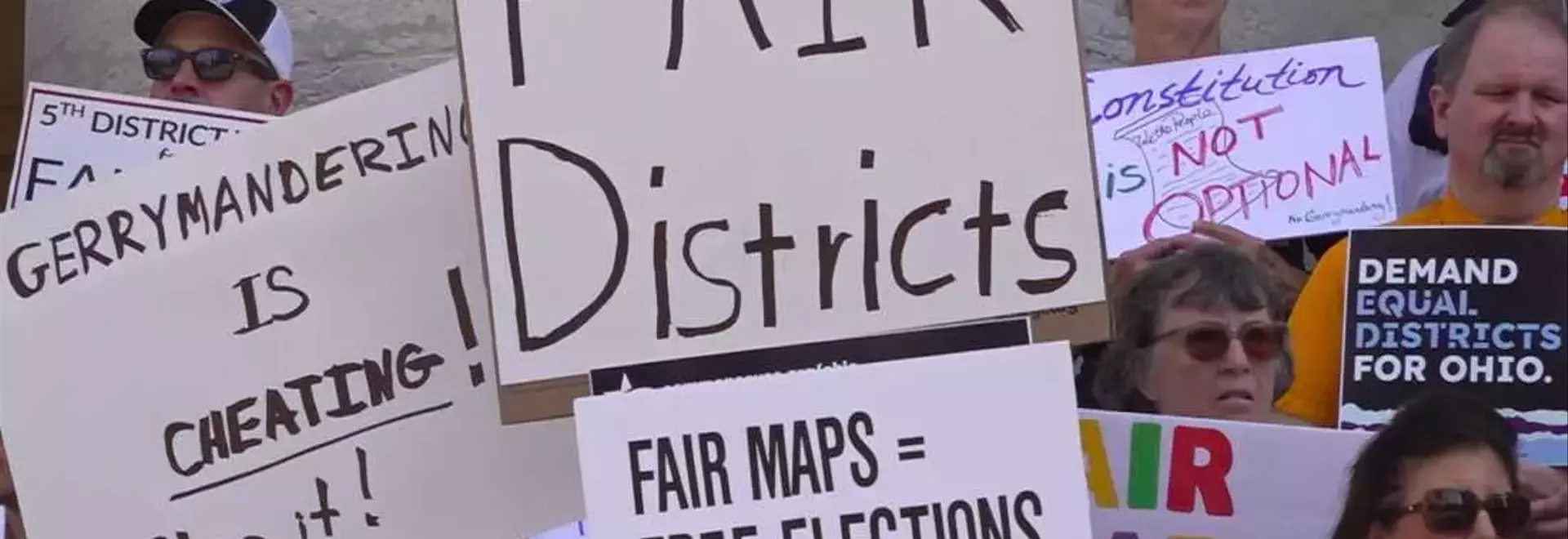
Redistricting Uncertainty: Midterm Elections Hang on Supreme Court's Voting Rights Decision
Electoral Maps in Limbo: States Await Supreme Court Verdict on Redistricting
The Critical Juncture: Redistricting Deadlines and Supreme Court's Impending Decision
The stage is set for the 2026 midterm elections, yet numerous states find themselves in a holding pattern, as they navigate crucial redistricting deadlines. The core of this uncertainty lies with the U.S. Supreme Court, which is poised to deliver a game-changing ruling that could dramatically reshape the electoral landscape.
Potential Impact: Weakening of Voting Rights Act's Anti-Discrimination Protections
During a rare rehearing of a redistricting case originating from Louisiana, the conservative majority of the Supreme Court seemed inclined to scale back the safeguards provided by Section 2 of the Voting Rights Act. This section is specifically designed to counteract racial discrimination in the process of drawing political maps. Such an outcome could diminish the legal avenues available to challenge gerrymandering practices that dilute the voting power of minority communities.
Repercussions Across States: A New Wave of Electoral Map Revisions
Should the Supreme Court decide to weaken these protections, the nation could witness a new surge in congressional redistricting efforts, particularly in the southern states. In these regions, where voting patterns often show racial polarization, Section 2 has historically played a vital role in preserving the collective influence of Black minority voters. Without these existing safeguards, Republican-controlled states in the South might dismantle districts that currently offer Black voters a genuine chance to elect their preferred representatives, who are frequently Democrats.
Political Implications: A Boost for the Republican Party's House Control Ambitions
Such extensive alterations to electoral maps could significantly bolster the Republican Party's strategy to retain its majority in the House of Representatives. By redrawing district lines to their advantage, especially in areas previously protected by Section 2, Republicans could secure a structural advantage in future elections.
Timing is Everything: The Urgency of the Supreme Court's Ruling for State Election Calendars
The exact timing of the Supreme Court's decision is paramount. States must finalize their redrawn maps before the candidate filing deadlines for primary elections. A swift decision from the Court would provide state legislatures with more time to convene, deliberate, and redraw their districts in response to the new legal parameters. However, delays could force states to adjust their electoral timelines.
Strategic Maneuvers: States Adapting Election Schedules in Anticipation
In anticipation of the Supreme Court's ruling, some states are already taking proactive measures. Louisiana's Republican-led legislature, for instance, has postponed its election calendar, shifting the deadline for candidate declarations and the primary election dates. This adjustment is seen as a move to accommodate a potentially earlier-than-usual Supreme Court decision. Similarly, in Alabama, a proposed legislative change seeks to allow for a special primary election if redistricting changes occur too late for the standard election schedule.
Uncertainty in Defining Protected Districts: The Challenge of Section 2 Implementation
Determining which districts would be most affected by a weakening of Section 2 is complex. Experts note that there isn't a clear, predefined list of districts explicitly protected by this provision. States often do not provide detailed justifications for their district boundaries, making it difficult to assess the exact impact on each district without a meticulous case-by-case analysis. This ambiguity could lead some states to claim districts were drawn under Section 2 mandates even when not legally required, potentially as a pretext to alter heavily minority districts.
The Double-Edged Sword of Redistricting: Unexpected Outcomes for Both Parties
Interestingly, eliminating Section 2 districts might not always benefit the Republican Party. In some areas, consolidating minority voters into a single, heavily Democratic district can make neighboring Republican districts more competitive. Republicans might prefer to maintain these concentrated Democratic districts, as they effectively "sop up" a large number of high-turnout minority voters, thereby making adjacent districts easier for Republican candidates to win.
The Blue State Response: Potential Retaliation in a Post-Section 2 World
A significant weakening of Section 2 could also provoke a reaction from Democratic-controlled states. If these "blue states" observe Republicans engaging in aggressive gerrymandering, leading to a substantial shift in the balance of power in the House, there would likely be immense pressure for them to respond in kind. This could involve making adjustments to districts currently held by minority-preferred candidates in blue states, potentially leading to a nationwide partisan redistricting battle to offset perceived disadvantage
