Polestar Faces US Sales Ban Amidst Crackdown on Chinese EVs
Navigating the Storm: Polestar's Future in a Changing U.S. Market
U.S. Administration's Mandate: Polestar's Exit from the Market
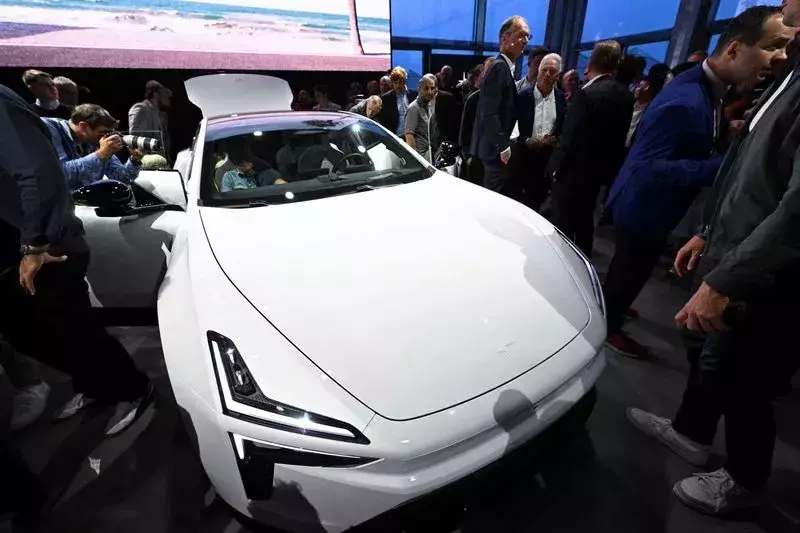
Polestar, the electric vehicle producer, revealed on Thursday that the Trump administration's directive will force it to discontinue vehicle sales in the United States beginning with the 2027 model year. This decision is part of a broader U.S. effort to restrict vehicles associated with China.
Immediate Market Reaction: Polestar's Stock Decline
Following this announcement, Polestar's shares experienced a 5.7% drop in early trading, reflecting investor concern over the company's future prospects in the critical U.S. market.
The 'Connected Vehicles Rule': A Barrier to Entry
The U.S. Department of Commerce declined to grant Polestar the necessary authorization to sell cars under the 'Connected Vehicles Rule.' This regulation, which came into effect for the 2027 model year, prohibits the import and sale of vehicles equipped with connected technology linked to China.
National Security Implications: Data Collection Concerns
The rule specifically targets technologies such as Bluetooth, Wi-Fi, cellular, and certain satellite communications in vehicles, citing national security concerns related to the potential for sensitive data collection from American vehicle owners.
Policy Continuity: From Biden to Trump
Initially adopted in January 2025 under President Joe Biden, the 'Connected Vehicles Rule' has been maintained by the Trump administration, signaling a bipartisan consensus on this security measure.
Broader U.S. Strategy: Strengthening Domestic Auto Industry
This action by the U.S. government represents a significant step in its ongoing campaign to ban Chinese-manufactured cars and bolster the domestic automotive manufacturing sector. Lawmakers are also considering further legislative measures to tighten these restrictions.
Polestar's Strategic Adjustments: Focusing on Existing Models and European Expansion
The Sweden-based company, primarily owned by China's Geely Holding, affirmed its commitment to continue selling its current Polestar 3 and Polestar 4 models in the U.S., alongside providing access to its service network. Polestar's CEO, Michael Lohscheller, highlighted the company's pivot towards Europe, which is becoming its primary growth engine, with plans to manufacture the Polestar 7 in Europe.
Declining U.S. Sales and Financial Struggles
Polestar's shift in focus is partly driven by sluggish sales in the U.S., which accounted for only 6% of its first-quarter sales compared to 78% from Europe. The company has also faced financial difficulties, requiring capital injections and undertaking a reverse stock split to maintain its Nasdaq listing.
Industry-Wide Impact: Automakers Seeking Authorization
The new regulations are compelling other automakers, including Ford, to seek U.S. government authorization to continue selling models that have been available in U.S. showrooms for years, but are now under scrutiny due to the ban.
Volvo's Situation: A Precedent for Authorization
Polestar's sister brand, Volvo Cars, announced in May that it had secured authorization, though it must still ensure its entire U.S. lineup meets the rule's specifications, acknowledging its ownership structure necessitated this specific approval.
Uncertainty for U.S.-Manufactured Polestar Models
The future of the Polestar 3, the company's only U.S.-manufactured model, remains uncertain. Volvo Cars had previously planned to consolidate Polestar 3 production at its South Carolina plant, shifting away from manufacturing in Chengdu, China. A Volvo spokesperson stated that Chinese production has not yet ceased and it's too early to determine if recent developments will alter these plans.
Product Strategy: Refreshing Models and Future Launches
Amid tariff pressures, Polestar is focusing on refreshing existing models rather than launching entirely new ones. Deliveries of a new Polestar 4 variant are anticipated later this year, followed by a revamped Polestar 2 sedan in 2027. The next completely new model, the compact Polestar 7 SUV, is slated for production at Volvo's forthcoming factory in Slovakia.
