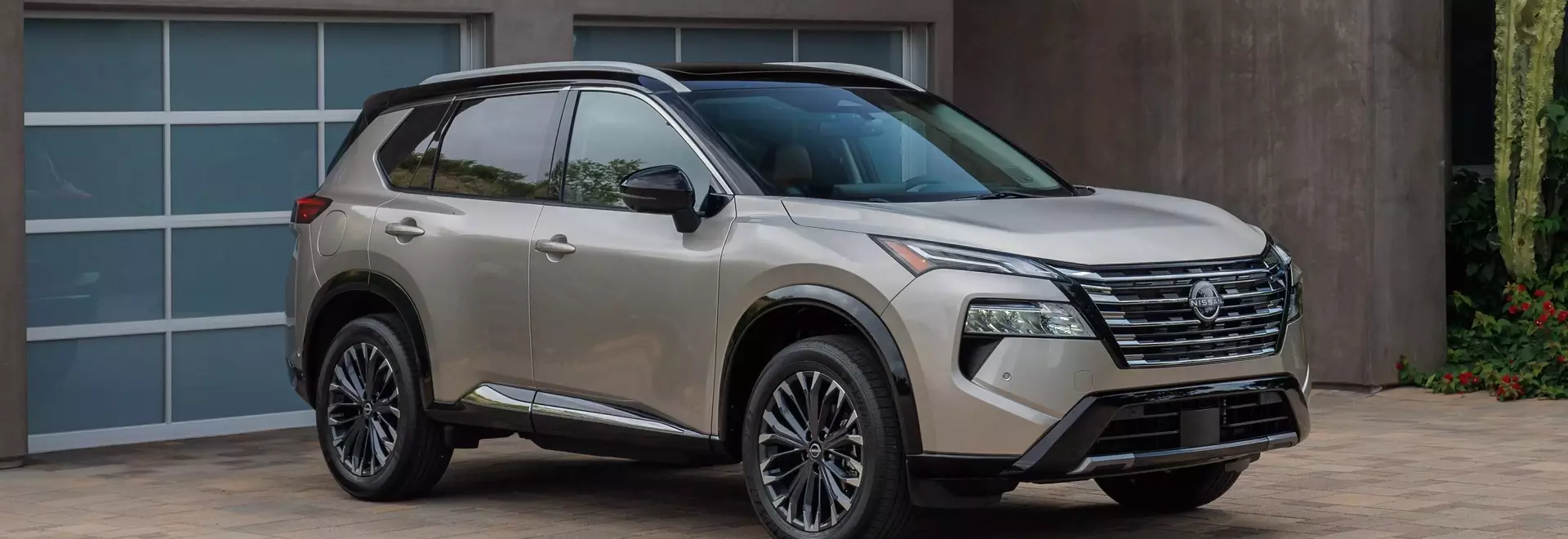
Nissan Recalls Over 300,000 Rogue SUVs Due to Throttle Body Issues
Cars

Nissan Recalls Over 300,000 Rogue SUVs Due to Throttle Body Issues

authorBy Larry Chen
DateFeb 19, 2026
Read Time2 min

Nissan has announced a major recall campaign affecting hundreds of thousands of its Rogue SUV models from the 2024 and 2025 production years. This extensive action, encompassing 318,781 vehicles, targets a critical flaw in the electronic throttle body system. The primary concern lies with the gears within the electronic throttle chamber (ETC), which are prone to fracturing.

The underlying cause of this problem is a diagnostic routine activated during vehicle startup. This routine, designed to test the ETC, inadvertently exerts pressure on the internal gears, causing them to rotate against a fixed stopper. Over time, the repeated stress from this operation, coupled with specific software in the Engine Control Module (ECM), can weaken or break these gears. A fractured gear could severely compromise the vehicle's ability to move, as it might prevent the engine from delivering power for forward or reverse motion. Nissan has acknowledged over 3,000 warranty claims related to this issue, though thankfully, no accidents or injuries have been reported. Nissan dealerships will address the defect by reprogramming the ECM and conducting a thorough inspection of the ETC for any necessary replacements. Owners of affected vehicles can expect to receive official notification letters by March 27, 2026, detailing the steps for repair.

This proactive measure by Nissan underscores the importance of vehicle safety and manufacturer accountability. Recalls, while inconvenient, are crucial for maintaining public trust and ensuring that vehicles on the road meet rigorous safety standards. It highlights the ongoing need for vigilance in automotive design and manufacturing, as even minor component flaws can have significant implications for vehicle performance and driver safety.

More Articles
Cars
Top Cars That Hold Their Value Best
This article identifies cars that maintain their value exceptionally well over three years, helping new car buyers mitigate depreciation. The Porsche 911 leads the list, retaining 98% of its value, while Toyota dominates the top ten with six models. Honda's Civic also stands out for its strong resale performance in the compact segment. Understanding these trends can assist consumers in making financially sound purchasing decisions for new vehicles.
By Henry FordFeb 19, 2026
Cars
Leading Car Brands in Dependability for 2026: Lexus, Buick, and Mini Shine
A recent study on vehicle reliability for 2026 shows a general decline in dependability across the automotive industry. Despite this trend, Lexus maintained its leading position among luxury brands, while Buick emerged as the top performer in the mass-market category. The research highlights a widening gap in reliability between premium and mainstream vehicles, indicating that luxury models generally encounter more issues.
By Akira MarutaFeb 19, 2026
Cars
2026 Audi A6: A Refined Luxury Sedan's Enduring Appeal
The 2026 Audi A6 reasserts the importance of luxury sedans in a rapidly evolving automotive landscape. Eschewing flashy trends, it prioritizes a sophisticated driving experience, exquisite craftsmanship, and discreet elegance. This review explores its powerful yet smooth V6 engine, advanced all-wheel-drive system, and a minimalist interior brimming with integrated technology. Positioned as a compelling choice for discerning professionals, the A6 delivers substantial value and comfort, reinforcing its status as a mature and capable vehicle in the luxury segment.
By Michele AcquaragiaFeb 19, 2026
Cars
Tesla's Autopilot Feature Withdrawn from California Vehicles Amid Regulatory Pressure
Tesla has removed its Autopilot feature from new vehicles in California, a strategic move to preempt a potential sales suspension by state regulators. The California Department of Motor Vehicles had challenged Tesla's 'Autopilot' and 'Full Self-Driving' branding as misleading. Consequently, new Teslas now come standard only with Traffic-Aware Cruise Control, while Autosteer functionality is now integrated into a subscription-based 'FSD (Supervised)' offering.
By Brock YatesFeb 19, 2026
Cars
Tesla Rebrands Driver-Assistance Features Under Regulatory Pressure
Tesla is rebranding its 'Autopilot' and 'Full Self-Driving' systems due to pressure from the California Department of Motor Vehicles. The move comes after the DMV deemed the original names misleading, violating state law. 'Full Self-Driving' will now be marketed as 'Full Self-Driving (Supervised)' and 'Autopilot' as 'Traffic Aware Cruise Control' to better reflect their capabilities as Level 2 autonomous systems requiring active human supervision. This change aims to prevent the suspension of Tesla's dealer license in California.
By Brock YatesFeb 19, 2026