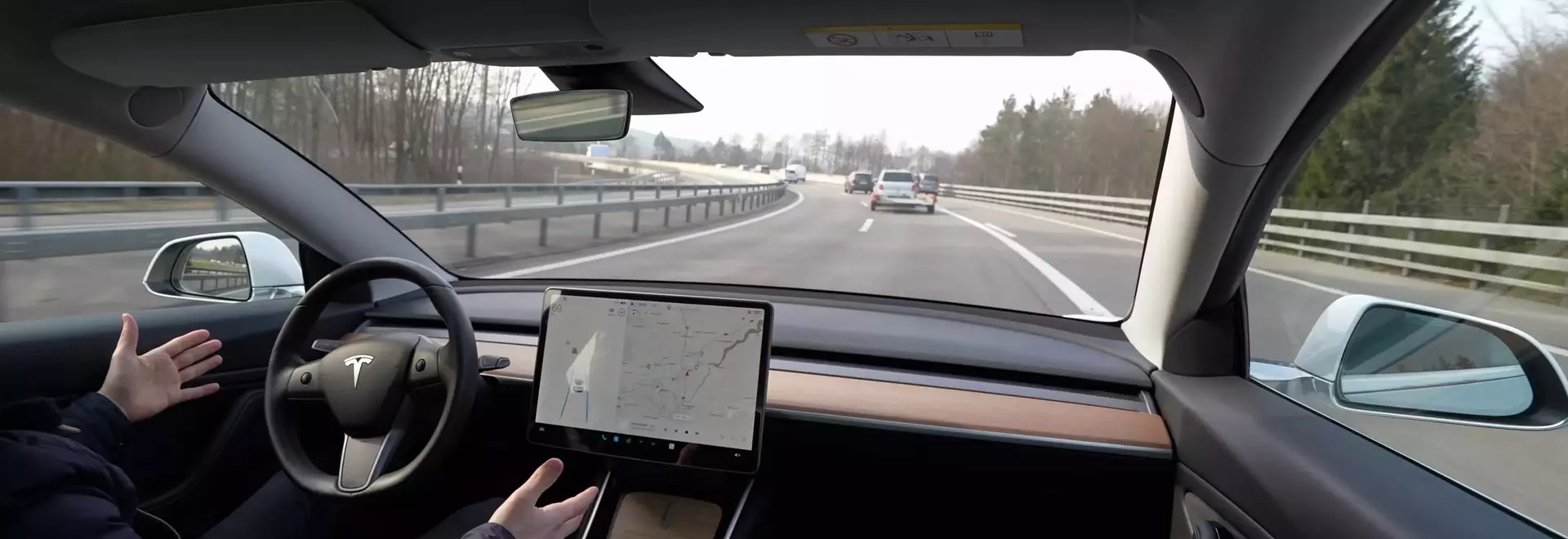
Tesla's Autopilot Feature Withdrawn from California Vehicles Amid Regulatory Pressure
Cars

Tesla's Autopilot Feature Withdrawn from California Vehicles Amid Regulatory Pressure

authorBy Brock Yates
DateFeb 19, 2026
Read Time3 min
Tesla's decision to discontinue its 'Autopilot' feature in new vehicles sold in California was a calculated maneuver aimed at navigating stringent regulatory oversight. This pivotal change arose from the California Department of Motor Vehicles' long-standing concerns regarding the potentially deceptive nomenclature of Tesla's advanced driver-assistance systems.

Navigating Regulatory Waters: Tesla's Strategic Retreat in California

Regulatory Scrutiny in California: The Catalyst for Change

California, a crucial market for electric vehicles, has become the epicenter of regulatory challenges for Tesla. The company's decision last month to withdraw the 'Autopilot' feature from its new vehicles was not a random technical alteration but a strategic response to impending governmental pressure. Previously, Autopilot encompassed both Traffic-Aware Cruise Control (TACC) and Autosteer as standard. However, this has now shifted, with new Teslas only featuring TACC as a standard offering. The Autosteer function, along with other advanced capabilities, is now bundled under a separate, subscription-based 'Full Self-Driving' package.

Avoiding a Sales Embargo: Tesla's Proactive Measure

The core of the issue dates back approximately five years when the California DMV initiated an inquiry into Tesla's promotional claims for 'Autopilot' and 'Full Self-Driving.' The regulatory body argued that these terms could mislead consumers into believing the vehicles possessed full autonomous driving capabilities. In November 2023, formal accusations were lodged by the DMV, leading to a ruling by an administrative judge against Tesla. The judge concluded that Tesla's branding adopted an unlawful and ambiguous approach that could deceive buyers. Tesla was given a 60-day ultimatum to cease using the 'Autopilot' designation. To circumvent a potential 30-day suspension of vehicle sales and manufacturing in California, Tesla opted to entirely remove the 'Autopilot' feature. Furthermore, 'Full Self-Driving' was rebranded as 'FSD (Supervised)' to meet regulatory compliance. The DMV has since confirmed that Tesla implemented these changes, updating existing vehicle inventories and revising all marketing materials to exclude the 'Autopilot' name. This preemptive action allowed Tesla to maintain its presence in a market it cannot afford to lose.

The Evolving Landscape of Tesla's Driver-Assistance Offerings

With the discontinuation of 'Autopilot,' new Tesla vehicles in the United States now include Traffic-Aware Cruise Control as a standard feature. Essential safety functionalities such as Automatic Emergency Braking, Blind Spot Monitoring, and Lane Departure Avoidance remain universally available. For drivers seeking lane centering or more sophisticated assistance features, a subscription to 'Full Self-Driving (Supervised)' is now required, priced at $99 per month. The previous one-time purchase option for $8,000 has been eliminated, signaling Tesla's shift towards a subscription-centric model. It is important to note that even with its new designation, FSD continues to be classified as a Level 2 system under SAE standards, necessitating constant driver alertness and hands-on steering. Tesla's CEO, Elon Musk, has suggested that the subscription cost may rise as the system advances, leveraging the increasing volume of real-world data to enhance its capabilities.

More Articles
Cars
Tesla Rebrands Driver-Assistance Features Under Regulatory Pressure
Tesla is rebranding its 'Autopilot' and 'Full Self-Driving' systems due to pressure from the California Department of Motor Vehicles. The move comes after the DMV deemed the original names misleading, violating state law. 'Full Self-Driving' will now be marketed as 'Full Self-Driving (Supervised)' and 'Autopilot' as 'Traffic Aware Cruise Control' to better reflect their capabilities as Level 2 autonomous systems requiring active human supervision. This change aims to prevent the suspension of Tesla's dealer license in California.
By Brock YatesFeb 19, 2026
Cars
Polestar Reintroduces Physical Buttons, Expands Interior Options
Polestar is shifting its interior design philosophy by bringing back physical buttons and knobs to its vehicles. This change, driven by new safety regulations and consumer feedback, also includes plans for more diverse interior color options and an enhanced infotainment system, marking a departure from its previous minimalist, screen-centric approach.
By Akira MarutaFeb 19, 2026
Cars
Unveiling the 2027 Audi RS5: A Glimpse into the Future of Performance
Explore the upcoming 2027 Audi RS5, a high-performance hybrid sedan that blends sporty aesthetics with advanced engineering. This article provides an exclusive look at its exterior and interior design, highlighting the innovative features and sophisticated styling that define Audi's vision for future luxury sports cars. Discover the meticulous craftsmanship and the dynamic presence of the new RS5 through a series of detailed photographs.
By Michele AcquaragiaFeb 19, 2026
Cars
First Look: The Next-Generation 2027 Audi RS5
Audi enthusiasts, get ready! The highly anticipated 2027 Audi RS5 has been unveiled, showcasing a revolutionary design and a powerful plug-in hybrid powertrain. This new model promises an exhilarating driving experience, blending high performance with sustainable technology. The gallery offers an exclusive peek at the exterior and interior, highlighting its aggressive styling and luxurious cabin. Discover the future of performance sedans with this innovative release.
By Larry ChenFeb 19, 2026
Cars
Long-Term Review of the 2024 Lucid Air Pure RWD: Performance and Practicality
This comprehensive review chronicles the 2024 Lucid Air Pure RWD's journey over 24,000 miles, highlighting its long-distance capabilities, charging experiences, and maintenance encounters. It details both the vehicle's luxurious driving feel and unexpected challenges, such as a spilled beverage leading to electronic issues and cold-weather quirks. The article also praises its immersive Dolby Atmos audio system and discusses its value as a luxury EV.
By Dan NeilFeb 19, 2026