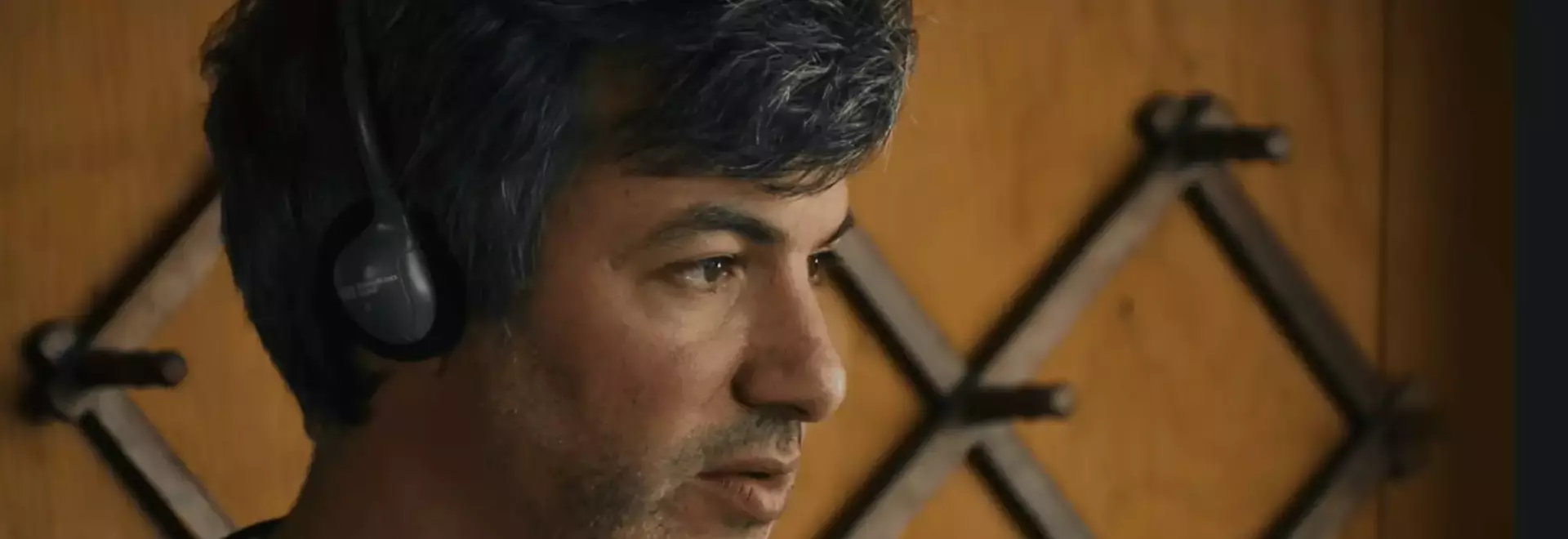
Nathan Fielder's Unexpected On-Screen Journey in 'You Can See Everything'
Nathan Fielder's documentary, 'You Can See Everything,' which focuses on Elizabeth Holmes, saw its director unexpectedly stepping into the limelight. Initially intending to observe from the sidelines, Fielder found himself drawn into the narrative by Holmes and her husband, Billy Evans. His on-screen presence evolved from mere observation to active participation, driven by a need to challenge their perspectives and engage in the unfolding story. This shift not only reshaped the film's dynamic but also contributed to its remarkable box office debut, surpassing expectations with a $15 million opening weekend.
Filmmaker's Unplanned On-Screen Emergence in Holmes Documentary
In a surprising turn of events, filmmaker Nathan Fielder, co-director of the compelling Elizabeth Holmes documentary titled 'You Can See Everything,' found himself unexpectedly in front of the camera, contrary to his initial intentions. The film, which premiered on October 19, 2026, chronicles the final period before Holmes's incarceration. Fielder had envisioned a background role when he arrived at the beach house rented by Holmes and her husband, Billy Evans, mirroring the initial, unobtrusive shots seen early in the production.
Reflecting on this unplanned transition, Fielder shared with Wired his original resolve: "I started this thing being like, 'I'm definitely not gonna be on camera in this.'" He underscored the gravity of the situation, noting, "The situation was very intense. She was going to prison… I was very aware this is the final month that she's gonna have for a decade with her kids and her family."
However, the dynamic began to shift as Holmes and Evans directly engaged Fielder with questions, drawing him into their conversations. This interactive environment, combined with Fielder's realization that he couldn't permit an unchallenged portrayal of their narratives, prompted his on-camera involvement. "They would keep engaging with me," Fielder explained, recounting how conversations would naturally pivot to him. He often interjected from off-camera to steer discussions or pose questions, seeking deeper insights. Eventually, the camera operators started capturing these interactions, leading to his visible presence.
Moreover, Fielder felt a compelling need to challenge certain statements. "They would say stuff that tickled a part of my brain that was like, 'Something's off about this.' Or I feel like this is them trying to do some sort of propaganda. So I would wanna interject to be like, 'Well, actually, I read this,' or 'I thought this was the case.'" This critical stance led to a collective understanding that "someone has to push back, and we can't just let them run whatever show they kinda wanna do."
The documentary's debut was met with significant success, raking in $15 million from only 855 North American cinemas. This impressive figure far exceeded predictions, marking it as the most successful non-concert documentary opening since Michael Moore's 'Fahrenheit 9/11' in 2004.
The evolution of Fielder's role from behind-the-scenes observer to an integral on-screen participant highlights the fluid and often unpredictable nature of documentary filmmaking. His commitment to journalistic integrity and willingness to challenge the subjects' narratives ultimately enriched the film, offering viewers a more nuanced and critical perspective. This unexpected journey underscores the powerful impact a filmmaker's presence can have on the story being told, transforming a passive observation into an active and probing inquiry. The success of 'You Can See Everything' serves as a testament to the compelling storytelling that emerges when a creator is willing to adapt and confront the complexities of their subject matter head-on.