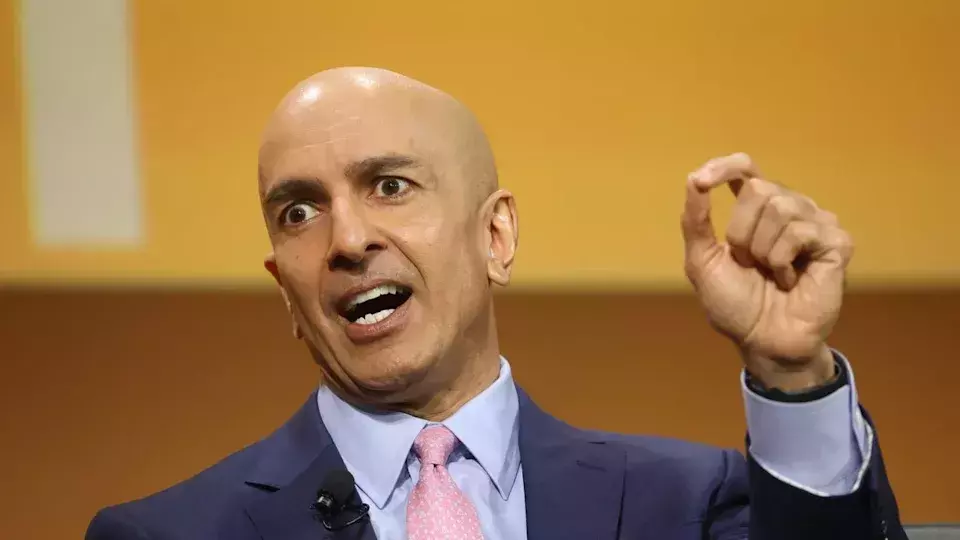
Minneapolis Fed President Advocates for Gradual Interest Rate Increases
Minneapolis Federal Reserve President Neel Kashkari has recently voiced his support for initiating a series of measured interest rate increases, advocating for such a move as early as September. He argues that the current monetary policy is not adequately restrictive to tackle ongoing inflation. Kashkari's perspective is shaped by robust economic indicators, including strong corporate profits, sustained consumer activity, and a steady labor market. He believes that by taking gradual steps now, the central bank can mitigate the risk of a more severe policy adjustment in the future, particularly given various supply-side pressures. This position places him among other regional Federal Reserve presidents who have expressed similar concerns regarding the path of monetary policy.
Kashkari's call for rate hikes stems from a concern that delaying action could lead to a more entrenched inflation problem, necessitating sharper and more disruptive policy responses later on. He points to several factors contributing to persistent inflation, such as the impact of tariffs on goods prices, disruptions in the fertilizer market, and significant investments in AI infrastructure. These supply shocks, he suggests, are creating inflationary pressures that monetary policy must address proactively. By advocating for early, incremental adjustments, Kashkari aims to guide the economy towards price stability without resorting to drastic measures, ensuring a more stable economic environment.
The Rationale Behind Gradual Rate Hikes
Minneapolis Federal Reserve President Neel Kashkari champions a policy of gradual interest rate increases, arguing that such a measured approach is crucial to counteract inflation effectively without precipitating a more drastic economic intervention down the line. His concern is rooted in the belief that current monetary policy lacks the necessary restrictiveness to rein in prices. He highlights several robust economic indicators, including impressive corporate earnings, resilient consumer spending, and a stable job market, as evidence that the economy can absorb modest rate adjustments. This proactive stance is designed to address inflationary pressures before they become deeply embedded, thus safeguarding long-term economic stability.
Kashkari's advocacy for early and moderate rate adjustments is a strategic move to prevent a scenario where inflation becomes so persistent that it demands an aggressive and potentially disruptive tightening cycle. He underscores the role of various supply-side disruptions, such as tariff-induced price increases, instabilities in global fertilizer markets, and substantial investments in artificial intelligence infrastructure, all of which contribute to the inflationary environment. By addressing these pressures with timely, small steps, Kashkari aims to guide the economy towards the Federal Reserve's 2% inflation target in a controlled manner, preventing greater economic volatility in the future and fostering sustained growth.
Divergent Views on Monetary Policy
Neel Kashkari's proposal for immediate, gradual rate hikes underscores a notable divergence of opinion within the Federal Reserve. His stance, which favors an early and measured tightening of monetary policy, contrasts with the prevailing decision of the Federal Open Market Committee (FOMC) to maintain steady interest rates. Kashkari, alongside Dallas Fed President Lorie Logan and Cleveland Fed President Beth Hammack, cast dissenting votes in favor of a quarter-point rate increase, emphasizing their shared conviction that the current economic climate necessitates a more proactive approach to combat inflation. This internal debate reflects varying interpretations of economic data and forecasts for future inflationary trends.
Despite the FOMC's decision to hold the benchmark federal funds rate steady, Kashkari maintains that the economy's strength, evidenced by strong corporate earnings, robust consumer demand, and a resilient labor market, signals an opportune moment for initial rate adjustments. He views these indicators as proof that monetary policy is not yet sufficiently restrictive to cool inflationary pressures, which have remained above the Fed's 2% target for an extended period. His evolving outlook, shifting from an expectation of rate cuts to rate hikes, highlights the dynamic nature of economic assessment and the challenges central bankers face in navigating a complex financial landscape, always striving for long-term economic stability.
