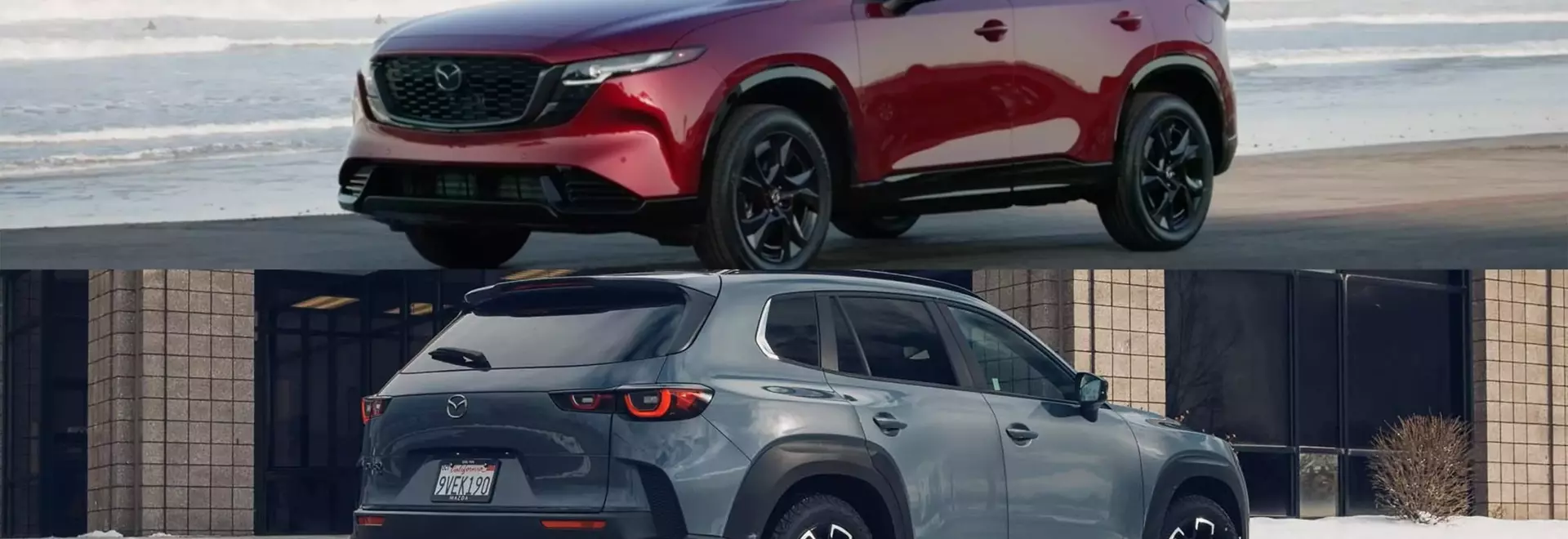
Mazda CX-5 vs. CX-50: A Comprehensive Comparison of Compact SUVs
When navigating the compact SUV market, consumers often encounter compelling choices from the same manufacturer. Mazda, for instance, presents two strong contenders: the CX-5 and the CX-50. Although both models consistently earn high praise, including top rankings and editorial endorsements, they cater to slightly different buyer preferences. Understanding their distinct characteristics in terms of aesthetics, practical space, technological features, performance, efficiency, and ruggedness is key to selecting the ideal vehicle.
A notable distinction lies in their physical attributes and interior configurations. The CX-50 boasts a longer, wider, and lower stance, giving it a more athletic appearance, while the CX-5, especially its 2026 iteration, offers a slightly more generous passenger cabin and enhanced headroom, despite sharing a similar wheelbase with its counterpart. In terms of cargo, the CX-50 comfortably accommodates nine carry-on suitcases, setting a high bar for its class. Furthermore, the infotainment experience varies significantly. The updated CX-5 features a larger, more integrated touchscreen display, ranging from 12.9 to 15.6 inches, which consolidates many controls into a single interface. Conversely, the CX-50 maintains a more traditional setup with an 8.8-inch screen primarily operated via a control knob, though it does offer touchscreen functionality for smartphone mirroring.
Performance and utility also set these SUVs apart. Both models share a standard 187-horsepower 2.5-liter four-cylinder engine. However, the CX-50 expands its powertrain offerings with an optional 256-horsepower turbocharged variant and a hybrid option, the latter borrowing technology from the Toyota RAV4 Hybrid to deliver 219 horsepower and impressive fuel efficiency. While a CX-5 Hybrid is anticipated, details are still pending. For those requiring towing capabilities, the CX-50, particularly with its turbocharged engine, is the superior choice, boasting a maximum towing capacity of 3500 pounds, significantly more than the CX-5's 1500 pounds. In terms of fuel economy, both base models achieve similar combined MPG ratings, but the CX-50 Hybrid leads the pack with an impressive 38 mpg combined. Lastly, for adventurers, the CX-50 offers enhanced off-road readiness with greater ground clearance and a dedicated Meridian Edition featuring all-terrain tires, providing a more rugged aesthetic and capability than the CX-5.
Ultimately, both Mazda compact SUVs represent excellent engineering and design. The choice between the CX-5 and CX-50 hinges on individual priorities. If a sophisticated cabin with cutting-edge infotainment, generous passenger room, and a traditional SUV profile are paramount, the CX-5 might be more appealing. However, for those seeking broader powertrain options, superior towing capacity, a more adventurous exterior, and better off-road potential, the CX-50 stands out. Regardless of the selection, both vehicles embody Mazda's commitment to driving pleasure and quality, ensuring a rewarding ownership experience that encourages exploration and dynamic journeys.
