Japanese Automakers Acknowledge Quality Differences in US-Made Vehicles for Domestic Market
Cars

Japanese Automakers Acknowledge Quality Differences in US-Made Vehicles for Domestic Market

authorBy Larry Chen
DateJun 23, 2026
Read Time3 min
This article explores the unexpected admission by leading Japanese automakers, Toyota and Nissan, regarding the differing quality standards of their American-made vehicles when sold in their domestic Japanese market. It highlights the specific cosmetic and functional discrepancies buyers might encounter, stemming from manufacturing philosophies tailored for different global regions.

US-Made Japanese Cars: A Compromise on Perfection

Japanese Market Receives US-Produced Vehicles with Explicit Quality Disclaimers

In a surprising development, Japanese car manufacturers Toyota and Nissan are now selling American-made vehicles in their home country, but not without a significant caveat. Consumers in Japan are being informed that these imported models may not meet the meticulously high-quality benchmarks typically associated with Japanese-made automobiles.

Trade Agreement Opens Doors to US-Manufactured Imports

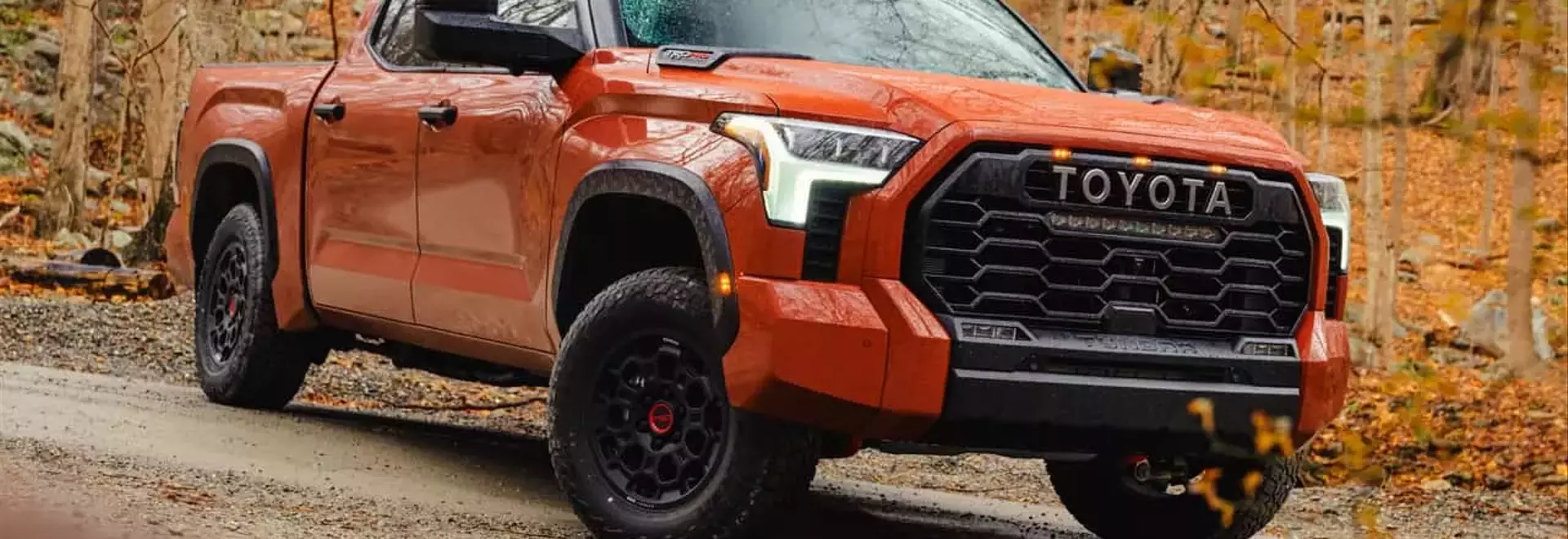
Following a trade agreement signed last year by then-US President Donald Trump, the Japanese market has become more accessible to vehicles produced in the United States. Consequently, Toyota and Nissan have begun shipping popular models such as the Tundra, Highlander, and Murano from their American manufacturing plants to Japan. However, these vehicles might present minor imperfections that are uncharacteristic of cars traditionally sold to Japanese customers.

Murano's Notice: "Quality Standards Differ"

The owner's manual for the imported Nissan Murano explicitly states that the vehicle is manufactured according to specifications intended for international markets, implying a deviation from the quality standards applied to models designated for the Japanese domestic market. Potential issues cited include minor dust particles embedded in the paint, residual sealant, or slight misalignments and gaps in body panels. Despite these cosmetic details, Nissan reassures buyers that these differences do not impact the vehicle's overall functionality or performance.

Toyota's Parallel Warning for Tundra and Highlander

Similarly, Toyota issues comparable warnings for its Tundra and Highlander models. The company advises that the paint finishes on these vehicles are designed for overseas markets, and customers may observe thinner paint applications, subtle color inconsistencies, polishing marks, or even small dents. Like Nissan, Toyota emphasizes that these variances do not compromise the vehicle's core operational capabilities.

Functional Discrepancies and Regional Feature Limitations

Beyond cosmetic concerns, both automakers also caution Japanese buyers about potential functional limitations. Certain features, particularly those related to in-car technology, may not operate as expected or may lack proper homologation for the Japanese market. For instance, the Murano's instrument cluster and infotainment system may only offer language options in English, Spanish, and French, excluding Japanese. Toyota's models, including the Highlander, may have non-functional features such as traffic sign recognition and navigation maps, which are not adapted for the Japanese road network. These functional differences could prove to be more significant deterrents for Japanese consumers than purely aesthetic imperfections.

More Articles
Cars
Jaecoo 7: A Chinese Brand's Rapid Ascent in the UK Market
The Jaecoo 7 has swiftly become a bestseller in the UK market within just 18 months, not by being revolutionary, but through strategic pricing and market understanding. Amidst varying import tariffs globally, the UK's modest 10% tariff has created a fertile ground for Chinese brands like Jaecoo to thrive. The 7, a mid-size SUV, targets cost-conscious families with its competitive pricing and diverse powertrain options, including gas, hybrid, and plug-in hybrid.
By Chris HarrisJun 23, 2026
Cars
Rivian Faces Lawsuit Over Alleged Failure to Deliver Promised Self-Driving Capabilities
Electric vehicle manufacturer Rivian is currently facing a class-action lawsuit filed by multiple customers. The plaintiffs assert that Rivian falsely advertised Level 3 autonomous driving features in its R1T and R1S models, leading them to purchase vehicles under misleading pretenses. The lawsuit claims that these first-generation vehicles lack the necessary hardware to support such advanced self-driving functionalities, and software updates alone cannot bridge this gap, resulting in unfulfilled promises to early adopters.
By Larry ChenJun 23, 2026
Cars
Alpine's New Electric Sports Car to Debut Next Month
Alpine is set to unveil the next generation of its A110 sports car on July 9, 2026, at the Goodwood Festival of Speed. This all-electric model, built on the innovative Alpine Performance Platform, is anticipated to challenge the Porsche Cayman with its lightweight design and advanced electric powertrain. The event will feature BWT Alpine Formula One Team drivers Pierre Gasly and Franco Colapinto.
By Edward LohJun 23, 2026
Cars
2026 Toyota GR Corolla Premium Plus: Interior Overview and Features
The 2026 Toyota GR Corolla's interior blends familiar Corolla design with sporty enhancements. While the overall cabin layout mirrors the standard model, the GR introduces performance-oriented seats with robust bolstering for driver support. A compact infotainment screen prioritizes driver focus, and the digital instrument cluster adapts its display based on the selected driving mode. Throughout the cabin, subtle GR branding reinforces its performance heritage, providing a cohesive and driver-centric experience.
By Michele AcquaragiaJun 23, 2026
Cars
Mitsubishi's Strategic Shift: Embracing Collaboration for EV Development
Mitsubishi's CEO, Takao Kato, has stated the company cannot afford the extensive investment required for independent EV development. Instead, Mitsubishi will focus on collaborative ventures, producing 'rebadged' electric vehicles like the Eclipse Sportback, which is based on the Nissan Leaf. This strategy aims to navigate the slowing global EV market and avoid significant financial risks, highlighting a pragmatic approach to electrification.
By Akira MarutaJun 23, 2026