Interstellar Comet 3I/ATLAS: A Window into Ancient Cosmic Chemistry
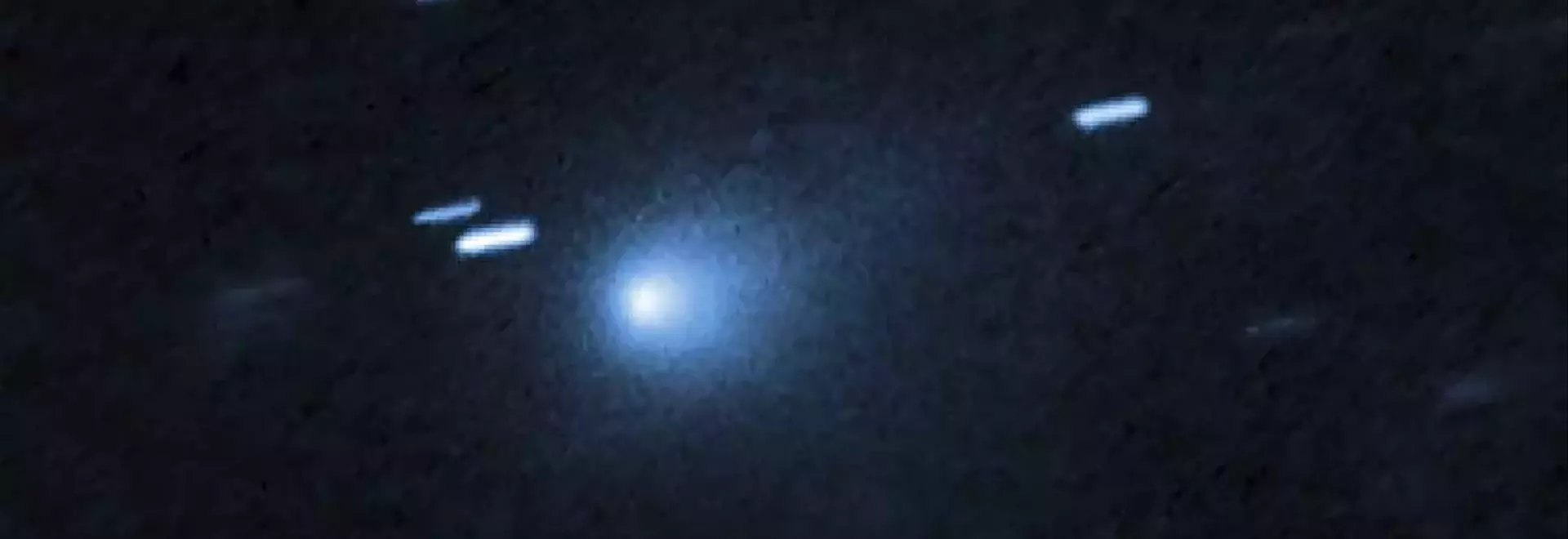
A celestial wanderer, the interstellar comet 3I/ATLAS, has captivated the scientific community with its recent passage through our solar system, offering an unparalleled chance to delve into the enigmatic chemistry of distant planetary realms. This ancient cosmic visitor, possibly predating our own solar system, presents a unique spectacle, distinguished by the unexpected presence of nickel vapor within its gaseous envelope. Researchers are diligently studying this phenomenon, hoping to unlock profound insights into the genesis and evolution of star systems far beyond our immediate cosmic neighborhood.
Interstellar Intruder: Unraveling the Mysteries of Comet 3I/ATLAS
In a thrilling astronomical development, scientists are closely observing the interstellar comet 3I/ATLAS, a celestial body that has made a rare journey into our solar system. This comet, only the third of its kind ever recorded, is generating immense excitement due to the detection of nickel vapor in its coma—a gaseous cloud surrounding the nucleus. This discovery was made by a team led by Rohan Rahatgaonkar, a Ph.D. student, and Professor Thomas Puzia at the Instituto de Astrofísica-Pontificia Universidad Católica de Chile. Their findings, detailed in a recent research paper, highlight the comet's exceptional nature.
Darryl Z. Seligman, an assistant professor of physics and astronomy at Michigan State University, who is coordinating international observation efforts, emphasized the immense value of studying 3I/ATLAS before it departs our solar system. The comet's interstellar origin means it carries pristine material from another star system, potentially offering clues about conditions and processes that occurred billions of years ago. The surprising aspect of the nickel vapor detection is its presence at a considerable distance from the Sun—nearly four times Earth's distance—where temperatures are typically too low for metals to vaporize. This unusual observation suggests that the comet's composition and behavior are unlike those of comets formed within our solar system. Further analysis, utilizing instruments like spectrographs on telescopes such as the Southern Astrophysical Research (SOAR) Telescope and the Very Large Telescope in Chile, will continue as 3I/ATLAS approaches the Sun. These observations aim to uncover more about its chemical makeup and the thermodynamic changes it undergoes, providing invaluable data for understanding its ancient origins and interstellar journey.
The arrival of comet 3I/ATLAS serves as a powerful reminder of the vastness and complexity of the cosmos, urging us to continually expand our understanding of the universe. This unique visitor from beyond our solar system not only enriches our knowledge of interstellar objects but also inspires a renewed sense of wonder and curiosity about the origins of matter and the potential for life in other star systems. It underscores the importance of continuous astronomical research and collaboration in unraveling the universe's most profound secrets.
