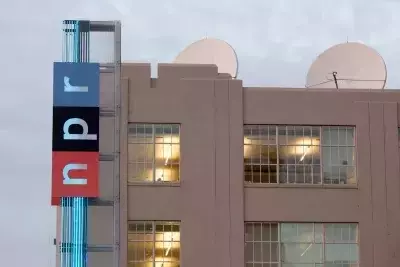
NPR's Legal Battle with CPB Over White House Influence Proceeds to Trial
NPR's legal challenge against the Corporation for Public Broadcasting (CPB) has been set for trial in December, following a federal judge's ruling. This case highlights the significant impact of the Trump administration on the media landscape. NPR contends that the CPB unjustly terminated a three-year, $36 million contract for satellite and distribution services, yielding to considerable White House pressure to disassociate from the radio network. The presiding judge indicated skepticism regarding CPB's rationale for the contract's abrupt cancellation, suggesting that the desire to appease the administration was a more credible explanation.
NPR vs. CPB: A Legal Showdown Over Political Pressure
In Washington, D.C., a federal district court has scheduled a trial for December in the lawsuit filed by National Public Radio (NPR) against the Corporation for Public Broadcasting (CPB). The legal dispute centers on NPR's claim that CPB, a long-standing partner responsible for funneling federal funds to public media, unlawfully revoked a three-year, $36 million contract for essential satellite and distribution services. This alleged reversal came after significant pressure from the White House to distance itself from NPR.
The saga began in early 2025, when President Trump, shortly after taking office, launched public criticisms against NPR and PBS, labeling them as 'radical left MONSTERS.' This culminated in an executive order in May 2025 to cease all federal funding for these public media entities. In response, NPR, along with three member stations in Colorado, initiated legal action against both the Trump administration and CPB, citing violations of their First Amendment rights. While the broader lawsuit addresses the funding cuts, the upcoming trial specifically concerns the separate contract for satellite and distribution services, a function NPR has managed for four decades under various agreements with CPB.
Court documents reveal that CPB officials, in late March, were aware of potential executive action against public media. On April 2, CPB's board authorized negotiations for a new contract with NPR. However, this momentum shifted dramatically after a meeting on April 3, where a senior White House budget official, Katie Sullivan, reportedly expressed her 'intense dislike for NPR' to CPB's leadership. The very next day, April 4, CPB's board reversed its decision, insisting that the satellite system be operated by an entity separate from NPR. Internal communications, including an April 12 email from CPB official Kathy Merritt, indicated the chairperson's strong aversion to funding NPR. Debra Sanchez, CPB's chief of staff, even admitted uncertainty in explaining the rationale for spinning off the Public Radio Satellite System (PRSS).
Further evidence presented in court includes advice from Republican consultant Carl Forti, who recommended CPB highlight its 'proactive steps to rein in what it sees as bias at NPR and PBS,' including withholding 'interconnection funds' and stopping grants for international reporting and newsroom support. This strategy aimed to demonstrate CPB's responsiveness to the administration's concerns. However, CPB officials were reportedly uncomfortable making these statements publicly.
During a recent court hearing, U.S. District Court Judge Randolph Moss expressed significant skepticism regarding CPB's defense. He questioned the sudden change in their long-standing arrangement with NPR, stating, 'The most plausible explanation for what's happening here, is that everything is not quite as linear as 'We're for or against it'.' Moss suggested CPB was 'understandably trying to survive' by distancing itself from NPR due to political pressure. He concluded that a brief, expedited bench trial, without a jury, will be held, expected to last three to four days.
This case serves as a critical examination of the independence of public media and the potential for political influence to impact contractual agreements. The outcome will likely have significant implications for the future relationship between government bodies and media organizations, particularly those relying on public funding or operating under government oversight. It underscores the ongoing tension between media autonomy and political pressures, and the judiciary's role in upholding contractual integrity amidst such challenges.
