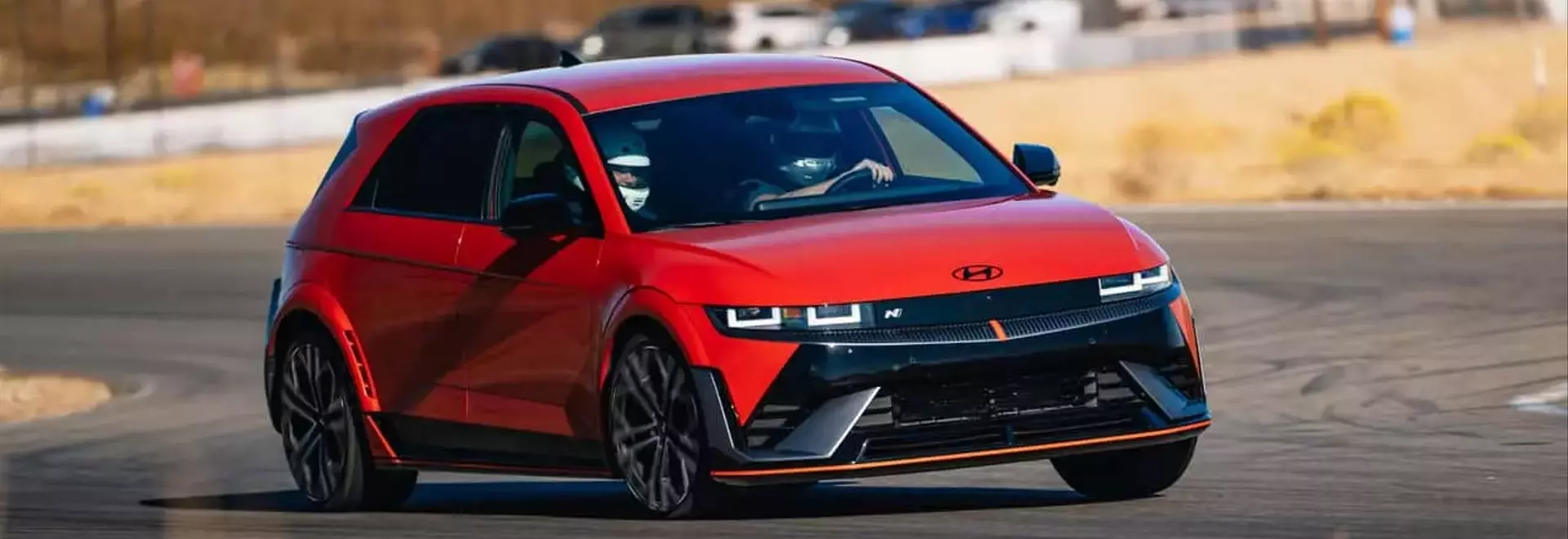
Hyundai's Evolving Design Philosophy: Cohesion Without Conformity
Cars

Hyundai's Evolving Design Philosophy: Cohesion Without Conformity

authorBy Edward Loh
DateFeb 17, 2026
Read Time2 min
Hyundai is implementing a new design strategy that emphasizes a stronger visual connection across its various vehicle models, ensuring brand recognition while preserving the unique character of each car. This approach seeks to differentiate Hyundai from competitors who might have adopted a more uniform, 'photocopied' design style.

Hyundai: Forging a Distinctive Brand Identity Through Thoughtful Design Evolution

The Quest for a Unified Brand Identity in Hyundai's Vehicle Lineup

Hyundai is embarking on a refined design journey, moving towards a more unified aesthetic across its diverse range of vehicles. This initiative aims to establish a clearer brand identity, allowing consumers to recognize a Hyundai model at a glance, regardless of its segment. The company's goal is to infuse a sense of familial resemblance throughout its offerings, from robust SUVs to sleek electric vehicles, without sacrificing their individual appeal.

Avoiding Design Homogeneity: A Strategic Imperative for Hyundai

Unlike some manufacturers that opt for a 'one-size-fits-all' design approach, Hyundai is committed to avoiding the trap of homogeneity. The manufacturer's executives have clearly stated their intent to steer clear of creating a lineup where every model appears to be a mere copy of another. This philosophy is crucial for maintaining the distinct market positioning and customer appeal of each Hyundai vehicle.

Embracing Segment-Specific Design Cues with a Shared DNA

Under this evolving design direction, Hyundai's different vehicle segments will continue to possess their unique characteristics. For instance, SUVs like the Santa Fe will retain their rugged and imposing presence, while electric vehicles, including the Ioniq 5 and Ioniq 6, will maintain their aerodynamic and futuristic profiles. However, subtle design elements will be integrated across these segments to create a cohesive 'family look' that signifies their shared Hyundai heritage.

The 'Chess Piece' Philosophy: Each Model, a Unique Role

Driving this design evolution is the 'chess piece' philosophy championed by Hyundai's head designer, SangYup Lee. This concept dictates that each model within the lineup should play a distinct and purposeful role, much like different pieces on a chessboard. This ensures that while there's an overarching brand identity, every Hyundai vehicle offers a unique personality and functional purpose, catering to diverse customer needs and preferences.

Crafting a Meaningful Family Resemblance for Hyundai's Future

Ultimately, Hyundai's design objective is to cultivate a 'sense of family' that communicates purpose and meaning. This means that future Hyundai vehicles will not only be aesthetically pleasing but will also convey a strong, consistent brand message. The brand is dedicated to evolving its design language in a way that resonates with consumers, building on its reputation for producing visually striking and individually appealing cars and SUVs.

More Articles
Cars
2026 Toyota bZ Woodland: An Electric SUV Evolution
The 2026 Toyota bZ Woodland debuts as a more substantial and powerful alternative to the standard bZ electric SUV. It features a wagon-like silhouette, a chunkier front bumper, and distinctive black plastic wheel arch cladding. With a potent dual-motor powertrain generating 375 horsepower and an estimated 281-mile range, or 260 miles with all-terrain tires, this new model promises enhanced performance and practicality.
By Chris HarrisFeb 17, 2026
Cars
2026 Toyota bZ Woodland: A Versatile Electric Wagon for Modern Families
The 2026 Toyota bZ Woodland blurs the lines between SUVs and wagons, offering a potent 375-hp electric powertrain, spacious interior, and surprising off-road capability. This review explores its unique design, advanced charging features, and comfortable driving experience, positioning it as an appealing electric option for families seeking versatility and power.
By Chris HarrisFeb 17, 2026
Cars
Rivian Enhances Amazon Delivery Vans with Extended Range and All-Wheel Drive
Rivian is upgrading its Electric Delivery Vans (EDVs) for Amazon, introducing new versions with larger battery packs to boost range by 30% and an all-wheel-drive option for enhanced capability. These improvements will allow the vans to serve a wider network and navigate more challenging terrains, moving beyond urban deliveries. The company also plans to launch its new R2 SUV and advanced driver-assist technology in 2026, marking a significant year for innovation and expansion.
By Larry ChenFeb 17, 2026
Cars
The 2026 Ram 1500 Rebel X: A Decade of Off-Road Dominance Continues
Celebrating its tenth anniversary, the Ram 1500 Rebel X returns for 2026, offering enhanced off-road capabilities and luxurious features. This truck integrates a Rough Road Cruise Control system and comes with a 420-hp twin-turbo inline-six engine, bridging the gap between the standard Rebel and the high-performance RHO. Priced at $71,930, it continues to be a favorite among truck enthusiasts.
By Larry ChenFeb 17, 2026
Cars
Mercedes-AMG's Iconic "Red Pig" Sedan Gets a Modern Redesign
Former Mercedes design chief Gorden Wagener has revealed a modernized concept of the legendary AMG "Red Pig" sedan. This V8-powered race car, famous for its second-place finish at the 1971 Spa 24 Hours, is reimagined with contemporary styling cues, including updated headlights and wheels. Although this tribute is a virtual concept and not for sale, it celebrates AMG's racing heritage and Mercedes' design evolution, highlighting the enduring legacy of this high-performance vehicle.
By Simona De SilvestroFeb 17, 2026