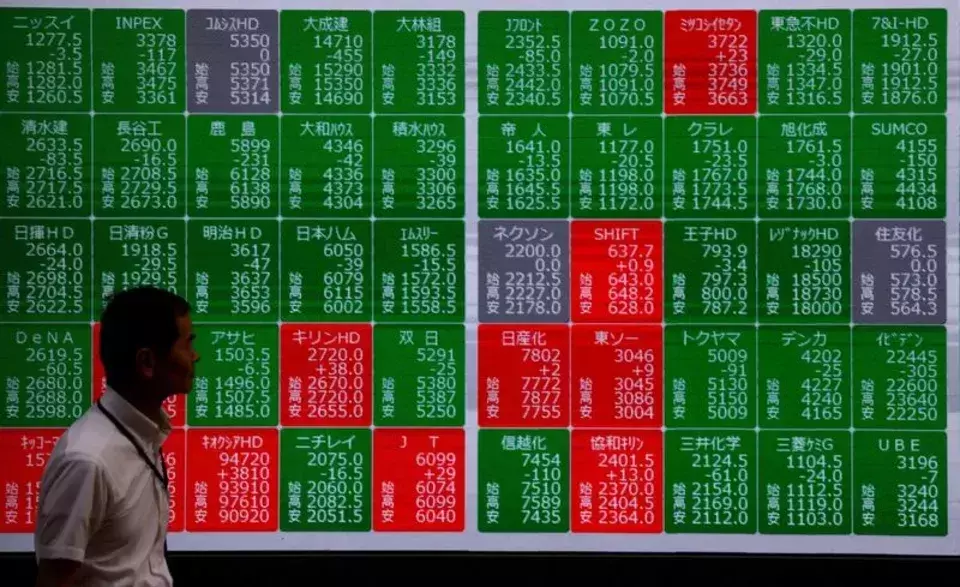
Global Markets Stumble as Fed's Inflation Stance and Oil Price Drops Reshape Investor Outlook
Global equity markets faced significant headwinds on Tuesday, as investor focus sharpened on the Federal Reserve's anticipated hawkish approach to inflation, overshadowing a notable dip in crude oil prices. This dynamic environment signaled a period of recalibration for asset valuations worldwide.
Global Markets Reel Amidst Federal Reserve's Inflationary Combat and Oil Price Slide
On a tumultuous Tuesday, global stock markets witnessed a broad decline, spearheaded by a sharp downturn in technology shares across continents. This market contraction was primarily driven by investors' heightened expectations that the Federal Reserve is poised to implement more assertive measures to rein in persistent inflation. The market's reaction occurred even as crude oil prices registered a substantial 16% fall over the month, a development that under normal circumstances might have buoyed investor confidence.
European markets mirrored this trend, with the STOXX 600 index shedding 1.2%. This decline was largely influenced by setbacks in European semiconductor and chip-equipment manufacturing firms. The ripple effect extended to Asian markets, where technology stocks in Japan and South Korea also retreated, most notably seen in Seoul's KOSPI index experiencing its most significant single-day plunge of 10% since March.
The American markets were not immune, as Nasdaq futures indicated a potential continuation of Monday's 1.3% dip, with futures down over 2.5%. Prominent technology and growth companies such as Alphabet, Meta Platforms, and Microsoft saw their share prices tumble. Adding to the tech sector's woes, SpaceX's shares, despite an earlier blockbuster initial public offering, fell nearly 17% following its entry into the bond market. S&P 500 e-mini futures also recorded a 1.5% decrease, signaling broader market distress.
Chris Weston, a leading research strategist at Pepperstone Group in Melbourne, articulated the prevailing market sentiment, noting, "These are far from dull markets. The former market leaders appear to have lost their impetus, as investors pivot towards more defensive sectors, less focused on AI, and offering more predictable cash flows."
In the energy sector, Brent crude futures dipped below $76 per barrel for the first time since early March. This decline was attributed to an increasing flow of vessels through the Strait of Hormuz and the return of physical market oil prices to levels observed before recent geopolitical disruptions. While a decrease in oil prices typically acts as a stimulus for stock markets, current investor attention is fixated on the implications of surging energy costs for central bank policy, particularly the Federal Reserve. The new Chair, Kevin Warsh, is widely expected to adopt a much firmer stance on combating inflation.
Consequently, 2-year Treasury yields, which are highly sensitive to shifts in inflation and interest rate expectations, surged to their highest point in 16 months, reaching approximately 4.188%. Longer-dated yields also experienced a sharp rise. Lee Hardman, a currency strategist at MUFG, commented on the situation, stating, "The upward adjustment in U.S. yields is creating a more challenging environment for risk assets in the immediate future, following strong gains in recent months."
Money markets are now almost fully pricing in an interest rate hike by September. Against this backdrop, the U.S. dollar has ascended to a one-year high against a basket of major currencies. This dollar strength has particularly impacted the Japanese yen, which remained flat at 161.47 against the dollar on Tuesday, after a volatile session the previous day that saw it nearing 40-year lows. Japanese Finance Minister Satsuki Katayama's online discussion with U.S. Treasury Secretary Scott Bessent regarding global financial markets has led analysts to believe there's an increased likelihood of official intervention from Tokyo to bolster the yen.
Coinciding with the tenth anniversary of the Brexit vote, the British pound depreciated by 0.3% against the dollar, trading at $1.3215. Sterling's value was further impacted by the news on Monday that British Prime Minister Keir Starmer would resign, paving the way for what is anticipated to be an orderly transition of power to Andy Burnham.
The anticipation of rising U.S. interest rates also exerted pressure on precious metals, with gold falling 2% to $4,100 an ounce. In the volatile cryptocurrency markets, Bitcoin dropped 3.1% to below $63,000, while Ethereum saw a nearly 5% decline, trading at $1,650.
The current global market turmoil serves as a stark reminder of the interconnectedness of central bank policies, geopolitical events, and investor sentiment. The Federal Reserve's resolute stance on inflation, coupled with evolving political landscapes and commodity price fluctuations, underscores a period of significant uncertainty and adjustment for financial markets. Investors are clearly re-evaluating risk, favoring stability and defensive assets over growth-oriented ventures, signaling a potential shift in investment paradigms for the foreseeable future. The coming months will likely test the resilience of economies and the resolve of policymakers as they navigate these complex challenges.
