France's Struggle with Memory: A Decade After the Bataclan Attacks
A decade has passed since the horrific Paris attacks of November 13, 2015, and France is still navigating the intricate emotional landscape of how to commemorate this tragic event and move forward. The nation has established extensive remembrance systems, including numerous memorials, documentaries, and a landmark terrorism trial that concluded in 2022. Despite these efforts, new research indicates that the collective memory of the attacks is beginning to wane, with differing recollections across various sites. This divergence in memory, coupled with ongoing scientific studies into trauma recovery, offers crucial insights into both societal and individual healing processes, emphasizing the importance of adaptive coping mechanisms.
The Evolving Landscape of Collective Memory in France
Ten years following the devastating Paris attacks, France is confronted with the challenge of maintaining a cohesive national memory. Despite widespread efforts to commemorate the tragedy through memorials, publications, and legal proceedings, a recent study led by historian Denis Peschanski highlights a concerning trend: the details of the attacks are gradually fading from public consciousness. While the Bataclan concert hall remains vividly etched in memory, events at other locations, such as cafes and the national stadium, are becoming increasingly blurred. This selective amnesia creates a profound sense of "double punishment" for survivors from these less remembered sites, who not only endure their personal trauma but also feel that their experiences are being overlooked by society. The ongoing struggle reflects the inherent difficulties in sustaining a collective historical narrative, particularly when competing with the natural processes of individual and societal healing.
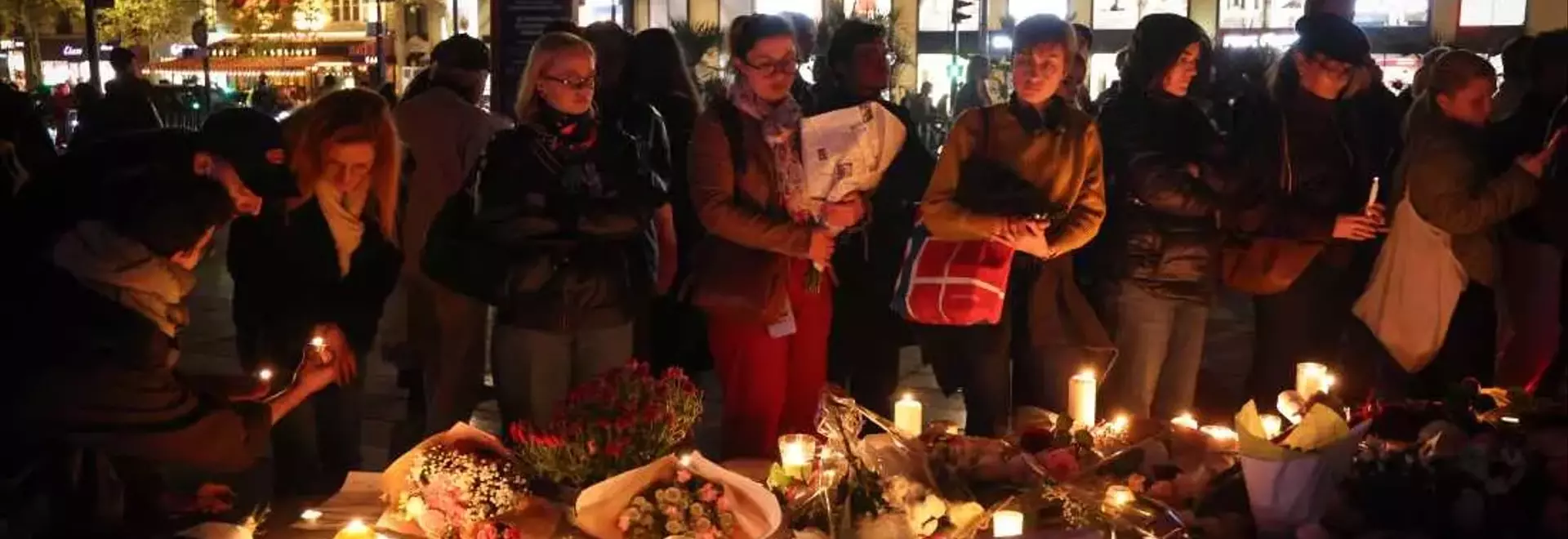
The study, spanning over a decade and involving nearly a thousand participants including survivors, victims' families, and first responders, meticulously tracks how recollections evolve over time. This research is instrumental in understanding the mechanisms behind collective forgetting. It suggests that while the rituals of remembrance, such as laying flowers and lighting candles, provide solace and reaffirm that the events are not forgotten, they do not necessarily halt the natural process of memory decay. For many, like Parisian resident Anaelle Baheux, these rituals are a vital source of reassurance. However, the academic findings reveal a more complex reality where public focus can narrow, leaving some aspects of a shared trauma less prominent than others. This underscores the need for continuous, inclusive efforts to ensure that all facets of a national tragedy are respectfully acknowledged and preserved in the collective conscience, preventing any part of the story from being relegated to the shadows.
Individual Trauma and the Science of Forgetting
Parallel to the societal grappling with collective memory, significant strides are being made in understanding individual recovery from post-traumatic stress disorder (PTSD). A decade-long study, spearheaded by neuroscientists, has meticulously tracked approximately 200 survivors of the Paris attacks through regular MRI scans and psychological evaluations. This groundbreaking research challenges long-held beliefs about memory suppression, indicating that the deliberate fading of traumatic memories can, in fact, be a crucial component of healing. Traditionally, therapeutic approaches often cautioned against attempting to block out painful recollections, fearing it could exacerbate intrusive thoughts. However, preliminary findings from this study suggest the opposite: the ability to make a memory less present, less vivid, and less accessible, without erasing the fundamental understanding of what transpired, is a key adaptive mechanism for recovery.
Pierre Gagnepain, a lead researcher in the neurological study, explains that this process of "forgetting" does not imply a complete erasure of the traumatic event. Instead, it involves the brain's ability to inhibit the intrusive and overwhelming aspects of a memory, allowing individuals to recall the event without being re-traumatized. MRI scans reveal that when specific memory control networks in the brain begin to strengthen, and neural connections responsible for suppressing intrusive thoughts are restored, survivors are less prone to persistent PTSD symptoms. While about a third of the study's participants continue to experience chronic trauma, remaining in a state where fear and memory are tightly intertwined, others, like Bataclan survivor Arthur Dénouveaux, demonstrate that it is possible to access memories without being consumed by them. For Dénouveaux, who has led a support group for survivors, the journey towards healing involves acknowledging the past while actively choosing to move beyond the identity of a victim, signifying that recovery is a dynamic and personal process of adaptation and growth.
