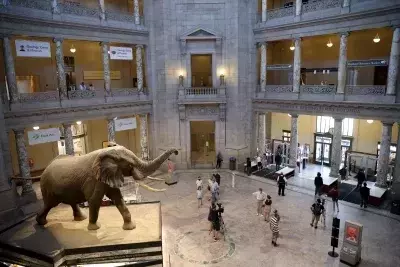
Cultural Institutions Reopen After Government Shutdown
Following a significant governmental closure, prominent cultural venues such as the Smithsonian institutions and the National Gallery of Art are progressively recommencing their public services. This shutdown, recognized as the longest in American history, led to considerable financial setbacks and interruptions in public engagement and educational initiatives. These establishments are now focused on recuperating from the economic repercussions and reaffirming their crucial role in fostering cultural appreciation and tourism.
The recent government shutdown, which impacted a wide array of federally funded cultural sites, prompted the closure of several esteemed institutions. Among these were the extensive network of Smithsonian museums and the renowned National Gallery of Art. The forced cessation of operations resulted in not only the furlough of staff and the suspension of various programs but also significant revenue losses that directly affected the cultural sector. For instance, the Smithsonian alone faced a substantial deficit from its retail and entertainment services, while the National Gallery of Art reported a dramatic decline in visitor numbers and associated income.
In response to the reopening announcement, the Smithsonian Institution, encompassing 21 museums and the National Zoo, has outlined a phased approach to welcome back the public. Starting Friday, November 14th, key sites such as the National Museum of American History, the National Air and Space Museum, and the Steven F. Udvar-Hazy Center will unlock their doors. By Monday, November 17th, all remaining museums and the National Zoo, including its popular animal webcams, are slated to be fully operational. This staggered reopening aims to ensure a smooth transition and readiness to host visitors once again.
Similarly, the National Gallery of Art has initiated its reopening strategy, with the West Building and the outdoor Sculpture Garden becoming accessible on Friday, November 14th. The East Building, which was set to host a significant touring exhibition of Australian Indigenous art, will follow suit on November 15th. This exhibition, titled 'The Stars We Do Not See,' sourced from the National Gallery of Victoria in Melbourne, will finally greet its first audiences on Saturday, November 15th, before embarking on its journey to other institutions across the U.S.
Furthermore, Ford's Theatre, a historical landmark operating as a public-private collaboration with the National Park Service, is now fully operational after being partially closed during the shutdown. A representative from the theatre expressed immense satisfaction at the return of visitors, highlighting the public's eagerness to re-engage with the site's rich offerings. The reopening of these cultural pillars signifies a step towards normalcy and a renewed opportunity for the public to access invaluable art, history, and scientific collections.
The resumption of activities at these cultural centers underscores their unwavering commitment to public service and their pivotal contribution to the nation's cultural landscape. Despite the financial challenges posed by the unprecedented closure, the enthusiasm surrounding their reopening reflects a collective desire to rediscover and reconnect with the wealth of knowledge and artistic expression they house.
