Federal Reserve's Unwavering Commitment to 2% Inflation Target
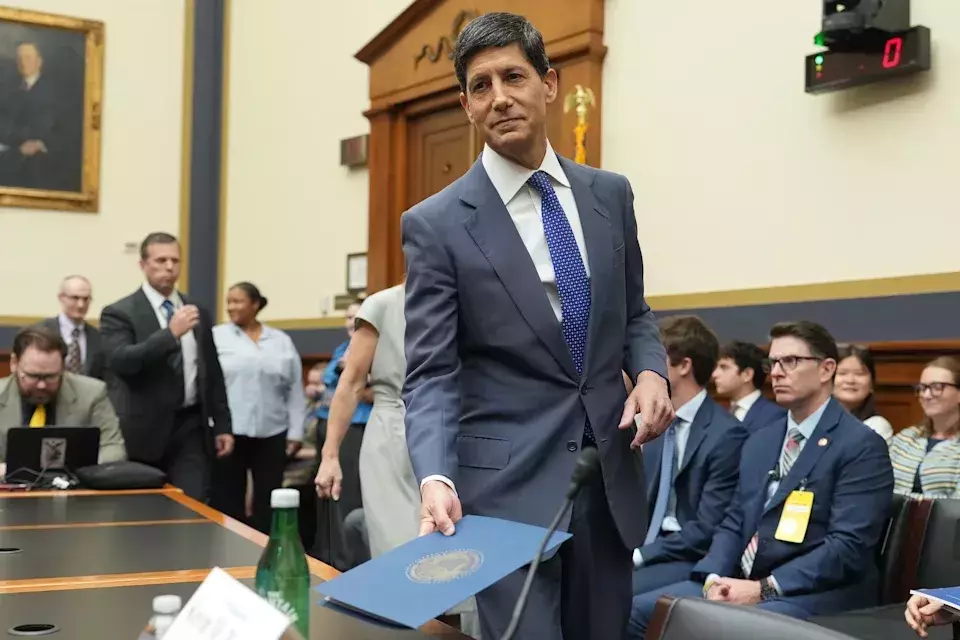
Federal Reserve Chairman Kevin Warsh recently addressed House lawmakers, unequivocally stating the central bank's resolute commitment to its 2% inflation objective. His testimony emphasized a zero-tolerance policy for sustained high inflation, aiming for a stable economic environment where price fluctuations are imperceptible to the average American. This stance was maintained even as new figures indicated a moderation in June's inflation, prompting the Fed to signal a continued cautious approach to monetary policy, potentially prolonging higher interest rates.
During his appearance before the House Financial Services Committee, Chairman Warsh declared that if monetary strategies are executed correctly, the inflationary pressures of the past half-decade will dissipate. He reiterated the Fed's dedication to the 2% inflation target, envisioning an economy where consumers no longer need to actively monitor price changes due to their stability. This firm position suggests that interest rates will likely remain elevated for the foreseeable future, despite recent inflation data showing a decrease to 3.5% in June, driven by lower energy costs.
Warsh, however, downplayed the significance of this single month's data, cautioning against premature declarations of success. He stated that while some might interpret the June figures as a sign of "mission accomplished," he does not share that view. This nuanced perspective underscores the Fed's long-term commitment to controlling inflation, rather than reacting to short-term fluctuations.
The Federal Reserve's unwavering stance on inflation could lead to potential disagreements with political figures, such as President Trump, who has previously advocated for lower interest rates. Warsh, however, asserted his independence, vowing to adhere strictly to legal mandates and economic data, irrespective of any political pressure to alter interest rate policies. This highlights the crucial separation between monetary policy decisions and political influence.
While Warsh refrained from detailing future interest rate adjustments, he indicated that the decision to keep rates steady in June was integral to the Fed's anti-inflationary strategy. Other Fed officials have been more explicit, with Governor Christopher Waller suggesting the necessity of further rate increases if underlying inflation persists. Warsh delivered his testimony as part of the semi-annual Monetary Policy Report, engaging with lawmakers on a range of economic issues, including unemployment, prediction markets, and the mandate of newly established task forces aimed at enhancing the Fed's operational efficiencies.
The Chairman pledged full transparency regarding the work of these task forces, which comprise leading experts dedicated to ensuring price stability. Discussion also touched upon energy prices, especially in light of President Trump's announcement to re-impose a blockade in the Strait of Hormuz, which caused a significant surge in Brent crude futures and could reignite inflationary pressures in July. Warsh also noted the stability of the labor market and the overall economic strength, tempered by a lagging housing sector. He specifically highlighted AI investment as a notable economic trend, though its full impact remains to be seen.
This biannual testimony, known as the Humphrey-Hawkins testimony, is a long-standing tradition requiring the Fed to report to Congress. Warsh, known for his circumspect approach to "forward guidance," offered little in the way of explicit predictions for future interest rates, emphasizing that being too prescriptive can be detrimental when economic conditions are fluid. He is scheduled to continue his discussions with policymakers at the Senate Banking Committee, further elaborating on the Fed's strategies and economic outlook. The central bank remains focused on a sustained effort to tame inflation, prioritizing long-term price stability over short-term market reactions or political demands.
