Federal Reserve's Stance Ignites Inflation Concerns on Wall Street
The Federal Reserve's most recent policymaking session concluded without any immediate shifts in interest rates or explicit future directives, leaving financial markets to grapple with uncertainty. Despite the central bank's commitment to eventually bring inflation down to its target level, the absence of clear communication has amplified concerns among investors, leading to notable market fluctuations. This complex economic landscape is further shaped by geopolitical events, particularly those affecting global energy markets.
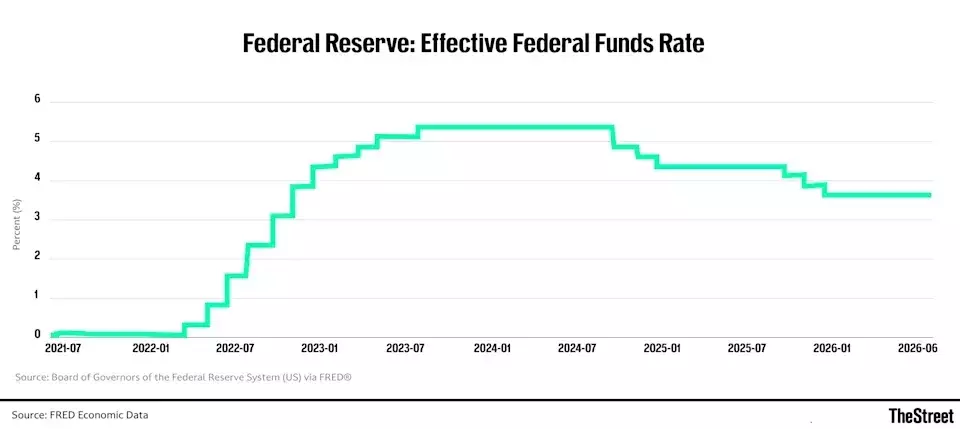
During the July Federal Open Market Committee (FOMC) meeting, a decision was made to keep short-term interest rates unchanged. This move, however, was met with a significant downturn on Wall Street, evidenced by a substantial decline in the Dow Jones Industrial Average and a rise in the 30-year Treasury yield. Market analysts interpret this reaction as a clear sign that investors anticipate potential future rate increases, particularly if inflation continues to exceed the Federal Reserve's 2% objective, a target that has remained elusive for the past five years.
Kevin Warsh, a prominent figure, has reiterated the Fed's dedication to achieving the inflation target. Nevertheless, he has refrained from detailing the specific strategies to reach this goal. This deliberate ambiguity, described as a shift towards greater flexibility over precise guidance, is intended to foster open discourse rather than behind-the-scenes decision-making. However, this approach has resulted in increased market volatility, as investors lack the customary foresight into the central bank's next moves.
Adding another layer of complexity, the global geopolitical climate, particularly the conflict in the Middle East, is exerting considerable influence. David Russell, Global Head of Market Strategy at TradeStation, emphasized the critical role of energy prices, stating that oil market dynamics are now dictating the Fed's potential actions. The ongoing instability has led to a more hawkish stance among policymakers, with many now considering rate hikes as early as September to combat inflationary pressures.
The Federal Reserve operates under a dual mandate from Congress: ensuring maximum employment and maintaining price stability. This mandate inherently presents a challenge, as policies designed to stimulate job growth, such as lower interest rates, can inadvertently fuel inflation. Conversely, raising rates to curb inflation can lead to a softening of the labor market. The FOMC has navigated this balance throughout the year, with some members expressing dissent in July by advocating for a rate hike, reflecting concerns about persistent underlying inflation.
Market participants are actively recalibrating their expectations for future interest rate adjustments. The CME Group FedWatch Tool now indicates a significant probability of a rate hike in September, with even higher chances of further tightening by the end of the year. This sentiment is reinforced by the belief that rising oil prices and geopolitical tensions will sustain inflationary pressures, necessitating a more aggressive response from the Fed.
The debate continues regarding whether the Fed can afford to wait for inflation to subside naturally. Experts like Daleep Singh from PGIM argue that current economic shocks are not fleeting events that the central bank can simply observe. He contends that the robust job market provides a unique window for the Fed to tighten monetary policy without immediately triggering widespread job losses. Delaying action, he warns, could necessitate even higher rate increases in the future. The implications of the Fed's decisions extend directly to consumers, influencing everything from credit card interest to mortgage rates, though housing affordability remains primarily driven by property values rather than solely by interest rate fluctuations.
In essence, the Federal Reserve's recent meeting, characterized by its decision to hold interest rates steady but without clear future guidance, has fueled significant inflation concerns on Wall Street. The market's reaction, alongside insights from various financial experts, underscores a prevailing sentiment that further rate hikes are likely on the horizon. Geopolitical factors, particularly those impacting energy costs, are playing an increasingly crucial role in shaping the central bank's strategic considerations. This period of uncertainty highlights the delicate balance the Fed must strike between controlling inflation and supporting economic stability, with direct consequences for both financial markets and the everyday consumer.
