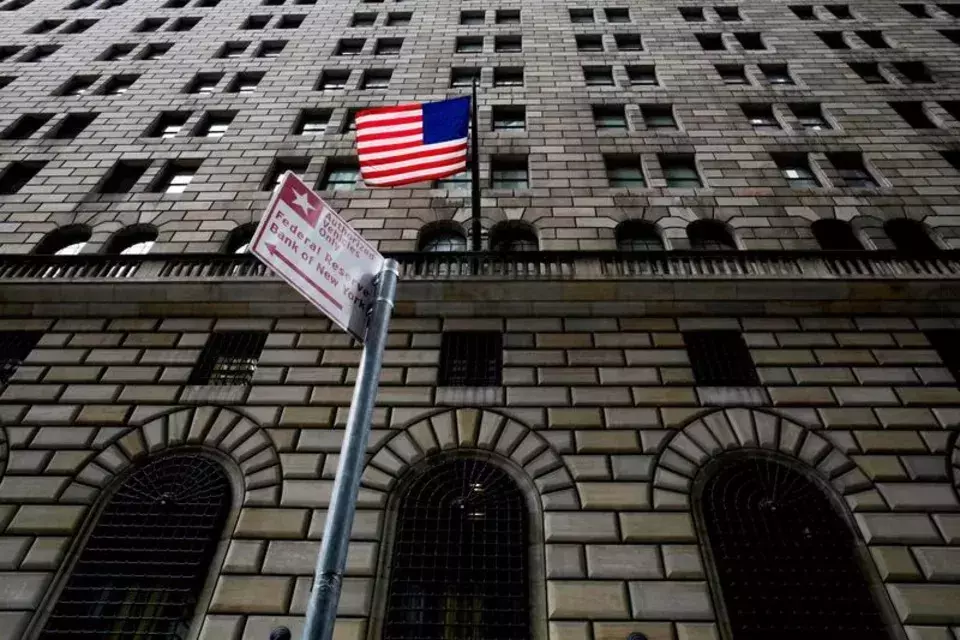
Fed Banks to Launch Pilot Survey on Private Credit Market
Money

Fed Banks to Launch Pilot Survey on Private Credit Market

authorBy Scott Pape
DateAug 05, 2026
Read Time2 min
The Federal Reserve Banks of Dallas and New York are preparing to undertake a pioneering survey of the private credit market, an increasingly influential segment of the financial landscape. This initiative underscores a concerted effort to shed light on a sector that has grown substantially, offering crucial insights into its operations, lending standards, and broader economic implications.

Illuminating the Shadows: A New Era of Scrutiny for Private Credit

The Emergence and Expansion of Private Credit

Following the financial turmoil of 2008, when traditional bank financing became scarce, the private credit market emerged as a vital alternative. It primarily facilitated the funding of private equity buyouts, subsequently evolving into a significant debt source for businesses with higher risk profiles, attracting substantial investments from those seeking greater returns.

Addressing Transparency and Risk Concerns

Despite its considerable growth, the private credit sector, currently valued at an estimated $1.3 trillion, has faced scrutiny regarding the quality of its lending practices and a notable lack of transparency. These concerns have prompted regulators to seek a clearer understanding of potential systemic risks, particularly those affecting the broader banking industry.

Structuring the Market Survey

The upcoming pilot survey, spearheaded by the Dallas and New York Federal Reserve banks, will categorize the private credit market based on the size of borrowers. This segmentation will include an upper-middle market for entities with over $100 million in EBITDA, a middle market for those between $30 million and $100 million EBITDA, and a lower-middle market for businesses under $30 million EBITDA.

Anticipated Insights and Publication Timeline

The Federal Reserve intends to release the comprehensive findings from this critical survey in the initial quarter of 2027. This data is expected to significantly inform regulatory bodies and market participants about the dynamics of credit availability, provision, evolving lending standards within private credit, and its wider impact on the economy and monetary policy.

Regulatory Challenges and the Drive for Data

Regulators have historically struggled to evaluate the inherent dangers of private credit to financial institutions due to a scarcity of verifiable data and the sector's unregulated nature, which limits their ability to compel disclosure. This new survey aims to bridge that information gap.

Understanding the Market's Dynamics and Investor Sentiment

The current year has seen an accelerated demand from investors to withdraw funds from certain private credit vehicles, known as business development companies. This trend is driven by concerns over heightened competition, diminishing returns, and the disruptive potential of artificial intelligence on software businesses often financed by these funds.

More Articles
Money
Identifying Value: Two Industrial Giants Poised for Enduring Growth
Amidst global economic shifts, two industrial powerhouses, UPS and Fluor, have seen their stock values decline significantly. This analysis delves into the reasons behind their recent downturns and highlights why these companies, despite current challenges, present compelling long-term investment opportunities for discerning investors seeking stability and potential future appreciation.
By Dave RamseyAug 05, 2026
Money
Lineage Logistics Navigates Cold Storage Oversupply with Facility Closures
Lineage Logistics is responding to a significant oversupply in the cold storage market by closing five more facilities this year, adding to the ten shuttered last year. This move, which impacts 1% of its U.S. portfolio, aims to address the estimated 10% market overcapacity. The company also plans to divest approximately $1 billion in assets to reduce debt, highlighting a strategy to consolidate operations and enhance efficiency amid a challenging market environment.
By Dave RamseyAug 05, 2026
Money
Amazon's Tariff Refund: Who Benefits?
Amazon is poised to share a portion of its $600 million tariff refund with a select group of customers. This move follows a Supreme Court ruling that mandated the government to reimburse businesses for Trump-era tariffs. While other large corporations like Apple and Walmart have also received substantial refunds, their plans for customer compensation differ, with some opting for price investments over direct reimbursements. This article explores the implications of these refunds for consumers and the broader retail landscape.
By Chika UwazieAug 05, 2026
Money
SpaceX Stock Plunge: An Analysis of Historical IPO Performance and Future Projections
SpaceX shares have experienced a significant downturn, reflecting a common trend among recent IPOs. Data indicates that a majority of major initial public offerings over the last 15 years saw substantial drops in their first year. SpaceX's stock performance, particularly its recent 10% dip, is influenced by higher-than-expected capital expenditures for AI initiatives, despite strong revenue and EBITDA beats. The company maintains ambitious long-term revenue targets, aiming for $1 trillion by 2030.
By Mr. Money MustacheAug 05, 2026
Money
GXO Logistics Reports Robust Q2 Growth, North America Leads Market Expansion
GXO Logistics announced strong second-quarter results, with North America emerging as its fastest-growing market. The company's transformation strategy, emphasizing commercial momentum, AI integration, and operational efficiency, is yielding significant financial improvements. Despite narrowly missing revenue forecasts, GXO exceeded adjusted EPS expectations and reaffirmed its full-year guidance, driven by strategic vertical wins and an expanding sales pipeline.
By Natalie PaceAug 05, 2026