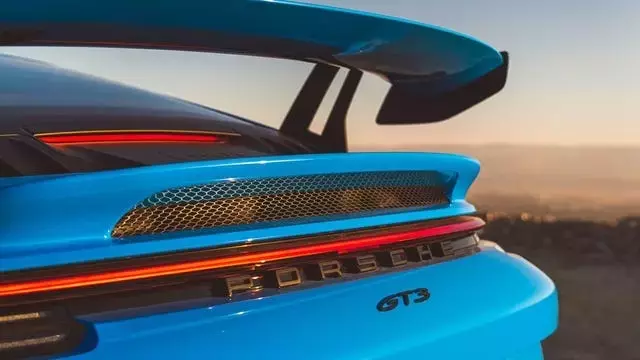
The End of an Era: Porsche 911 GT3's Naturally Aspirated Engine Faces Extinction
The signature naturally aspirated flat-six engine that has defined the Porsche 911 GT3 for generations is now at a crossroads, with stricter European emissions standards threatening its future. Since its debut in 1999 with the 996-generation, this powertrain has been central to the GT3's identity. However, the current 992.2 model may mark the final iteration to boast a free-breathing engine, as regulatory pressures are pushing Porsche towards alternative solutions, potentially including forced induction or hybrid technology.
Andreas Preuninger, the esteemed head of Porsche's GT division, recently shed light on the impending fate of the GT3's 4.0-liter naturally aspirated flat-six engine. In an interview, he conveyed a somewhat somber outlook for purists, indicating that the engine's longevity, particularly in Europe, is severely constrained. He noted that without significant design changes, the engine's lifespan in the European market is likely limited to just a few years. While its future in the United States might be slightly longer, the global automotive landscape and the challenges of developing distinct powertrains for different markets make a unified approach more probable.
The core of this predicament lies in the European Union's ambitious 2030 emissions targets, which mandate a 55 percent reduction in vehicle greenhouse gas emissions compared to 1990 levels. This aggressive regulatory push means that continuing with the current naturally aspirated configuration would require extensive and costly re-engineering, potentially undermining the GT3's performance and purity. When questioned about the possibility of turbocharging as a future direction for the GT3, Preuninger's response was a concise, 'It might be,' suggesting that forced induction is a serious consideration for maintaining compliance while striving for performance.
The potential shift to turbocharging for the GT3 raises questions about the broader implications for Porsche's GT lineup. For instance, the future of the 718, which is rumored to offer both electric and gasoline powertrain options, becomes uncertain for its GT4 variant. Moreover, the distinct positioning of the GT2, traditionally differentiated by its turbocharged engine, could become less clear if the GT3 also adopts turbocharging. Porsche faces the intricate challenge of evolving its high-performance models to meet environmental mandates without diluting the unique driving experience that enthusiasts cherish.
As the automotive industry continues its rapid evolution towards sustainability, the beloved naturally aspirated engine of the Porsche 911 GT3 stands on the brink of significant transformation. Porsche's challenge is to navigate these regulatory demands while preserving the essence and emotional appeal of its iconic high-performance vehicles. The upcoming generation of the GT3 will undoubtedly be a testament to the brand's ability to innovate and adapt in a changing world, shaping the future of driving exhilaration.
