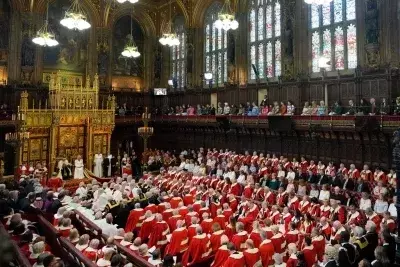
End of an Era: British Parliament Removes Hereditary Peers from House of Lords
A historic transformation is underway in the United Kingdom's legislative landscape as the British Parliament has enacted a sweeping reform, concluding the centuries-long practice of hereditary aristocrats holding seats in the House of Lords. This pivotal decision marks a significant stride towards modernizing the nation's political system, fostering a more equitable and talent-based representation within its legislative chambers. The move culminates a reform process initiated decades ago, fundamentally reshaping the composition and ethos of the upper house.
Transforming the House of Lords: The End of Hereditary Privileges
The British Parliament has recently concluded a profound parliamentary reform, effectively abolishing the presence of hereditary peers in the House of Lords. This historic decision, finalized after a vote in the upper chamber, brings an end to a 700-year-old tradition where aristocratic titles granted automatic legislative power. Dozens of dukes, earls, and viscounts will no longer hold their seats by birthright, a change that government minister Nick Thomas-Symonds lauded as a decisive move away from an "archaic and undemocratic principle." He emphasized that legislative bodies should prioritize talent and merit, rather than perpetuate an "old boys' network" reliant on ancient titles. This legislative shift aims to realign the House of Lords with contemporary democratic values, ensuring that political influence stems from capability and public service rather than inherited status, marking a significant redefinition of the UK's parliamentary structure.
The journey to this legislative overhaul has been protracted, stretching over a quarter-century since the initial attempts to curtail hereditary influence. The 1999 Labour government, under Prime Minister Tony Blair, first significantly reduced the number of hereditary peers, allowing only a small contingent to remain as a temporary compromise. Current Prime Minister Keir Starmer's administration pushed through the final legislation, which faced initial resistance from within the House of Lords. A compromise was reached, permitting a limited number of hereditary members to transition into "life peers," thereby retaining their roles based on appointment rather than birth. This bill awaits royal assent from King Charles III, a final ceremonial step before the hereditary peers officially depart at the close of the current parliamentary session. While this reform addresses a key democratic deficit, the Labour Party has signaled further ambitions for the House of Lords, envisioning an entirely new second chamber that is more comprehensively representative of the UK's diverse populace, underscoring a continuous commitment to democratic evolution.
A New Era for British Democracy: Prioritizing Merit Over Lineage
The recent parliamentary vote to remove hereditary aristocrats from the House of Lords signifies a profound shift in British political thought, prioritizing a meritocratic system over inherited privilege. This landmark decision fundamentally alters the composition of the upper chamber, aligning it more closely with modern democratic ideals. Critics have long argued that the hereditary nature of the House of Lords was an anachronism in a contemporary democracy, undermining principles of fairness and representation. The government's successful passage of this legislation underscores a commitment to fostering a legislative environment where individuals earn their positions through their contributions and abilities, rather than through ancestral lineage. This move is seen as a crucial step towards creating a more accountable and representative government, reflecting the diverse talents and perspectives of the broader population within its highest echelons of power.
This reform is not merely a symbolic gesture; it is a structural change intended to enhance the functionality and legitimacy of the House of Lords. While the upper chamber plays a vital role in scrutinizing legislation from the House of Commons, its previous composition was often a target of criticism regarding its democratic credentials. The elimination of hereditary seats aims to address these concerns, paving the way for a more dynamic and responsive legislative body. As Nicholas True, the opposition Conservative Party leader in the Lords, reflected on the long history of hereditary peers, acknowledging their past contributions while recognizing the necessity for change. The impending royal assent will formalize this transformation, marking a definitive end to centuries of tradition and ushering in an era where the foundation of parliamentary service in the House of Lords is firmly rooted in merit and public trust. This foundational shift is expected to invigorate debates and decision-making, ensuring that the legislative process benefits from a wider array of expertise and perspectives, ultimately strengthening the democratic fabric of the United Kingdom.
