El Niño Expected to Intensify, Driving Global Temperature Surge
A substantial El Niño climate phenomenon is anticipated to develop this summer and extend throughout the coming year, according to meteorologists. This natural oceanic and atmospheric event is poised to significantly escalate global temperatures, potentially establishing new records for heat in both 2026 and 2027. While El Niño is a recurring cycle, its impact is increasingly amplified by human-driven climate change, leading to more severe weather occurrences across the globe. Experts emphasize that although El Niño temporarily stores and releases heat from the deeper oceans, the underlying cause of rising planetary temperatures remains the continuous emission of greenhouse gases from the burning of fossil fuels.
Global Weather Patterns Undergo Significant Shift with Impending El Niño
In a recent announcement on March 12, 2026, the National Oceanic and Atmospheric Administration (NOAA) issued a critical forecast: a powerful El Niño weather pattern is highly likely to manifest this summer and persist into the next year. With a 62% estimated probability, this climatic shift is expected to take hold between June and August. El Niño, characterized by the weakening of trade winds, allows vast currents of warm Pacific Ocean water to migrate eastward towards the Americas, profoundly influencing global weather systems.
Climate scientist Daniel Swain from the University of California Agriculture and Natural Resources highlighted the potential gravity of this event, stating that "this could be a very significant event in 2026 and lingering into 2027." Historically, the warmest years on record frequently coincide with active El Niño periods, as the phenomenon itself involves an unusual warming of the Eastern Pacific. This dynamic was prominently observed in 2023 and 2024, when a prolonged and intense El Niño contributed to shattering global temperature benchmarks, making 2023 the hottest year ever recorded, only to be surpassed by 2024.
Zeke Hausfather, a research scientist at Berkeley Earth, corroborated these concerns, predicting that "if a strong El Niño does develop, it'll boost temperatures in 2026 a bit, but it will have a particularly large effect on temperatures in 2027 and put that year on track to probably be the warmest year on record after 2024." He further explained that El Niño acts as a heat release mechanism for the deep oceans, bringing stored heat to the surface.
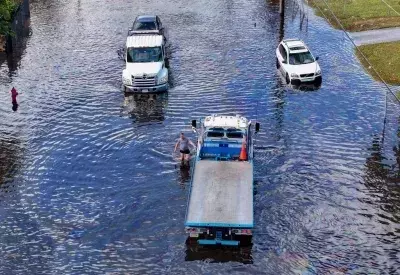
Beyond temperature escalations, El Niño wields considerable influence over regional weather patterns worldwide. The Southern United States often experiences increased rainfall and cooler conditions, which can mitigate droughts and reduce wildfire risks. However, the National Integrated Drought Information System's analysis suggests that even a year of enhanced precipitation may not suffice to fully replenish reservoirs in the severely drought-stricken Southwest. Conversely, the additional global heat generated by El Niño can exacerbate droughts in other parts of the world.
In the Atlantic Ocean, El Niño typically hinders hurricane formation, leading to less severe hurricane seasons. Yet, this protection is limited; a single major storm can still cause widespread devastation, especially with rising Atlantic temperatures fueled by climate change. Moreover, El Niño offers no such mitigating effect on storms originating in the Pacific. Swain underscored the dangers of these regional impacts, noting that El Niño translates to "more energy for storms, heavier downpours, more intensive droughts, more extreme wildfires." These effects, he warned, are perhaps the most critical consequences of an intensifying El Niño.
The anticipated emergence of a strong El Niño underscores a critical intersection of natural climate variability and anthropogenic global warming. As we brace for potentially record-setting temperatures and more extreme weather events, it serves as a stark reminder of the urgent need for comprehensive climate action. While El Niño is a cyclical phenomenon, its amplified impacts in an already warming world highlight the increasing vulnerability of communities and ecosystems globally. This situation necessitates proactive measures in disaster preparedness, infrastructure resilience, and, most importantly, a concerted international effort to reduce greenhouse gas emissions. The coming years will be a crucial test of our collective ability to adapt to and mitigate the profound challenges posed by a changing climate, exacerbated by natural cycles like El Niño.
