CXMT's Ascent Amidst the Memory Crisis
Games

CXMT's Ascent Amidst the Memory Crisis

authorBy Amy Hennig
DateAug 05, 2026
Read Time3 min
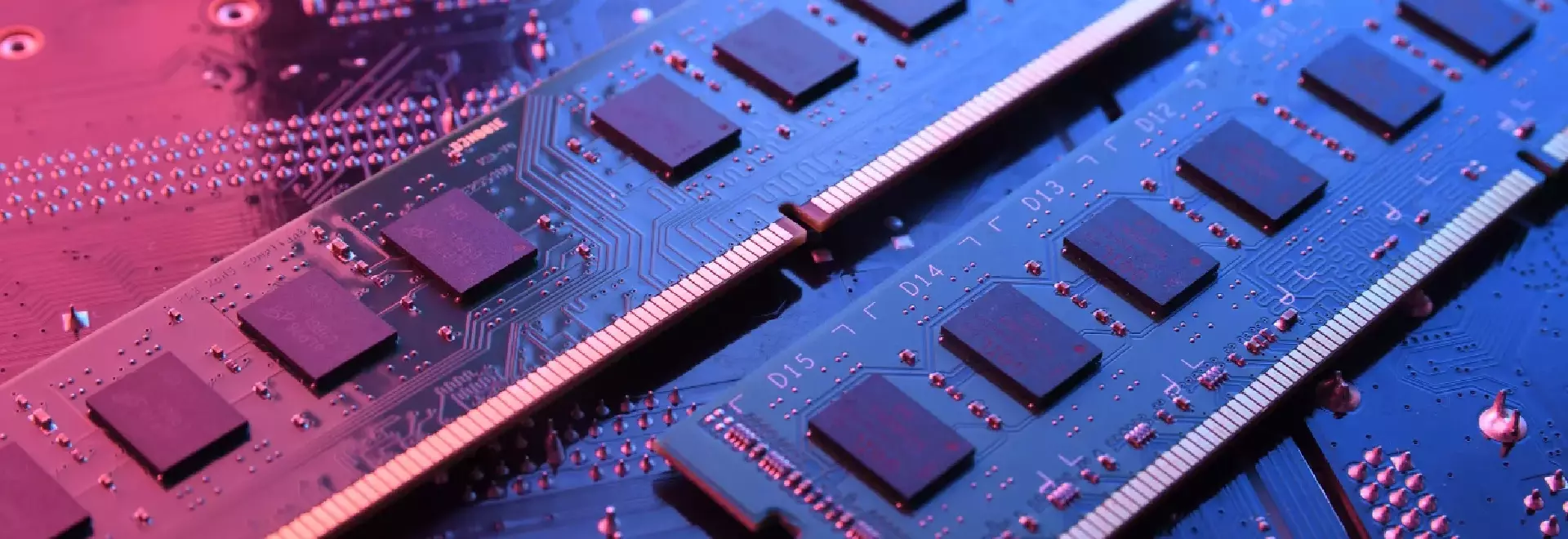
The PC gaming hardware market is currently grappling with a severe memory shortage, a widespread issue impacting various sectors. Amidst this challenge, a new contender, Chinese memory producer CXMT, is rapidly expanding its influence and offering a glimmer of hope for increased competition.

A New Era for Memory Production

The Current State of the Memory Market

The persistent memory crisis is a recurring theme in discussions about PC gaming hardware, profoundly affecting the entire industry. While immediate solutions remain elusive for the coming year, the emergence of CXMT from China signals a significant shift in market dynamics.

CXMT's Remarkable Growth

According to Counterpoint's analysis, CXMT has secured approximately 7% of the revenue market share. This is notable when compared to industry giants like Samsung (39%), SK Hynix (26%), and Micron (25%), who collectively command a staggering 97% of the memory revenue. CXMT's rapid ascent is attributed to several key factors.

Factors Driving CXMT's Expansion

Earlier this month, component manufacturers began validating their products for compatibility with Chinese memory, specifically CXMT's offerings. This move paved the way for broader adoption. Subsequently, CXMT's public offering saw an impressive 466% surge in shares, elevating its market capitalization to nearly half a trillion dollars, making it one of China's most valuable enterprises.

Expanding Reach and Industry Impact

CXMT memory modules are reportedly being integrated into laptops from major brands such as HP, Asus, and Acer, though primarily outside the US market. This strategic penetration into the global supply chain underscores CXMT's growing influence. With leading memory producers unable to satisfy the immense demand, particularly fueled by AI's insatiable memory requirements, CXMT is strategically positioning itself to fill this critical gap.

The Promise of Increased Competition

Heightened competition is generally beneficial for the market, fostering innovation and potentially leading to more favorable pricing and improved production efficiencies. This is particularly relevant given recent allegations of anti-competitive practices against Samsung, SK Hynix, and Micron in a class-action lawsuit. The rise of new players like CXMT could help alleviate such concerns and promote a healthier market environment.

Future Outlook and Production Plans

Despite CXMT's promising entry, the memory crisis is not expected to abate in the immediate future. Samsung recently warned of a "severe" memory supply crunch next year, with some projections extending beyond 2030. In response, CXMT is planning to construct additional chip fabrication plants in Beijing, Shanghai, and Hefei, aiming to double its production capacity to 600,000 wafers per month. If the current memory scarcity persists, CXMT is well-positioned to meet the ongoing demand, indicating a clear trajectory for growth in a market where PC gamers have, until now, been on the losing end due to escalating RAM costs.

More Articles
Games
Pulsar Gaming Seeks User Input for Next-Gen Mouse Design
Pulsar Gaming, in collaboration with Yonsei University's High-Performance Human-Computer Interaction Lab, has launched a comprehensive survey to gather gamer data for the development of future gaming mice. Participants have a chance to win a Pulsar Gaming mouse, with the study aiming to establish empirical design standards based on actual user behavior and preferences.
By Shigeru MiyamotoAug 05, 2026
Games
Layoffs Loom at Electronic Arts as Saudi Investment Fund Takes Control
Electronic Arts (EA) has transitioned to private ownership under the Saudi Arabia Public Investment Fund, a move reportedly precipitating significant layoffs. With EA taking on substantial debt, an internal memo suggests widespread job cuts are imminent as the company seeks to reduce annual costs by $700 million, including $170 million through 'organizational efficiencies.' This follows a trend of mass layoffs in the gaming industry after major acquisitions, despite the sector's overall profitability.
By Amy HennigAug 05, 2026
Games
Game Freak's 'Beast of Reincarnation' Faces Launch Woes, Promises Swift Updates
Game Freak's latest action RPG, 'Beast of Reincarnation,' has encountered a rocky launch, drawing criticism from players and reviewers alike due to technical issues and unrefined gameplay. In response, the studio has pledged a series of continuous updates, with the first patch addressing camera angles, narrative pacing, bug fixes, performance mode defaults, and text size within the next week. The game currently holds a 'mixed' rating on Steam, highlighting the community's divided reception.
By Reiner KniziaAug 05, 2026
Games
Battlefield 6: Nvidia GPU Crash Fix for Water Maps and Attachment Changes
A recent update for Battlefield 6 has resolved a frustrating crashing issue experienced by players using Nvidia graphics cards. The crashes, which occurred when changing weapon attachments, using custom server search, or playing on maps with large bodies of water, were particularly problematic on the new, water-heavy Tsuru Reef map. Players who previously rolled back their Nvidia drivers are advised to update to the latest version to ensure optimal gameplay.
By Richard GarfieldAug 05, 2026
Games
James Cameron Considers Post-Avatar Future, Hints at New Creative Directions
After decades dedicated to the Avatar saga, acclaimed director James Cameron is contemplating his next cinematic ventures. He's openly discussing a shift in focus, aiming to tell new stories that contribute positively to the world while streamlining production costs and timelines for future large-scale projects. This exploration suggests a potential departure from the Avatar universe, marking a significant point in his illustrious career.
By Reiner KniziaAug 05, 2026