Consumer Inflation Moderates in July Amidst Energy Price Fluctuations
Money

Consumer Inflation Moderates in July Amidst Energy Price Fluctuations

authorBy Chika Uwazie
DateAug 12, 2026
Read Time2 min

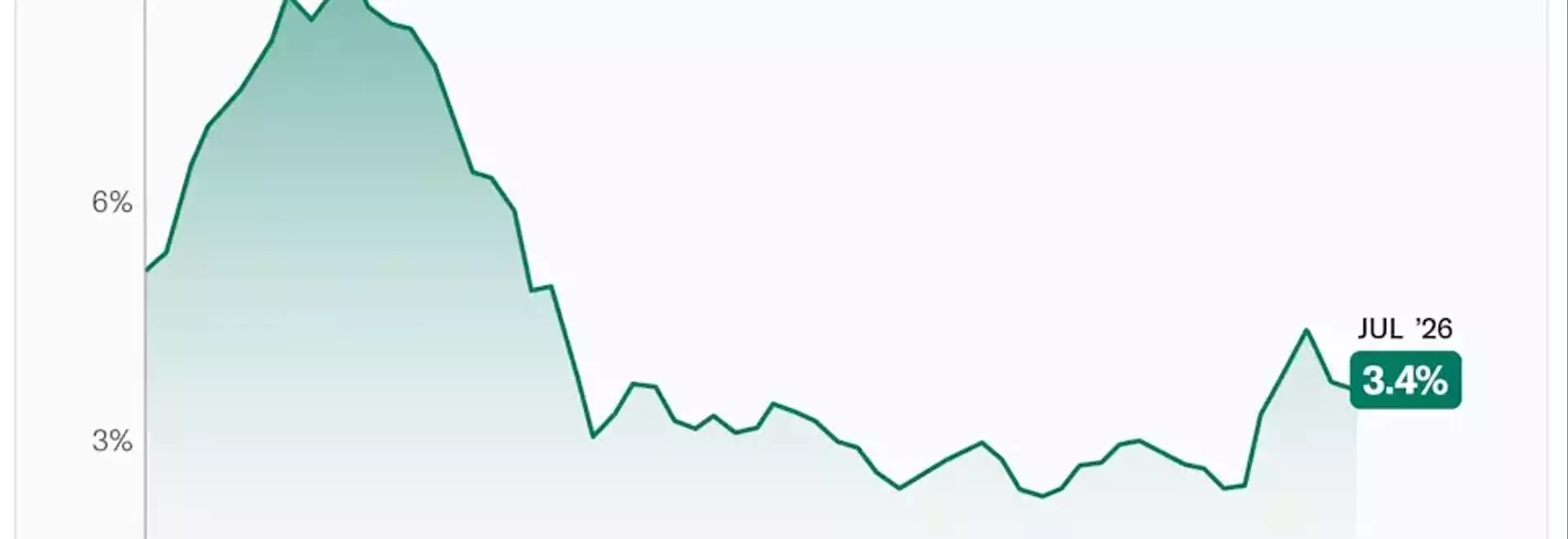
Inflationary pressures demonstrated a slight abatement in July, with the Consumer Price Index (CPI) registering an annual increase of 3.4%, a marginal reduction from the 3.5% recorded in June. This moderation transpired even as global geopolitical tensions impacted energy costs, leading to some price volatility. On a month-over-month basis, consumer prices advanced by a modest 0.1% following an unexpected decline in the previous month, with both figures aligning with analysts' predictions.

Despite a brief surge in energy prices during July, influenced by the breakdown of a truce and subsequent rise in crude oil values, the average cost of gasoline at the pump remained marginally lower than in June, according to federal energy statistics. Specifically, gasoline prices receded by 2.9% over the month, although they still reflect a substantial 24.6% increase over the past year. Broader energy costs experienced an overall decline of 1.5%. Concurrently, housing expenses showed a fractional increase of 0.1% from June, and food prices also edged up by 0.1%, with dining out experiencing a 0.3% monthly rise. While certain food items, such as beef, fish, and coffee, saw significant year-over-year price hikes, lettuce prices notably decreased, partly due to health-related concerns. Core inflation, which excludes the more volatile categories of food and energy, increased by 2.5% annually and 0.2% monthly, indicating a more stable underlying price trend. Additionally, consumers found some relief in insurance costs, with auto insurance seeing a 4.5% annual decrease and health insurance dropping by 8%. However, air travel expenses continued their upward trajectory, rising 2.2% from June to July, and marking a 25.5% increase over the last year.

This nuanced inflation report is likely to maintain the Federal Reserve's cautious stance regarding future interest rate adjustments, particularly given signs of a softening labor market. Market expectations, as reflected by CME FedWatch, suggest a greater likelihood of maintaining current benchmark rates, moving away from previous evenly split predictions for a rate hike. This situation highlights the intricate balance policymakers face in navigating economic signals that offer both relief in price stability and challenges in employment trends.

In the evolving landscape of economic indicators, the subtle shifts in consumer inflation underscore the resilience and adaptability required in managing financial policies. While progress in tempering price increases is evident, the interconnectedness of global events and domestic factors necessitates a vigilant and flexible approach. This ongoing journey toward economic equilibrium demands continuous assessment and strategic responses to foster sustained growth and stability for all.

More Articles
Money
The Rise of Late-Night AI Job Interviews: Convenience vs. Candidate Frustration
The integration of AI into the hiring process has led to a significant increase in job interviews occurring late at night, between 10 p.m. and 2 a.m. While offering unprecedented flexibility for candidates balancing work and personal life, this trend is also met with considerable applicant dissatisfaction regarding the impersonal nature of AI interactions and a demand for greater transparency from employers.
By Bola SokunbiAug 12, 2026
Money
Kaiser Aluminum Stock Performance and Market Trends
Kaiser Aluminum shares recently surpassed a key buy point following a strong quarterly earnings report. Despite a slight dip, the stock maintains a favorable position above an alternative buy point. This article delves into the company's financial performance, its standing among competitors, and broader market trends affecting the aluminum industry and the stock market as a whole, including the impact of AI on various sectors.
By Vicki RobinAug 12, 2026
Money
Alico Inc. Shifts Focus to Land Management, Reports Strong Q3 Revenue Growth
Alico Inc. (ALCO) has successfully transitioned its business model, with land management now driving revenue growth. The company reported a 7.7% year-over-year revenue increase in Q3 FY26, reaching $9.0 million. This growth is attributed to strategic land monetization, including a new agricultural lease with a purchase option for 3,280 acres in Hendry County, Florida. Alico's liquidity has improved significantly, extending its operational runway through FY29, and its Corkscrew Grove East Village development project is progressing through state and federal permitting.
By Scott PapeAug 12, 2026
Money
Southwest Gas Holdings Reports Strong Q2 2026 Earnings and Strategic Progress
Southwest Gas Holdings reported adjusted earnings per share of $0.45 for Q2 2026, driven by effective regulatory strategies and reduced interest expenses. The company reaffirmed its 2026 and long-term guidance, highlighting significant progress in rate case proceedings across its jurisdictions and the strengthening commercial outlook for the Great Basin 2028 Expansion Project. Key initiatives include capital investment recovery, maintaining strong financial liquidity, and disciplined cost management.
By Dave RamseyAug 12, 2026
Money
CoreWeave's Financial Performance: A Deep Dive into Growth Amidst Profitability Concerns
CoreWeave recently announced its second-quarter earnings, showcasing significant year-over-year revenue growth driven by strong demand in the AI computing sector. Despite this impressive top-line expansion, the company continues to struggle with profitability, reporting a substantial operating loss and a wider net loss compared to the previous year. This analysis explores the paradox of CoreWeave's booming business contrasted with its persistent financial challenges, particularly its high operational and interest costs.
By Dave RamseyAug 12, 2026