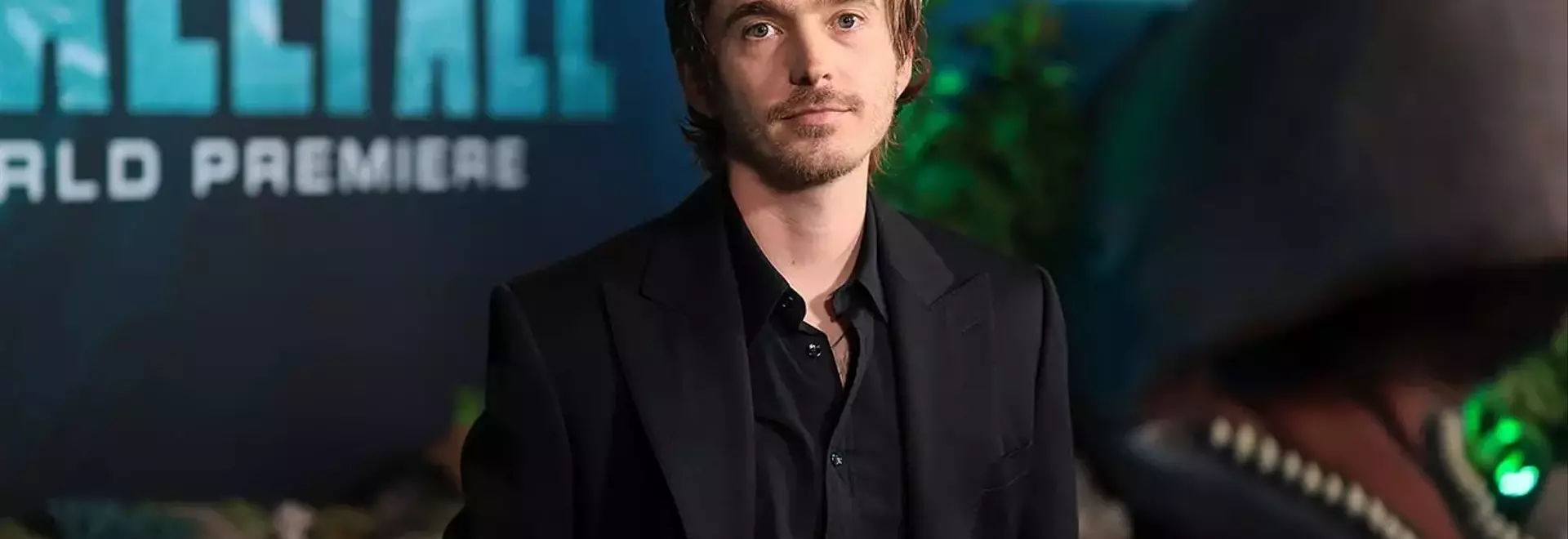
Austin Abrams Reflects on Demanding Roles in 'Whalefall' and 'Resident Evil'
Austin Abrams, a rising talent in the cinematic world, recently offered a glimpse into the rigorous demands of his latest projects, 'Whalefall' and 'Resident Evil.' In a candid interview, Abrams navigated discussions about the contrasting intensity of these two films, revealing the dedication required to embody his characters. From meticulous physical preparation to profound emotional immersion, his commitment to his craft shines through in every detail, even extending to a personal weight transformation for one of the roles. His reflections provide a compelling look at the intricate process behind bringing complex narratives to the screen.
Unveiling the Depths: Abrams' Journey Through 'Whalefall' and 'Resident Evil'
On a crisp October day in 2026, actor Austin Abrams found himself at the center of attention following the theatrical release of 'Whalefall,' a film that, much like 'Resident Evil,' pushed the boundaries of his acting prowess. 'Whalefall,' co-written and directed by Brian Duffield, sees Abrams portraying Jay Gardiner, a college student on a poignant mission to recover his estranged father's remains from the ocean floor near Monastery Beach, California. This grim quest follows his father's tragic decision to end his life at sea after a terminal mesothelioma diagnosis. Jay's journey is fraught with peril, as he quickly finds himself engulfed by a sperm whale while attempting to locate his father. The film presents a harrowing race against time, mirroring the high-stakes environment of 'Resident Evil,' where Abrams' character faces a similar one-hour deadline to escape his predicament before his oxygen supply diminishes.
Abrams' dedication to his roles is evident in his preparation. For 'Whalefall,' he undertook scuba diving certification and even visited a sperm whale sanctuary in the Caribbean. Describing the encounter with these majestic creatures, Abrams remarked, "It was beautiful. It was peaceful. It was the opposite of what you think it would be. You immediately know and feel how gentle and loving they are." To further immerse himself in the character, he even walked around his neighborhood in full scuba gear, acclimatizing to the equipment's weight. This unconventional method, however, led to an amusing incident during filming at Radford Studios in Studio City, where his visibly distressed appearance prompted security to be called. This commitment to authenticity also extended to his role in 'Resident Evil,' filmed shortly after 'Whalefall.' Without consulting the producers, Abrams intentionally gained weight for his character, Bryan, a medical courier, aiming for a less conventionally heroic physique to enhance the character's vulnerability in a zombie outbreak scenario. This bold move, reminiscent of Ryan Gosling's past character choices, was ultimately embraced by 'Resident Evil' filmmaker Zach Cregger.
Abrams also reflected on a recurring theme in his career: his characters frequently meet untimely ends. This pattern began with his first film, 'Ticking Clock,' in 2011, and continued through 'Gangster Squad,' where his shoeshine boy character was tragically caught in a mob ambush. Despite the intensity of these roles and his characters' unfortunate fates, Abrams maintains a gentlemanly composure, humorously deflecting questions about which film was more physically demanding. While his director, Brian Duffield, readily claims 'Whalefall' as the more punishing experience due to Abrams' restricted movements, the actor playfully suggests both films had their unique challenges and rewards. Another intriguing aspect of 'Whalefall' involves a partially visible letter from Jay's father, which was later removed at the studio's request. Abrams, respecting the creative decision, chooses to keep its contents a secret, believing that the mystery allows viewers to project their own emotions and interpretations onto the narrative, thereby enriching their personal connection to the story.
The conversation also delved into several 'Resident Evil' fan theories and script details. Abrams confirmed the popular theory that the "Sundress Woman" was indeed the farmer's wife, a detail subtly conveyed within the film. He also clarified that a script draft featuring Bryan explicitly telling Michelle he wanted to have a child with her, a conversation cut short by poor cell service, was never filmed. Additionally, he expressed unfamiliarity with an earlier draft where Paul, a character played by Paul Walter Hauser, was originally a woman named Pauline who met a gruesome end in a rat-infested sewer. Abrams confirmed that the dog, not the little girl, was initially responsible for Bryan's infection in an earlier script. Finally, he acknowledged discussions about the syringe breaking outside the lab in 'Resident Evil,' a decision made during post-production to alter the scene's impact.
Austin Abrams' journey through 'Whalefall' and 'Resident Evil' illustrates the profound dedication required in contemporary acting. His willingness to embrace physical transformations, endure challenging filming conditions, and make bold character choices underscores the dynamic and often demanding nature of cinematic artistry. The actor's nuanced approach to his craft, coupled with his respect for the storytelling process and audience interpretation, truly elevates his performances, leaving a lasting impression on viewers.
", "review": "The article is clean and free from any sensitive conten