Audi vs. BMW vs. Mercedes: Driving Character Over Reliability
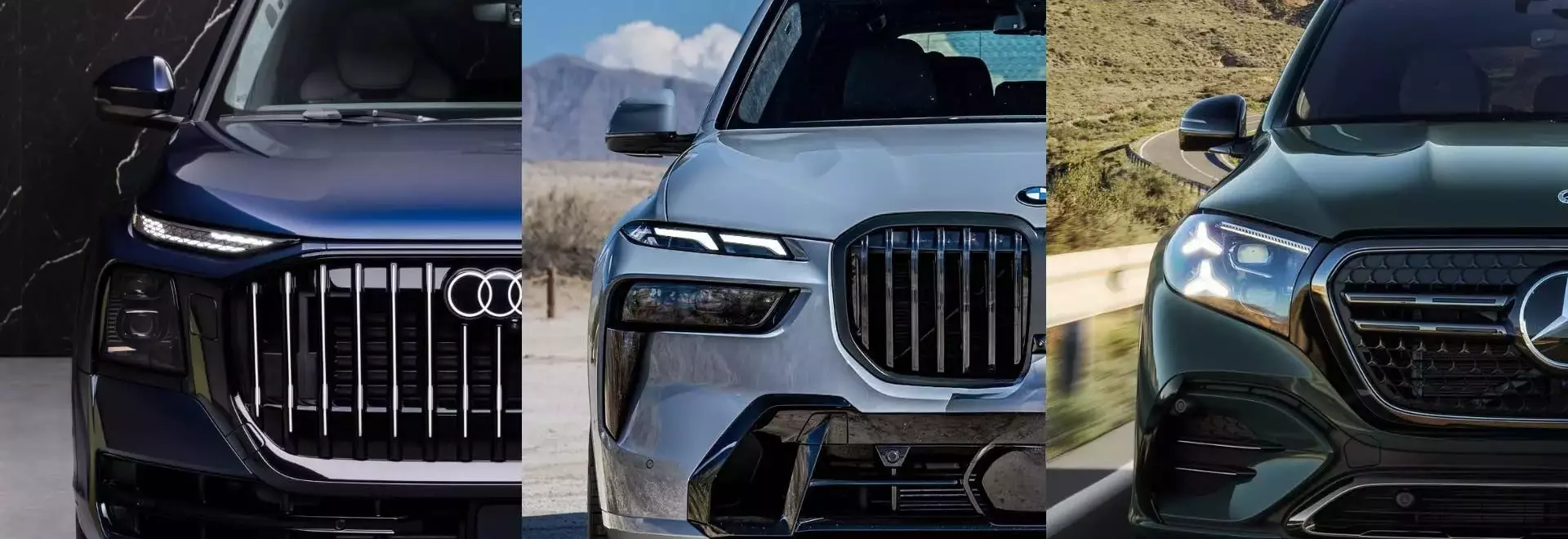
When comparing top-tier automotive brands like Audi, BMW, and Mercedes-Benz, it's easy to get caught up in metrics like reliability. While BMW often leads in this area, the true differentiator lies in each brand's unique driving character and engineering philosophy. This distinction is particularly evident in their all-wheel-drive (AWD) systems, which are finely tuned to deliver specific driving experiences. The recent introduction of Audi's flagship Q9 SUV further emphasizes this point, as it directly competes with established models like the BMW X7 and Mercedes-Benz GLS, forcing consumers to consider what kind of driving experience they truly value.
For many years, there was a common perception that Audi specialized in front-wheel drive, while BMW and Mercedes-Benz focused on rear-wheel drive. However, this simplification no longer holds true. Mercedes-Benz’s 4MATIC system, for instance, comes in both variable and permanent forms. Variable 4MATIC operates as front-wheel drive until additional grip is required, seen in models like the CLA and GLA. Permanent 4MATIC, found in higher-end vehicles such as the E-Class, S-Class, GLE, and GLS, consistently powers all four wheels. Similarly, Audi’s quattro system has evolved into three distinct variations: ‘ultra’ (front-wheel drive biased for efficiency), multi-plate clutch (front-biased in normal conditions), and self-locking differential (always engaged). These diverse implementations mean that a Mercedes-Benz, traditionally known for rear-wheel drive, now offers front-wheel drive models at its entry level, while some Audis can effectively distribute power to the rear wheels when needed.
The engineering philosophies behind these AWD systems reveal the brands' core identities. BMW explicitly designs its xDrive system for driver engagement, maintaining a rear-biased setup to appeal to enthusiasts, only sending power to the front when necessary for traction. Mercedes-Benz, conversely, prioritizes composure and comfort. Its 4MATIC system, especially with the 4-ETS feature, focuses on maintaining vehicle stability by braking individual slipping wheels rather than altering the car's dynamic handling characteristics. Audi’s quattro, on the other hand, emphasizes both traction and fuel efficiency. The ‘ultra’ system, for example, can disengage the rear axle when not needed, reducing drag and improving fuel economy. These subtle yet significant engineering choices highlight how each brand caters to a distinct type of driver and their preferences.
Beyond the technical specifications, the perceived brand identity doesn't always align with the actual engineering delivered, especially at different price points. Mercedes-Benz vehicles, for example, tend to offer more sophisticated AWD systems as the price increases. Entry-level models like the GLA, starting at $41,500, feature the variable 4MATIC, which can feel different from the permanent AWD system found in a 2027 S 500, priced at $114,000. This disparity can lead to a gap between brand expectations and the actual driving experience in lower-priced models. Audi faces a different challenge, often being perceived as offering glorified Volkswagens with premium interiors. The introduction of the Q9, directly competing with the X7 and GLS, pushes Audi into a segment where its engineering and brand reputation are rigorously tested against more established luxury offerings. These dynamics suggest that a brand's badge no longer universally guarantees a specific driving experience across its entire lineup.
Ultimately, the decision between an Audi, BMW, or Mercedes-Benz comes down to personal driving preferences and the specific character one seeks in a vehicle. If an exhilarating, driver-centric experience with a distinct rear-wheel bias is desired, BMW remains the prime choice. For those who prioritize a smooth, isolated, and composed ride, Mercedes-Benz offers a sophisticated solution designed for comfort and stability. Audi caters to drivers who seek reliable grip in various conditions without sacrificing fuel efficiency, thanks to innovative systems like quattro ultra. However, it is crucial for buyers to research the specific AWD system installed in any model they are considering, as entry-level vehicles may not always embody the full, high-end engineering philosophy associated with the brand's name. Understanding these nuances before making a purchase can prevent potential long-term dissatisfaction.
