Audi's New RS5 Avant: Less Practical Than Expected
Cars

Audi's New RS5 Avant: Less Practical Than Expected

authorBy Edward Loh
DateFeb 20, 2026
Read Time2 min

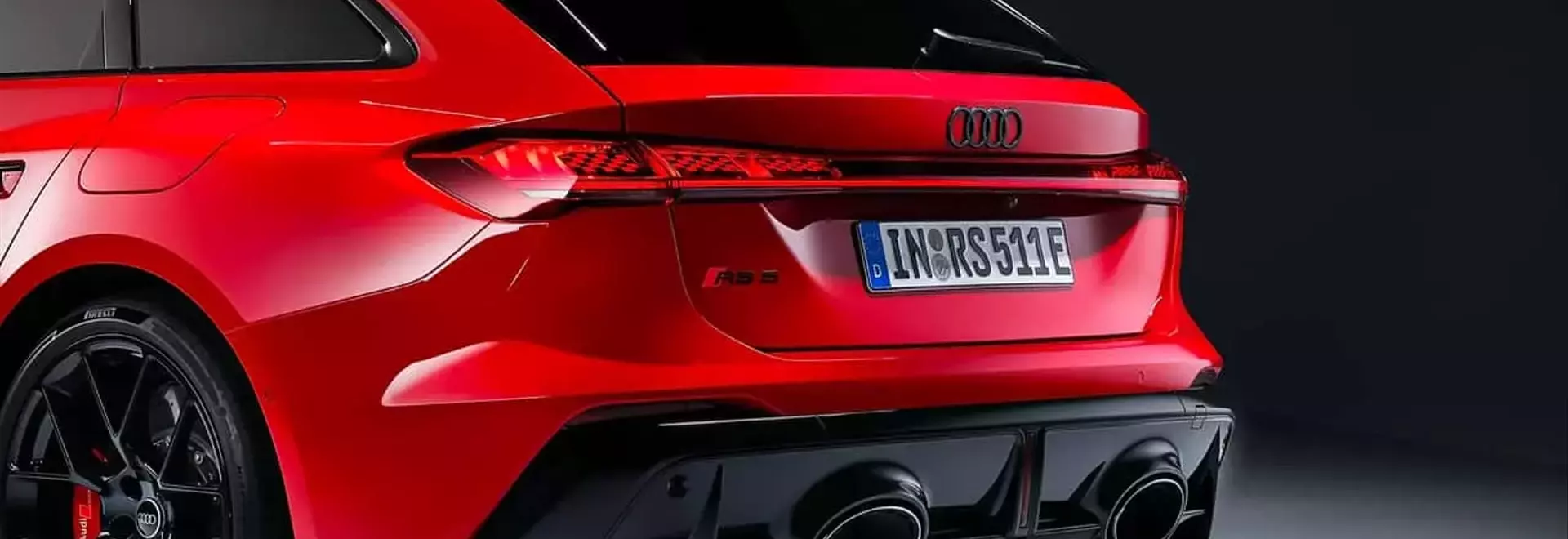
The new Audi RS5 Avant, a plug-in hybrid, emerges as a stylish and technologically advanced vehicle, yet it presents unexpected compromises in terms of everyday utility. Despite being larger than the previous RS4 Avant, its cargo capacity is notably reduced, primarily due to the integrated battery system. This design choice highlights a common challenge in hybrid vehicle development: balancing electric power with traditional functional expectations.

A key factor limiting the RS5 Avant's practicality is its rear-mounted battery pack. This innovative hybrid system, which offers an electric range of up to 54 miles, necessitates a smaller luggage area. With the rear seats upright, the new model offers only 12.7 cubic feet of storage, a significant decrease compared to the older RS4 Avant's 17.5 cubic feet. Even with the rear seats folded down, the space available is still less than that of its predecessor and other, smaller Audi vehicles, illustrating the direct impact of electrification on storage solutions.

Furthermore, the RS5 Avant is physically larger, measuring 4.5 inches longer and 3.4 inches wider than the last V6-only RS4 Avant. This increase in dimensions, however, does not translate to greater cargo volume, underscoring the trade-offs involved in its plug-in hybrid architecture. The vehicle's 25.9 kWh battery, with a usable capacity of 22 kWh, directly influences this reduced space, a design characteristic likely to be seen in future electrified models like the upcoming RS6 Avant.

The automotive industry is in a transformative era, where advancements in technology like plug-in hybrid systems are crucial for environmental sustainability. While these innovations may sometimes lead to unexpected changes in vehicle practicality, they also push the boundaries of performance and design. It reflects a commitment to progress, continuously seeking innovative solutions that balance power, efficiency, and evolving consumer needs.

More Articles
Cars
BMW M Division CEO Foresees the End of Manual Transmissions
Frank van Meel, CEO of BMW's M division, stated that the business case for manual transmissions is declining, making their future uncertain. He indicated that while manual options will persist for a few more years due to customer demand, the increasing power of performance vehicles and the high cost of developing new manual gearboxes make their long-term viability difficult. This suggests a shift towards automatic transmissions as the industry progresses.
By Akira MarutaFeb 20, 2026
Cars
Nissan Recalls Over 300,000 Rogue SUVs Due to Throttle Body Issues
Nissan is initiating a significant recall impacting 318,781 Rogue SUVs from the 2024 and 2025 model years. The recall addresses a potential defect in the electronic throttle body gears, which may fracture. This issue could lead to the vehicle losing propulsion, posing a safety risk. Owners will be notified by March 27, 2026, to have their vehicles inspected and repaired by dealerships.
By Larry ChenFeb 19, 2026
Cars
Top Cars That Hold Their Value Best
This article identifies cars that maintain their value exceptionally well over three years, helping new car buyers mitigate depreciation. The Porsche 911 leads the list, retaining 98% of its value, while Toyota dominates the top ten with six models. Honda's Civic also stands out for its strong resale performance in the compact segment. Understanding these trends can assist consumers in making financially sound purchasing decisions for new vehicles.
By Henry FordFeb 19, 2026
Cars
Leading Car Brands in Dependability for 2026: Lexus, Buick, and Mini Shine
A recent study on vehicle reliability for 2026 shows a general decline in dependability across the automotive industry. Despite this trend, Lexus maintained its leading position among luxury brands, while Buick emerged as the top performer in the mass-market category. The research highlights a widening gap in reliability between premium and mainstream vehicles, indicating that luxury models generally encounter more issues.
By Akira MarutaFeb 19, 2026
Cars
2026 Audi A6: A Refined Luxury Sedan's Enduring Appeal
The 2026 Audi A6 reasserts the importance of luxury sedans in a rapidly evolving automotive landscape. Eschewing flashy trends, it prioritizes a sophisticated driving experience, exquisite craftsmanship, and discreet elegance. This review explores its powerful yet smooth V6 engine, advanced all-wheel-drive system, and a minimalist interior brimming with integrated technology. Positioned as a compelling choice for discerning professionals, the A6 delivers substantial value and comfort, reinforcing its status as a mature and capable vehicle in the luxury segment.
By Michele AcquaragiaFeb 19, 2026