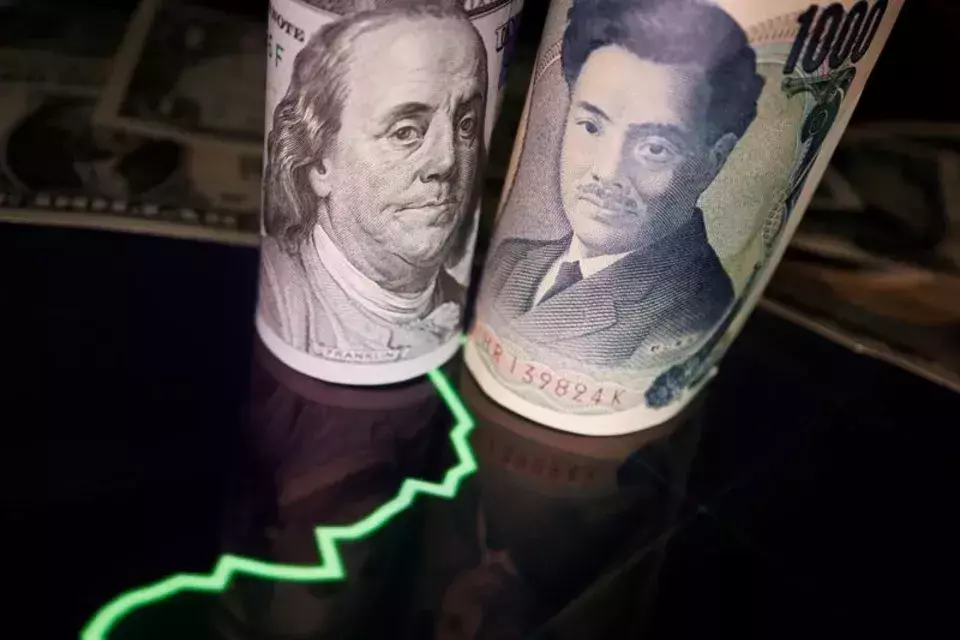
Yen Strengthens for Third Consecutive Session Amidst Intervention Watch
The Japanese yen has continued its upward trajectory for a third straight trading period, signaling ongoing market anticipation of potential currency interventions. This follows recent joint actions by Japanese and U.S. financial authorities aimed at stabilizing the currency. Adding to the market dynamics, crude oil prices experienced a notable drop, as news emerged of a de-escalation of tensions between the U.S. and Iran, which in turn diminished the U.S. dollar's role as a secure investment.
Yen's Resurgence: A Deep Dive into Market Movements and Interventions
On a recent Monday, the Japanese yen marked its third consecutive day of appreciation, drawing keen attention from currency traders who are now closely monitoring for additional intervention measures. This surge is a direct consequence of joint efforts by Tokyo and Washington last week to bolster the Japanese currency. The Ministry of Finance in Japan confirmed its engagement in a coordinated yen-buying operation with the United States on Friday. Data from the Bank of Japan indicated that Japanese authorities might have acquired as much as $58.97 billion worth of yen on the preceding Thursday. This decisive action has led the yen to its strongest level in approximately three months against the U.S. dollar, climbing by 1% in Asian trading hours to 155.20 per dollar, before settling at a 0.45% gain at 156.65. According to Hirofumi Suzuki, SMBC's chief forex strategist, this recent movement primarily reflects the unwinding of a substantial build-up in short yen positions. Concurrently, global oil markets reacted to political developments, with prices plummeting over $4 a barrel. This downturn followed the U.S. President's decision to withhold further aggressive actions against Iran, leading to a decrease in demand for the U.S. dollar as a safe-haven currency. Iran's statement denying any ongoing discussions with the U.S. further influenced this trend. Analysts from institutions like Societe Generale, including Stephen Spratt, highlight that historical patterns suggest intervention risk becomes significant when the dollar/yen exchange rate exceeds 1.5-2 standard deviations from its long-term average, currently identified between 162.72-164.96. Despite the recent gains, the yen has faced sustained pressure over the years due to the Bank of Japan's cautious approach to monetary policy tightening, which has maintained substantial yield differentials compared to other major economies. Barclays analysts caution that while short-term yen strengthening is possible, long-term depreciating forces may persist. Goldman Sachs strategists propose that, absent changes in policy mix or global growth outlook, promoting repatriation would be the most effective long-term policy for influencing the currency. Meanwhile, the broader dollar index remained largely stable at 99.79, recovering slightly after a more than 1.5% decline last week. The euro experienced a minor increase of 0.03% against the dollar, reaching $1.1525, having touched a 1.5-month peak earlier in Asian trading. Chris Turner, ING's global head of forex, noted that the dollar's resilience, despite falling oil prices, likely stems from uncertainty surrounding the Federal Reserve's potential September rate hike, a decision heavily influenced by upcoming jobs data.
This sequence of events underscores the intricate interplay between global political developments, monetary policy decisions, and currency markets. The coordinated efforts by major economies to manage currency stability, particularly in times of economic flux and geopolitical sensitivity, highlight a crucial aspect of international finance. For investors and policymakers alike, the yen's current volatility serves as a reminder of the immediate impact of government intervention and the broader implications of global economic indicators on exchange rates. The persistent underlying pressures on the yen, despite short-term gains, indicate that deeper structural adjustments or a significant shift in global economic conditions might be necessary for sustained appreciation.
