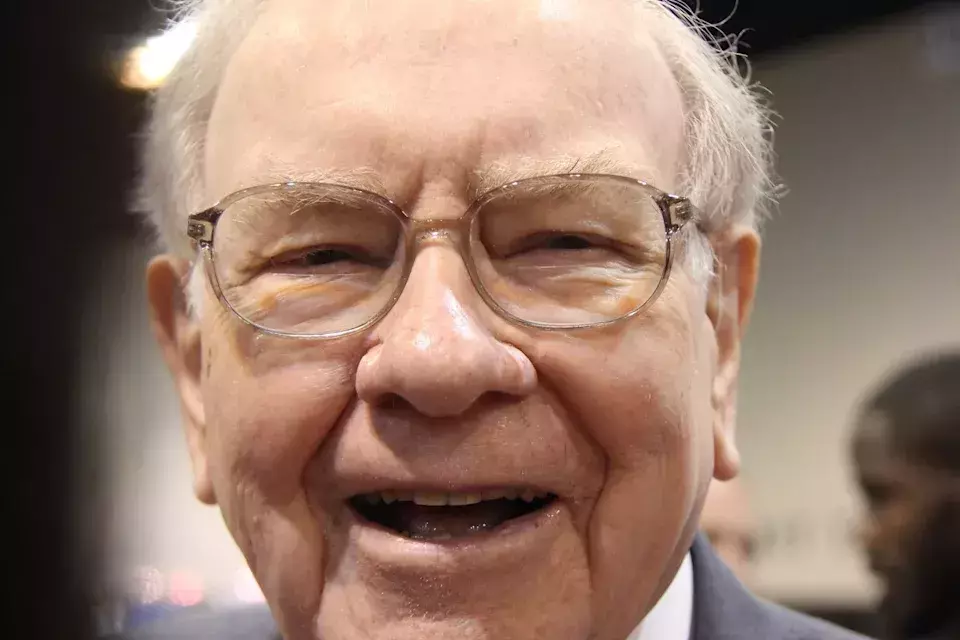
Warren Buffett's Enduring Investment Philosophy: A Historical Perspective
Embrace the Horizon: Buffett's Unwavering Guide to Lasting Prosperity
The Unrivaled Trajectory of Berkshire Hathaway
The financial powerhouse, Berkshire Hathaway, stands as a testament to investment prowess, showcasing an extraordinary track record. Between 1965 and 2025, this conglomerate achieved an impressive compound annual growth rate of 19.7%, culminating in a staggering total return of nearly 6.1 million percent. In contrast, the S&P 500, a widely recognized market benchmark, saw compound annual gains of 10.5% over the same period, yielding a total return of approximately 46,000%.
Buffett's Core Principle: Investing in Enduring Value
The remarkable achievements of Berkshire Hathaway are inextricably linked to its long-serving CEO, Warren Buffett, who recently transitioned from his leadership role. Buffett's investment philosophy has consistently revolved around a singular, powerful concept that has proven infallible throughout history. He advocates for investing in businesses that are not only straightforward to comprehend but also possess a clear and certain path to significantly increased earnings over the span of five, ten, and even twenty years.
Navigating Market Fluctuations with Discipline
In today's dynamic market, characterized by narratives of rapid wealth accumulation through meme stocks, options trading, or high-flying sectors like artificial intelligence, maintaining a disciplined, long-term investment perspective can be challenging. While such instances of swift gains do occur, Buffett consistently champions a more conservative path to wealth creation: harnessing the transformative power of time and compounding.
The Prudence of Patience: A Historical Imperative
Buffett's advice comes with a crucial caveat: the number of companies truly capable of sustained, long-term growth is limited, and the temptation to deviate from this principle is ever-present. He famously stated, "If you aren't willing to own a stock for 10 years, don't even think about owning it for 10 minutes." History consistently validates this perspective, as countless seemingly promising short-term investments have ultimately faltered. This explains why Buffett seldom pursues the market's fleeting "hot" stocks.
Identifying Resilient Investments Across Economic Cycles
Instead of chasing trends, Buffett seeks out companies that demonstrate robustness across various market conditions – whether the economy is in decline, stable, or flourishing. A prime example is Coca-Cola, one of Berkshire's enduring major holdings, which the company began acquiring in the late 1980s. While Coca-Cola is now a mature entity and unlikely to exhibit explosive "AI-like" growth, its powerful brand and expanding beverage portfolio have forged a formidable economic moat, positioning it as a highly defensive consumer staple. This year, Coca-Cola's shares have risen by nearly 26%, surpassing the broader market, as investor focus shifts from the speculative allure of AI.
Emulating the Sage of Omaha's Investment Wisdom
While no investor, including Buffett, possesses a crystal ball, and occasional missteps are inevitable, individuals can still safeguard their investments by prioritizing stability over fleeting trends. This involves identifying stocks that are not merely temporary fads but rather reliable enterprises capable of performing consistently across diverse market and economic landscapes. It is crucial to periodically reassess long-term holdings if the underlying investment thesis changes.
The Indisputable Benefits of Extended Holding Periods
Historical data unequivocally shows that the longer one retains ownership of stocks, the lower the probability of incurring losses. However, this truth does not imply that every stock will yield positive returns over a decade. Acquiring a company that is consistently losing money, lacks a credible path to profitability, and trades at an inflated valuation will likely disappoint, even with a long-term holding strategy. Therefore, it is paramount to heed Buffett's counsel: seek out businesses with genuine potential for sustained earnings growth, envisioning them as investments you would willingly hold for at least a decade. The growth need not be spectacular year after year; rather, consistent, high-quality expansion will ultimately outperform temporary bursts of earnings followed by significant downturns.
Considering an Investment in Berkshire Hathaway Today
Before making an investment decision regarding Berkshire Hathaway, it's insightful to consider external perspectives. For instance, The Motley Fool Stock Advisor analyst team recently identified their top ten stock picks for investors, and interestingly, Berkshire Hathaway was not among them. The selected companies, they suggest, have the potential for substantial returns in the coming years.
Historical Precedents of Exceptional Returns
Consider the trajectory of Netflix after it was highlighted on this list in December 2004: a $1,000 investment then would have grown to over $411,000. Similarly, a $1,000 investment in Nvidia when it made the list in April 2005 would now be worth more than $1.3 million. The Stock Advisor's average total return stands at 965%, significantly outperforming the S&P 500's 215% over the same period. This highlights the value of expert analysis and an informed investment community.
