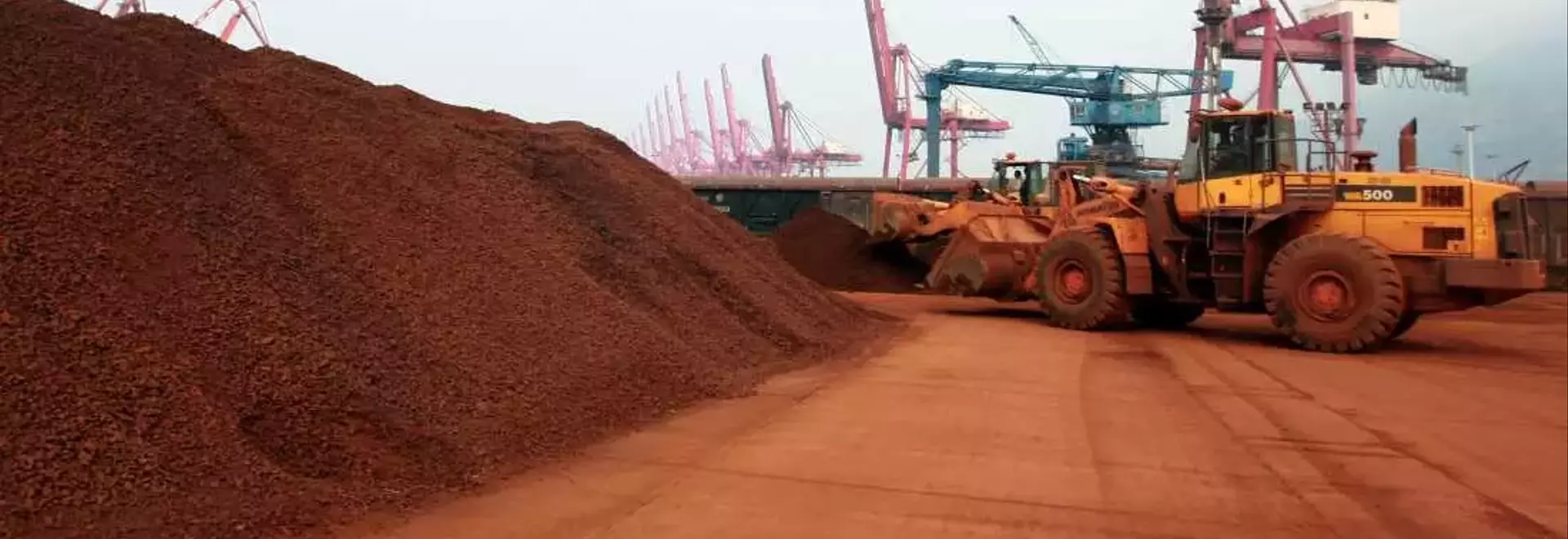
US Ramps Up Rare Earth Production to Counter China's Dominance
In an ambitious move to secure its technological and defense future, the United States is vigorously pursuing self-sufficiency in rare earth element production. These vital minerals, with names like neodymium and dysprosium, are not inherently scarce but pose significant challenges in extraction and refinement. Historically, the U.S. has lagged in processing capabilities, allowing China to command nearly 90% of the global output. However, with robust federal support and groundbreaking technological advancements, America is now charting a course to re-establish its footprint in this critical industry, aiming to mitigate foreign reliance and bolster its supply chain.
US Forges Ahead in Rare Earth Independence with Federal Investment and Innovation
On November 21, 2025, a significant announcement marked a pivotal moment in the United States' quest for rare earth independence. The Trump administration, in a strategic departure from conventional free-market approaches, revealed a major collaboration between the Pentagon's Office of Strategic Capital (OSC) and two innovative American firms: Indiana-based ReElement Technologies and North Carolina-based Vulcan Elements. This partnership underscores a burgeoning public-private initiative designed to cultivate domestic rare earth production and processing capabilities, directly challenging China's long-standing global supremacy.
Rare earth elements are indispensable components in a vast array of modern technologies, from electric vehicle motors and wind turbines to medical imaging equipment and advanced military aircraft. For instance, a single F-35 fighter jet incorporates over 900 pounds of these materials in its sophisticated engines and electronics. The burgeoning demand, fueled by the rapid expansion of the electric vehicle market, necessitates a stable and secure supply chain, a goal currently hampered by the U.S.'s historical dependence on foreign processing.
ReElement Technologies is at the forefront of this domestic resurgence, having developed an innovative, environmentally conscious method for processing and recycling rare earths using chromatography. This advanced technique promises greater efficiency and reduced ecological impact compared to traditional solvent extraction methods, which are often characterized by toxic byproducts and scalability issues. The company currently operates a commercialization facility in Noblesville, Indiana, with plans to launch a larger production site in Marion, Indiana, next year. Mark Jensen, CEO of ReElement, confidently projects that by the end of 2026, his company will emerge as the largest producer of rare earth oxides in the United States.
The federal government's commitment is substantial. Earlier this year, the “One Big Beautiful Bill” allocated $7.5 billion towards securing critical minerals. Following this, the Pentagon’s OSC invested $400 million in MP Materials, making the U.S. government its largest shareholder. Furthermore, the partnership announced this month includes a $620 million loan from the Pentagon’s OSC to Vulcan Elements, complemented by an additional $50 million from the Department of Commerce under the CHIPS and Science Act. ReElement Technologies itself will receive an $80 million loan to accelerate the expansion of its recycling and processing operations. These investments are integral to the broader strategy of bolstering domestic production and fostering innovation in critical components and raw materials.
Historically, the U.S. ceded its lead in rare earth production to China due to escalating environmental concerns and the high costs associated with domestic processing. The Mountain Pass mine in California, once a major U.S. producer, faced multiple shutdowns due to spills of radioactive and toxic wastewater. This allowed China to consolidate its dominance, eventually controlling approximately 60% of the world's supply. However, with renewed focus and significant federal backing, the U.S. aims to overcome these past challenges. Experts like Brent Elliott, a geology professor at the University of Texas, affirm that the U.S. possesses ample reserves; the key lies in developing environmentally and socially responsible extraction and processing methods. The ambition is not necessarily to achieve total global dominance but to establish sufficient domestic production to dismantle China's current monopoly and ensure national security.
The renewed national emphasis on domestic rare earth production signals a critical shift in U.S. industrial policy. By combining strategic federal investment with cutting-edge technological solutions, the United States is not only addressing a critical supply chain vulnerability but also setting a new standard for environmentally responsible resource management. This concerted effort promises to strengthen national security, stimulate economic growth, and position America as a formidable player in the global market for essential minerals. It demonstrates that with foresight and investment, nations can reclaim vital industries and secure their futures against geopolitical risks.
