Unpacking Paternal Influences on Children's People-Pleasing Tendencies
This analysis delves into the nuanced ways paternal communication can shape a child's inclination towards people-pleasing. It outlines how well-intentioned paternal remarks, such as prompting gratitude for maternal efforts or urging children to 'be good' for a stay-at-home parent, can unintentionally burden children with guilt or a sense of responsibility for others' emotions. The core message emphasizes that genuine appreciation, expressed through action and modeling, along with fostering an environment where children feel secure in expressing their full range of emotions, is far more constructive than verbal directives that might stem from a parent's own unaddressed guilt. Ultimately, effective parenting is shown to be a mirror reflecting a parent's self-awareness and modeling desired behaviors.
Revealing Unintended Parental Patterns and Nurturing Authentic Child Development
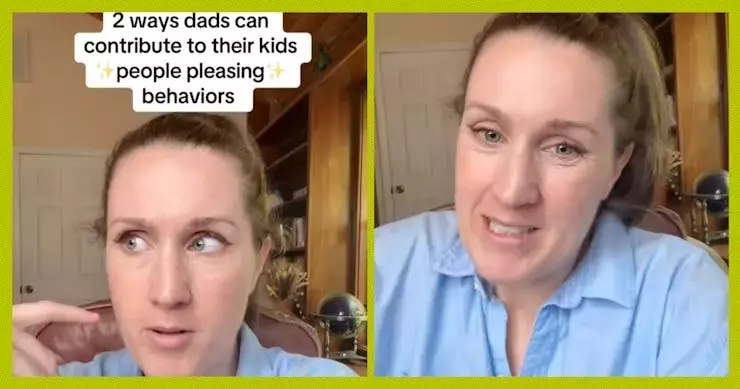
In a recent and widely discussed online video, licensed family and marriage therapist Kate Gray shed light on how fathers, despite their best intentions, can inadvertently encourage a people-pleasing disposition in their offspring. Gray’s insights, shared in her impactful TikTok presentation, meticulously outline specific paternal behaviors that might sow the seeds of such tendencies, detailing the motivations behind these actions, their consequential effects on children, and proposing more beneficial alternatives.
Gray meticulously identified two primary scenarios where this dynamic unfolds. The first involves fathers instructing their children to be profoundly grateful for all the mother contributes. While the underlying aim is to cultivate appreciation, Gray points out that when this gratitude is demanded *towards* another parent, it can inadvertently instill a sense of guilt in the child. If the child experiences dissatisfaction or desires more, they might feel shame for not being adequately appreciative, questioning their right to feel upset.
She powerfully advocates for an alternative approach: instead of direct instruction, fathers should exemplify gratitude through their own actions and interactions with their partners. By visibly expressing affection and appreciation, such as a spontaneous hug and words of thanks to the mother, fathers naturally model the desired behavior for their children to observe and internalize.
The second critical area Gray highlighted concerns fathers instructing their children to “be good for mom,” particularly when the mother is a stay-at-home parent and the father departs for work. While seemingly aimed at maintaining household harmony, Gray explains that this directive can subtly transfer the father’s own guilt or perceived inadequacy onto the children. It may inadvertently lead children to believe they are responsible for their mother’s emotional state, a burden that can foster unhealthy emotional dependencies.
Instead, Gray suggests a more empowering message. Fathers should assure their children of an enjoyable day with their mother, explicitly stating that it is acceptable to feel and express all emotions, and that the mother is fully capable of handling them. This approach reinforces a child’s right to emotional authenticity and alleviates undue responsibility for parental feelings. Furthermore, she encouraged fathers to introspect on their own feelings of guilt, recognizing if these underlie their directives, and to address these internal dynamics proactively. This self-awareness, she posits, is a vital component of holistic parenting, essentially serving as a re-parenting of oneself while guiding one's children.
Reflecting on Parental Impact: A Call for Intentionality and Empathy
As a keen observer of human behavior and familial dynamics, this expose serves as a potent reminder that every parental action and utterance, no matter how seemingly minor, carries profound weight in a child's developmental journey. It prompts us to consider the subtle, often subconscious, messages we convey through our words and, more importantly, our deeds. The revelation that well-meaning phrases can inadvertently cultivate people-pleasing traits in children is a powerful call to greater intentionality in our communication. It underscores the critical need for parents, particularly fathers in this context, to not just tell their children how to feel or behave, but to embody those values themselves. The lesson here extends beyond the specific examples; it's a universal principle that authenticity, emotional freedom, and leading by example are the cornerstones of raising resilient, emotionally intelligent individuals who are true to themselves, rather than merely striving to satisfy others. This challenges us all to examine our own motivations and to foster an environment where children are encouraged to express their full emotional spectrum without fear of judgment or guilt.
